AI estimate as of August 6, 2025 · verify with a professional before acting
AI-Generated · Verify before acting
Everything on this page is generated by AI for informational purposes only. AI can make mistakes — the AI may misidentify items or misattribute them (artist, maker, brand, designer, origin, era). This is not an official valuation and should not be used for insurance, sale, tax, estate, legal, or lending purposes — or any decision requiring a certified appraisal. It is not an authoritative claim about any person, brand, or rights holder — do not share or rely on it as a factual statement about a third party. Always consult qualified professionals before making financial decisions.
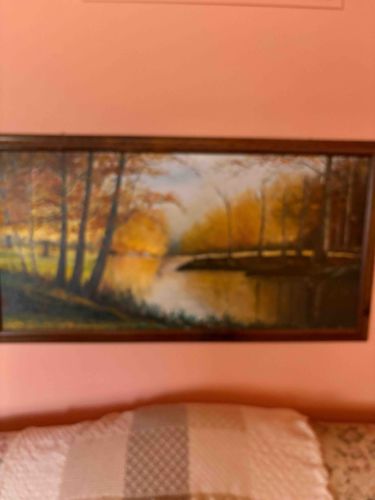
The item is a framed landscape painting, likely an oil or acrylic on canvas or board, depicting an autumn scene. The overall dimensions appear to be rectangular, with a horizontal orientation, suggesting a panoramic view. The color palette is dominated by warm tones, featuring vibrant yellows, oranges, and browns indicative of fall foliage, complemented by cooler blues and grays in the sky and water reflections. The painting showcases a body of water, possibly a river or pond, reflecting the surrounding trees and sky. On the left side, a cluster of trees with prominent trunks and autumn leaves stands by the water's edge. Similar trees extend into the background on the right, creating a sense of depth and a dense wooded environment. The brushstrokes appear to be visible and somewhat impressionistic, particularly in the rendering of the foliage and reflections, giving the artwork a textured quality. The frame is a dark, possibly wooden or wood-effect material, with a simple, classical profile, which encases the artwork without an evident mat. Due to the image quality, specific manufacturing marks, artist signatures, or precise dimensions are not discernible. The artwork appears to be in good visible condition with no obvious signs of significant damage, tears, or extensive paint loss, though minor surface wear on the frame or painting is possible due to age and handling. The style suggests it could be a 20th-century piece, possibly mid to late 20th century, given the general aesthetic and framing choices. The overall craftsmanship points to a decorative piece, likely intended for home display.
AI Appraisal Report
Based on my visual examination of the provided image, this framed autumn landscape painting appears to be a decorative piece, likely an oil or acrylic on canvas or board. The painting is in good visible condition; I observe no obvious tears, significant paint loss, or major frame damage, though minor surface wear consistent with age and handling is probable. The style, characterized by visible, somewhat impressionistic brushstrokes and a dominant warm palette, suggests a mid-to-late 20th-century origin. The dark, simple frame complements the artwork without distracting from it. Authenticity verification is significantly limited by image-based examination. I cannot discern any artist signatures, specific manufacturing marks, or precise dimensions, which are crucial for full authentication. A physical in-person examination would be necessary to verify the medium definitively, assess the exact condition of both the artwork and frame (including any hidden damage or repairs), and search for any obscured signatures or labels. Provenance documentation, such as purchase receipts or exhibition history, would further establish authenticity and origin. Scientific testing, like pigment analysis, could confirm the age and materials. The market for decorative landscape paintings is generally stable, with demand consistent for pieces that offer aesthetic appeal. This particular work, while visually pleasing, does not exhibit traits indicative of a renowned artist or exceptional rarity. Its value is primarily driven by its decorative quality and condition. Without an identifiable artist or unique historical significance, its market appeal is primarily to home decorators. Therefore, its value reflects its utility as an attractive decorative art piece rather than a collectible work with significant investment potential.