AI Appraisal Estimate

AI-generated estimates · not official valuations

From the user

What was submitted

Photo and notes provided by the user — not generated by AI

Submitted item photo
Submitted photo · July 21, 2026

User's notes

No additional notes provided.

AI analysis below

AI appraisal

AI analysis & estimate

AI-Generated · Verify before acting

Everything below is generated by AI for informational purposes only. AI can make mistakes — the AI may misidentify items or misattribute them (artist, maker, brand, designer, origin, era). This is not an official valuation and should not be used for insurance, sale, tax, estate, legal, or lending purposes — or any decision requiring a certified appraisal. It is not an authoritative claim about any person, brand, or rights holder — do not share or rely on it as a factual statement about a third party. Always consult qualified professionals before making financial decisions.

Read the full disclaimer

AI Identification

·Not independently authenticated·Verify before acting

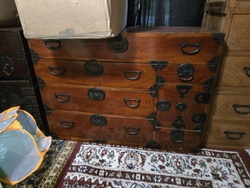
Multi-drawer wooden chest in the style of an 11th-century to early 20th-century machinist or tool cabinet

Antique Furniture

AI Estimated Value

·Not an official valuation·Verify before acting

$300 - $650

As of July 21, 2026

AI Item Analysis

·AI can make mistakes·Verify before acting
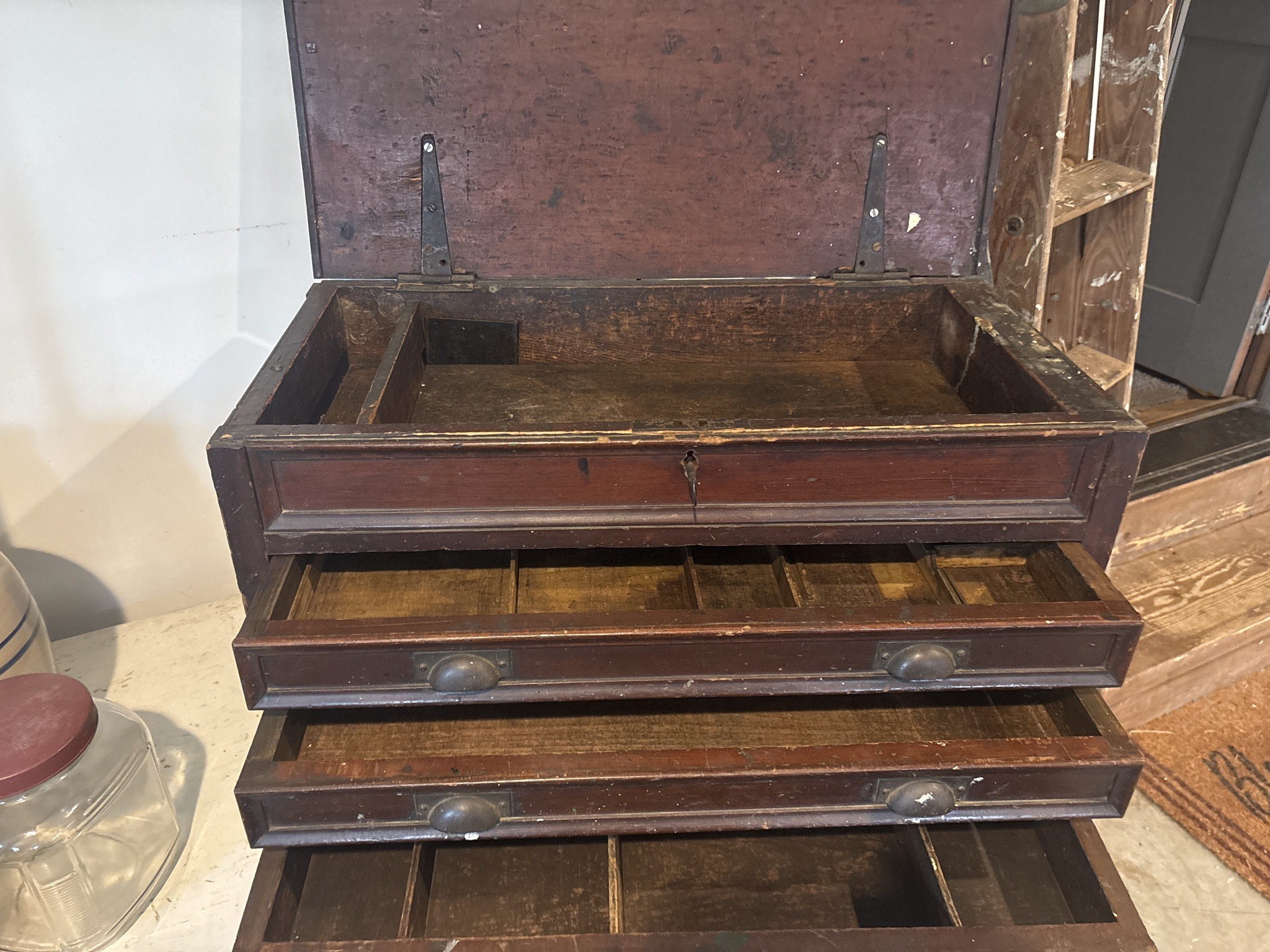
This item appears to be a utilitarian wooden chest or storage cabinet, stylistically consistent with late 11th-century to early 20th-century tool chests, machinist chests, or watchmaker cabinets. The piece is constructed from wood with a dark brown or reddish-brown finish, appearing to be stained or showing a heavy patina. It features a hinged top lid and multiple pull-out drawers of varying depths. The interior of the top compartment and some drawers are subdivided with fixed wooden dividers, suggesting a purpose for organizing small tools or hardware. The drawers are equipped with metal bin-pull or cup-style handles, which exhibit a dark, aged finish. Notable construction details include long metal strap hinges securing the lid and a central keyhole on the front facade, though no key is visible. The condition shows significant signs of age and heavy use, including surface abrasions, wood scuffs, paint splatters on the top-right corner, and a worn, darkened interior. There are no maker’s marks, labels, or signatures visible in the image to provide a specific origin or brand; therefore, the identification relies on its aesthetic and functional design. This type of craftsmanship is typical of industrial or workshop furniture intended more for durability than decoration.
AI Appraisal Report

·AI can make mistakes·Verify before acting
Based on the provided imagery, I have examined this multi-drawer wooden machinist-style chest. This piece exhibits design characteristics consistent with utilitarian workshop furniture from the late 19th to early 20th century, though I cannot verify its exact age or origin from a photo alone. The value estimate is predicated on the hypothesis that this is a period-authentic industrial tool cabinet. Based on what I can see, the chest features appropriate wear, including patina, wood scuffs, and paint splatters, which often appeal to collectors of industrial Americana. These signs of use suggest a history of functional labor, though I cannot confirm if the finish is period-authentic or a later distress. The metal strap hinges and cup-style pulls appear consistent with hardware of the era, but a physical inspection would be required to determine if they are contemporary to the piece or later replacements. Market demand for antique tool chests remains steady, particularly for examples with a high drawer count and original dividers. The lack of a visible maker's mark suggests this may be a journeyman-made piece rather than a branded cabinet by a known manufacturer like Gerstner or Union, which could command a premium. To confirm the item’s origin and age, an in-person examination of joinery and internal wood oxidation would be necessary. Should the piece be a modern 'in the style of' reproduction using aged materials, the market value would likely decrease to the $100 - $200 range. Professional verification of provenance and material science testing of the finish would be the only ways to move beyond a hypothetical attribution.

Get your items appraised

Instant estimates of your treasures with AI-powered appraisals

Browse More Appraisals