Antique 14K Gold Pictorial Scene Thimble
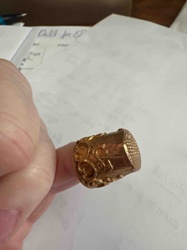
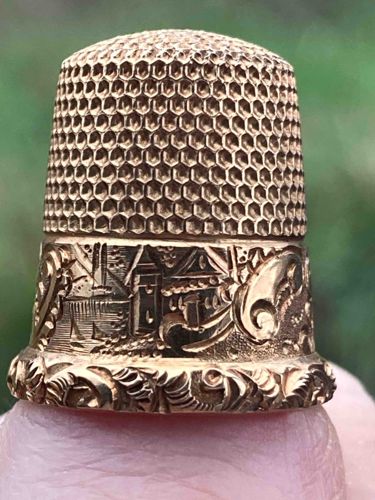
This is an exquisite example of a late Victorian or early Edwardian era thimble, likely crafted from 14K rose or yellow gold. The item features a domed cap with a deep, precision-stamped honeycomb knurling pattern designed to catch a needle head. Below this is a highly detailed, hand-engraved or die-rolled pictorial band showcasing a rural or village landscape, featuring a prominent house with a pitched roof, a lighthouse or tower, and swirling scrollwork. The base of the thimble is finished with a thick, flared rim featuring a repoussé or chased foliate and floral pattern, which adds both structural integrity and aesthetic appeal. The craftsmanship is of high quality, suggesting a master goldsmith or a premium manufacturer such as Simons Bros. Co. Condition appears excellent with no visible dings, holes in the cap, or major crushing, which is common in these soft-metal pieces. There is a slight patina in the recessed areas of the engraving, which beautifully highlights the depth of the scene. The piece likely dates from between 1880 and 1910 and represents a time when sewing implements were prized as functional jewelry.
AI-Generated Appraisal Disclaimer
Estimated Value
$450 - $650
Basic Information
Category
Antique Sewing Tools & Notions
Appraised On
February 23, 2026
Estimated Value
$450 - $650
Item Description
This is an exquisite example of a late Victorian or early Edwardian era thimble, likely crafted from 14K rose or yellow gold. The item features a domed cap with a deep, precision-stamped honeycomb knurling pattern designed to catch a needle head. Below this is a highly detailed, hand-engraved or die-rolled pictorial band showcasing a rural or village landscape, featuring a prominent house with a pitched roof, a lighthouse or tower, and swirling scrollwork. The base of the thimble is finished with a thick, flared rim featuring a repoussé or chased foliate and floral pattern, which adds both structural integrity and aesthetic appeal. The craftsmanship is of high quality, suggesting a master goldsmith or a premium manufacturer such as Simons Bros. Co. Condition appears excellent with no visible dings, holes in the cap, or major crushing, which is common in these soft-metal pieces. There is a slight patina in the recessed areas of the engraving, which beautifully highlights the depth of the scene. The piece likely dates from between 1880 and 1910 and represents a time when sewing implements were prized as functional jewelry.
Get Your Items Appraised
Instant estimates of your treasures with AI-powered instant appraisals