AI estimate as of July 28, 2025 · verify with a professional before acting
AI-Generated · Verify before acting
Everything on this page is generated by AI for informational purposes only. AI can make mistakes — the AI may misidentify items or misattribute them (artist, maker, brand, designer, origin, era). This is not an official valuation and should not be used for insurance, sale, tax, estate, legal, or lending purposes — or any decision requiring a certified appraisal. It is not an authoritative claim about any person, brand, or rights holder — do not share or rely on it as a factual statement about a third party. Always consult qualified professionals before making financial decisions.
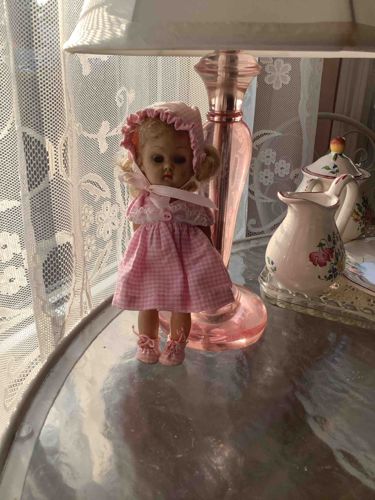
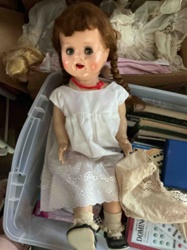
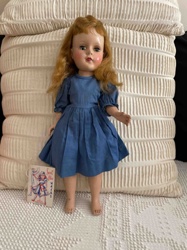
The item is a small, vintage-style doll, approximately 8-10 inches tall based on its proportion next to common household items like a lamp base. Its head appears to be made of a hard plastic, composition, or perhaps porcelain bisque, with a matte finish. The facial features include painted brown eyes with a somewhat vacant or melancholic expression, delicate painted eyebrows, and a small, closed red mouth. The doll has light blonde, possibly synthetic or mohair, hair styled in soft curls that peek out from under its bonnet. It is dressed in a charming, traditional outfit, likely made of cotton or a cotton blend fabric. The main garment is a pink and white gingham checked dress, with a full skirt and possibly puffed sleeves or a simple bodice. Over the dress, there is a lighter pink or white lace-trimmed top or bib, secured with a pink ribbon tie at the neck, which forms a small bow. The doll wears a matching pink bonnet with ruffles around the brim, tied with a similar pink ribbon under the chin. Its feet are adorned with small, pink, laced shoes, exhibiting some wear or discoloration. The doll's limbs appear to be soft-bodied or jointed, allowing for some posing. There are no clear manufacturer's marks visible in the image. The doll's condition appears good for its presumed age, with a slight darkening or patina to the face, consistent with vintage materials. The overall aesthetic suggests an early to mid-20th century production, possibly from the 1930s-1950s, embodying a nostalgic or 'sweetheart' doll style.
AI Appraisal Report
Upon visual examination of the provided image, this vintage girl doll, approximately 8-10 inches tall, appears to be in good condition for its age. The head material, likely composition or hard plastic, shows a slight patina consistent with vintage materials, but no overt cracks or significant damage. The painted facial features are intact, and the hair appears well-preserved under the bonnet. The charming pink gingham dress, bonnet, and lace trim, along with the shoes, also seem to be in good, unrestored condition. This suggests authenticity as a period piece, likely from the early to mid-20th century (1930s-1950s), given its style and typical manufacturing techniques of that era.
Market conditions for vintage dolls like this are generally stable, driven by collectors of dolls from specific eras or those with a nostalgic appeal. Comparable dolls of similar age, size, and material, especially those with original clothing, typically sell in the low to mid-hundred dollar range. While not exceedingly rare, its good condition and complete original outfit enhance its desirability. Factors positively impacting value include its charming aesthetic, perceived originality, and overall good preservation. The lack of visible manufacturer's marks, however, limits definitive identification of its maker, which could otherwise significantly increase its value if it were a known, sought-after brand.
It is crucial to note that this authenticity verification is based solely on visual assessment from an image. A definitive appraisal would require in-person examination to verify the head material (e.g., composition vs. early plastic), assess joint integrity, confirm the originality of the clothing through tactile inspection and examination of seams/materials, and search for hidden marks. Provenance documentation, such as original purchase receipts or family history, would also significantly aid in authenticating its age and origin. Without physical inspection, the precise material composition, internal condition, and any hidden damage or repairs cannot be fully determined, thus placing a limitation on the absolute certainty of the appraisal.