AI Appraisal Estimate

AI-generated estimates · not official valuations

From the user

What was submitted

Photo and notes provided by the user — not generated by AI

Submitted item photo
Submitted photo · July 18, 2026

User's notes

Mask

AI analysis below

AI appraisal

AI analysis & estimate

AI-Generated · Verify before acting

Everything below is generated by AI for informational purposes only. AI can make mistakes — the AI may misidentify items or misattribute them (artist, maker, brand, designer, origin, era). This is not an official valuation and should not be used for insurance, sale, tax, estate, legal, or lending purposes — or any decision requiring a certified appraisal. It is not an authoritative claim about any person, brand, or rights holder — do not share or rely on it as a factual statement about a third party. Always consult qualified professionals before making financial decisions.

Note

This analysis also relies on unverified notes provided by the user, which may be incomplete or inaccurate and could affect the result.

Read the full disclaimer

AI Identification

·Not independently authenticated·Verify before acting

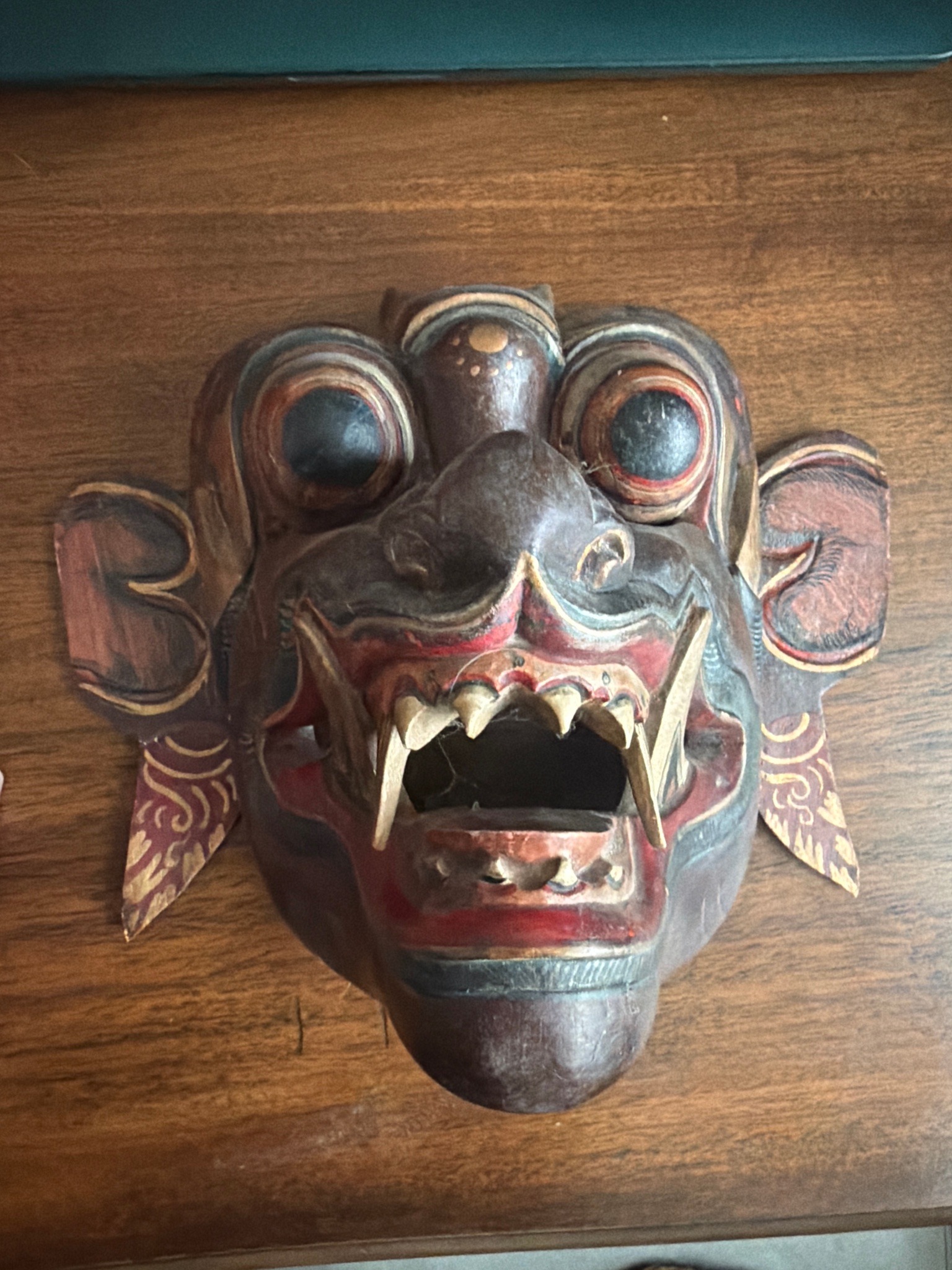
Hand-carved wooden mask in the Balinese Topeng style

Cultures and Collectibles

AI Estimated Value

·Not an official valuation·Verify before acting

$150 - $350

As of July 18, 2026

AI Item Analysis

·AI can make mistakes·Verify before acting
This item appears to be a hand-carved wooden mask, stylistically consistent with Balinese Topeng or Rangda-style masks from Indonesia. The mask features a demonic or mythological visage characterized by large, bulging black eyes with red surrounding lids, a prominent bulbous nose, and an open mouth revealing a row of sharp teeth and four elongated tusks. The color palette consists primarily of deep earthy browns, accented with faded red and off-white/cream pigments. The construction involves carved wood with applied pigments and possibly a gesso-like layering; the side 'ears' or wings appear to be separate pieces attached to the main facial form. Notable features include a decorative crest on the forehead and carved scrollwork on the side flaps. Condition-wise, the mask shows signs of age and wear, including surface abrasions, dust accumulation (particularly in the mouth and eyes), and some chipping of the paint and wood on the lower jaw and ear edges. The owner identifies this as a 'Mask,' which is unverified by physical inspection but matches the visual form. There are no visible maker's marks or signatures, though the craftsmanship is consistent with mid-to-late 20th-century decorative or performance-style carvings from Southeast Asia. Identification is based on stylistic indicators including the tusk placement and bulging ocular features common in Indonesian folk art.

AI Appraisal Report

·AI can make mistakes·Verify before acting
Based on the visual evidence provided, I have examined this hand-carved wooden mask, which appears to be in the style of Balinese Topeng or Rangda-style folk art. The estimate reflects its status as a decorative piece of Southeast Asian carving. From the photo, I can see intricate details such as tusk placement and bulging ocular features consistent with Indonesian mythological figures, but I cannot verify the type of wood, the specific pigments used, or its age without a physical inspection. The value assumes the piece is a mid-to-late 20th-century carving. The presence of surface abrasions, dust, and minor chipping suggests it has some age, though these condition issues also limit the top-end value. In the current market for ethnographic collectibles, demand is steady for masks with expressive features and visible handwork. This estimate is based on the hypothesis that this is a traditional, hand-crafted item; if it were discovered to be a modern mass-produced souvenir or a cast reproduction, the value would likely fall below $50. Conversely, if it were documented as a 19th-century performance mask with verifiable provenance, the value could increase significantly. To establish a more precise valuation and confirm its origins, I would need to perform an in-person examination to check the wood grain, tool marks, and any inner-surface wear patterns that might indicate actual use in dance or ceremony. Documentation regarding how and when it was acquired would also be necessary to move beyond this working hypothesis.

Get your items appraised

Instant estimates of your treasures with AI-powered appraisals

Browse More Appraisals