AI identification & appraisal estimate

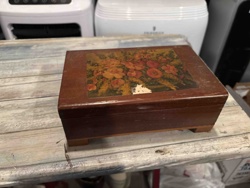
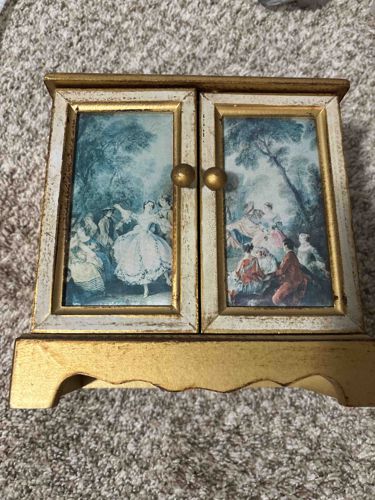
Distressed Gilt Cavalier Style Musical Jewelry Box

Submitted photo of Distressed Gilt Cavalier Style Musical Jewelry Box
Photo submitted by the user — not generated by AI

User's notes

Quality imports Japan music jewelry box

These notes were written by the person who submitted this item. Appraiser.AI has not verified them, and the AI's identification and estimate may rely on them.

AI Estimated Value

Not an official valuation

$30-50

AI estimate as of July 31, 2025 · verify with a professional before acting

AI-Generated · Verify before acting

Everything on this page is generated by AI for informational purposes only. AI can make mistakes — the AI may misidentify items or misattribute them (artist, maker, brand, designer, origin, era). This is not an official valuation and should not be used for insurance, sale, tax, estate, legal, or lending purposes — or any decision requiring a certified appraisal. It is not an authoritative claim about any person, brand, or rights holder — do not share or rely on it as a factual statement about a third party. Always consult qualified professionals before making financial decisions.

This analysis also relies on unverified notes provided by the user, which may be incomplete or inaccurate and could affect the result.

Read the full disclaimer

AI Item Analysis

This appears to be a vintage or antique musical jewelry box, likely from Japan based on the provided context, designed to resemble a miniature cabinet. Its physical characteristics include a rectangular main body, approximately 8-10 inches in height, constructed potentially from wood or a composite material, with a distressed white and gold finish. The distress is deliberate, giving it an aged, shabby-chic appearance, with areas of white paint flaking or worn away to reveal a gold undertone, particularly on the relief details. The top and base of the box are predominantly gold, with the base featuring a decorative, scalloped edge. The front is adorned with two cabinet-style doors, each inset with a print or decoupage panel depicting a Rococo-style Fête galante scene, characteristic of artists like Watteau or Fragonard, featuring elegantly dressed figures dancing and socialising in a pastoral setting. The color palette of these scenes is muted, primarily blues, greens, and ochres. The doors are fastened with two small, spherical gold-toned knobs that serve as handles. The condition shows intentional distressing as part of its design, but actual wear and tear beyond this designed patina is not clearly discernible from the image. No visible maker's marks or signatures are apparent on the exterior. Its craftsmanship indicates a decorative item intended for display and storage, possibly mass-produced but with attention to aesthetic detail. The 'Quality Imports Japan' context suggests it was manufactured for export, likely in the mid-20th century. The inclusion of 'music' in the context implies it plays a tune, which is a common feature for such jewelry boxes.

AI Appraisal Report

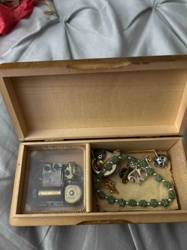
Upon examining the provided images and details of this musical jewelry box, I assess it to be a mid-20th century decorative piece, likely manufactured in Japan for the American export market, as indicated by the 'Quality Imports Japan' information. The style is a Rococo or 'Cavalier' revival, featuring a distressed white and gilt finish over a wood or composite base. The decoupage panels depict Fête galante scenes, a popular decorative motif during that period. The condition appears fair to good, with the distressing being an intentional part of its 'shabby-chic' aesthetic rather than damage. However, the functionality of the musical component is a critical, yet unknown, factor influencing its value. Market analysis of similar Japanese-made musical jewelry boxes from the 1950s-1970s shows a modest but consistent collector interest. These items are not considered rare and were mass-produced. Comparable examples in working condition typically sell in online marketplaces and at local antique shops in the $25 to $60 range. The value is driven primarily by nostalgia and decorative appeal rather than intrinsic material worth or rarity. Higher values are reserved for items with demonstrable provenance, intricate mechanics, or those made by renowned manufacturers like Sankyo, if marked. This appraisal is limited as it is based solely on images. A full authentication would require physical inspection to confirm the material composition, assess the condition of the musical movement (and identify the tune), and search for any hidden maker's marks. Without this direct examination, I cannot fully verify the manufacturer or the operational status of the music box, which are key determinants of its final value.

Keep exploring

More decorative arts/music box appraisals

Get your items appraised

Instant AI-powered appraisal estimates from a photo

Browse More Appraisals