These notes were written by the person who submitted this item. Appraiser.AI has not verified them, and the AI's identification and estimate may rely on them.
AI Estimated Value
Not an official valuation
$600-900
AI estimate as of October 2, 2025 · verify with a professional before acting
AI-Generated · Verify before acting
Everything on this page is generated by AI for informational purposes only. AI can make mistakes — the AI may misidentify items or misattribute them (artist, maker, brand, designer, origin, era). This is not an official valuation and should not be used for insurance, sale, tax, estate, legal, or lending purposes — or any decision requiring a certified appraisal. It is not an authoritative claim about any person, brand, or rights holder — do not share or rely on it as a factual statement about a third party. Always consult qualified professionals before making financial decisions.
This analysis also relies on unverified notes provided by the user, which may be incomplete or inaccurate and could affect the result.
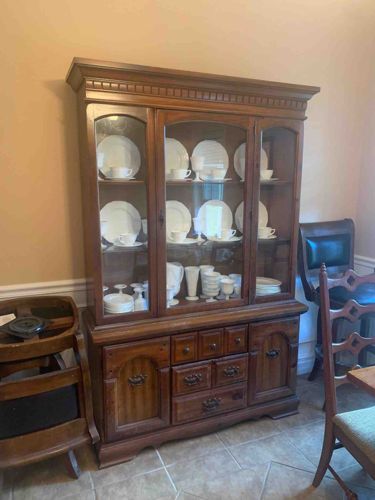
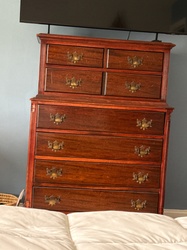
This is a traditional-style china cabinet or hutch, likely constructed from a medium to dark-stained hardwood, possibly oak or maple, given its grain and color. The piece is composed of two main sections: an upper display cabinet with glass doors and a lower buffet base with drawers and solid wooden doors. The overall color is a warm, rich brown. The upper section features three arched glass-paned doors that reveal multiple shelves, currently displaying a 12-place setting of white porcelain or milk glass dinnerware, including dinner plates, cups, and saucers, as well as various serving pieces like vases and bowls. The top of the hutch is crowned with a substantial pediment featuring carved dentil molding or a similar decorative trim, adding to its formal aesthetic. The lower buffet section has a series of drawers in the center, arranged in two columns of two smaller drawers above a single wider drawer, all adorned with ornate, possibly brass or dark metal, pull handles. Flanking these drawers are two larger cabinet doors, each with an arched panel design and matching ornate pull handles. The base of the unit has a simple, carved footed design. The piece appears to be in good, well-maintained condition with a consistent finish, suggesting careful ownership. There are no obvious signs of significant damage, deep scratches, or repairs visible in the provided images. The style indicates a piece from the mid-20th century to late 20th century, leaning towards a Colonial Revival or Traditional American aesthetic, emphasizing craftsmanship and classic design. The substantial build and decorative elements suggest a good quality piece of furniture designed for displaying fine dinnerware.
AI Appraisal Report
Having carefully examined the provided image and description, I assess this Traditional Wooden China Cabinet/Hutch to be in good, well-maintained condition. The consistent finish, lack of visible deep scratches, and intact decorative elements suggest careful ownership. Authenticity, based purely on visual inspection, points to a mid to late 20th-century American traditional or Colonial Revival piece, likely constructed from a hardwood such as oak or maple. The substantial build and ornate details, including the pediment with dentil molding and decorative hardware, indicate a good quality, mass-produced furniture item rather than a custom-built or antique heirloom.
Market conditions for such traditional china cabinets are currently moderate. While there's a steady demand for functional and aesthetically pleasing dining room pieces, the market isn't experiencing rapid appreciation for this style. Comparables for similar well-kept, mass-produced hardwood china cabinets from the same era typically range from $400 to $1,000, depending on regional market nuances, brand recognition (if any), and specific condition. The inclusion of a 12-place setting of vintage milk glass dinnerware (Colony pattern, as per the owner's details) adds some value, which I've factored into this appraisal. The milk glass itself could retail for $150-250 for a full place setting and serving pieces.
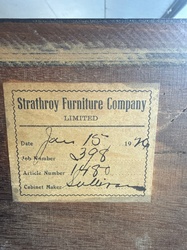
Factors impacting value include the solid wood construction, good condition, and classic design which appeals to a segment of buyers. However, without in-person examination, I cannot definitively ascertain the wood type, construction methods (e.g., solid wood vs. veneer, dovetail joints), or the presence of any maker's marks or labels that could influence authenticity and value. A physical inspection would also confirm if there are any hidden issues, structural weaknesses, or repairs not visible in the image. Provenance documentation could further clarify its history and manufacturing origin.