AI estimate as of July 30, 2025 · verify with a professional before acting
AI-Generated · Verify before acting
Everything on this page is generated by AI for informational purposes only. AI can make mistakes — the AI may misidentify items or misattribute them (artist, maker, brand, designer, origin, era). This is not an official valuation and should not be used for insurance, sale, tax, estate, legal, or lending purposes — or any decision requiring a certified appraisal. It is not an authoritative claim about any person, brand, or rights holder — do not share or rely on it as a factual statement about a third party. Always consult qualified professionals before making financial decisions.
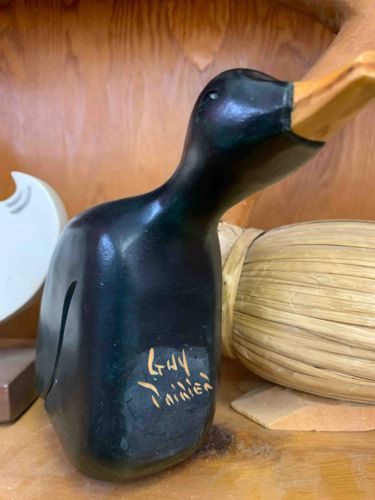
This item is a hand-carved wooden duck, likely a decorative decoy or collectible sculpture. Its physical characteristics include a sleek, minimalist form, predominantly black in color with a subtle sheen that suggests a polished or lacquered finish, possibly iridescent in certain lighting, particularly on the head and neck. The duck features a distinct, natural wood-toned bill, a contrasting yellow-orange that is unpainted, highlighting the natural grain of the wood. The eyes are small, white dots, providing a simple yet expressive touch. The construction appears solid and well-executed, with smooth, flowing lines indicating skilled craftsmanship.
One of the most notable features is a signature on the side of the duck, rendered in a lighter, possibly gold or yellow, script that reads "GUY" on the upper line and "PAINÉE" (or a similar spelling) on the lower line. This signature is a key identifying mark, indicating the artist or carver. The overall condition appears very good, with no overt signs of significant damage such as chips, cracks, or repairs. There may be minor surface wear consistent with age or gentle handling, but no prominent issues are visible. The style suggests a more contemporary or modern folk art approach, deviating from highly realistic traditional decoys, focusing instead on elegant form and simple coloration. The visible wood grain on the bill and the overall smooth finish speak to good quality materials and attention to detail in its creation. Its estimated age is difficult to determine precisely without further context, but it appears to be a mid to late 20th-century or early 21st-century piece based on the artistic style.
AI Appraisal Report
Upon visual examination of the provided images, this hand-carved wooden duck is identified as a work by the Quebec artist Guy Painée. The piece exhibits the artist's characteristic sleek, minimalist style, a departure from traditional, highly detailed decoys. The signature, rendered in paint script as 'GUY' over 'PAINÉE', appears consistent with known examples of his work. The overall condition is judged to be very good to excellent, with a smooth, polished black finish and a natural wood-grain bill. There are no visible chips, cracks, or repairs, suggesting it has been well-maintained. The primary value driver for this piece is the artist's reputation. Guy Painée is a recognized and collected artist in the North American folk art and decoy carving community. Market comparables for signed Painée ducks of this style and condition typically sell at auction and in galleries in the range of $150 to $400, depending on size, artistic complexity, and venue. Demand for his work is steady among collectors of modern folk art. The minimalist aesthetic also gives it broader decorative appeal, which can positively influence value. However, this appraisal is limited by the inability to conduct an in-person examination. Final authentication would require physical inspection to confirm the signature's authenticity, examine the surface for any hidden restorations under UV light, and verify the wood and finishing materials used. While the piece appears authentic based on its stylistic and signatory markers, a definitive confirmation cannot be made from images alone.