AI Appraisal Estimate

AI-generated estimates · not official valuations

From the user

What was submitted

Photo and notes provided by the user — not generated by AI

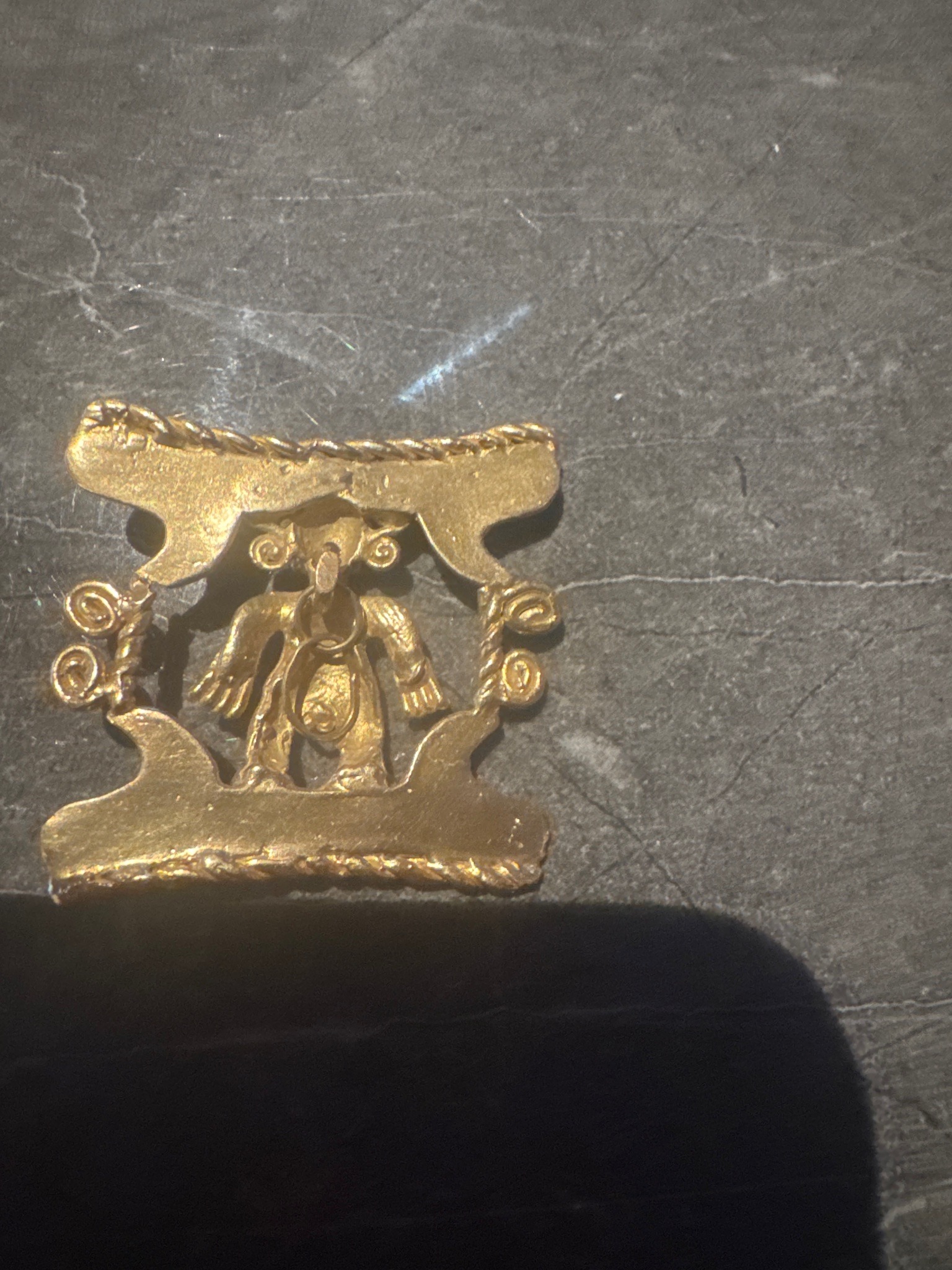
Submitted item photo
Submitted photo · June 3, 2026

User's notes

No additional notes provided.

AI analysis below

AI appraisal

AI analysis & estimate

AI-Generated · Verify before acting

Everything below is generated by AI for informational purposes only. AI can make mistakes — the AI may misidentify items or misattribute them (artist, maker, brand, designer, origin, era). This is not an official valuation and should not be used for insurance, sale, tax, estate, legal, or lending purposes — or any decision requiring a certified appraisal. It is not an authoritative claim about any person, brand, or rights holder — do not share or rely on it as a factual statement about a third party. Always consult qualified professionals before making financial decisions.

Read the full disclaimer

AI Identification

·Not independently authenticated·Verify before acting

Tumbaga-Style Pre-Columbian Figural Pendant

Ethnographic Jewelry / Artifacts

AI Estimated Value

·Not an official valuation·Verify before acting

$400 - $600

As of June 3, 2026

AI Item Analysis

·AI can make mistakes·Verify before acting
This item is a decorative yellow-gold-toned pendant, measuring approximately 1.5 to 2 inches in width, crafted in a style reminiscent of Pre-Columbian goldsmithing from Central or South America (such as the Diquis or Malagana cultures). The piece features a central anthropomorphic figure with stylized bird-like or simian features, characterized by large spiral ears or headdress elements and outstretched hands. The figure is enclosed within a rectangular frame defined by top and bottom flat bars with braided 'rope' borders. Flanking the central figure are symmetrical wirework spirals. A distinctive ring is suspended from the figure's nose or mouth area, suggesting a labret or nose ornament. The material appears to be either a high-karat gold wash or a tumbaga alloy (gold and copper), displaying a rich, slightly matte yellow luster. The construction shows signs of lost-wax casting, indicated by the integrated decorative spirals and textured surfaces. Condition-wise, the item exhibits minor surface abrasions, soft edge wear, and a gentle patina consistent with a 20th-century reproduction or a well-preserved ethnographic artifact. There are no visible maker's marks or hallmarks on the front surface.
AI Appraisal Report

·AI can make mistakes·Verify before acting
Upon visual examination of this tumbaga-style pendant, I have assessed the piece as a high-quality 20th-century boutique reproduction or 'Grand Tour' style souvenir, likely inspired by the Diquis or Veraguas cultures of the Greater Chiriqui region. The item exhibits classic iconography, including the characteristic spiral ear ornaments and the distinctive suspended nose ring (labret). Technically, the piece demonstrates lost-wax casting. However, the uniformity of the 'rope' borders and the surface texture suggest modern refining processes rather than the irregular porosity often found in ancient Pre-Columbian artifacts. The patina appears consistent with a gold-washed copper alloy (tumbaga) that has been chemically aged or gently worn through 20th-century handling, rather than the deep, localized mineralization expected from centuries of burial. The market for authentic Pre-Columbian gold is highly regulated and requires impeccable provenance; such pieces can fetch tens of thousands. In contrast, high-end ethnographic reproductions have a steady decorative market, with comparable pieces from firms like Galeria Cano selling in the mid-hundreds. The value is driven by the aesthetic appeal and the craftsmanship of the casting. IMPORTANT LIMITATIONS: This appraisal is based strictly on visual digital evidence. Definitive authentication is impossible without physical inspection. To confirm age and origin, I would require: 1) X-ray Fluorescence (XRF) spectroscopy to determine metal composition and trace elements; 2) Microscopic examination of surface wear patterns; and 3) Documentation of provenance prior to the 1970 UNESCO Convention. Without these, the piece must be valued as a decorative reproduction.

Get your items appraised

Instant estimates of your treasures with AI-powered appraisals

Browse More Appraisals