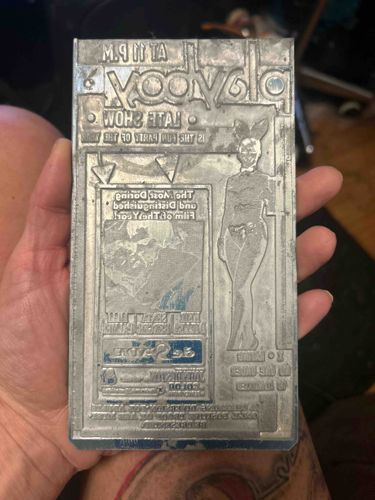
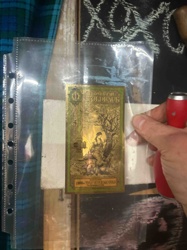
1969 Playboy Magazine Print Press Plate advertisement of 1969 film de Sade
These notes were written by the person who submitted this item. Appraiser.AI has not verified them, and the AI's identification and estimate may rely on them.
AI Estimated Value
Not an official valuation
$400-700
AI estimate as of August 13, 2025 · verify with a professional before acting
AI-Generated · Verify before acting
Everything on this page is generated by AI for informational purposes only. AI can make mistakes — the AI may misidentify items or misattribute them (artist, maker, brand, designer, origin, era). This is not an official valuation and should not be used for insurance, sale, tax, estate, legal, or lending purposes — or any decision requiring a certified appraisal. It is not an authoritative claim about any person, brand, or rights holder — do not share or rely on it as a factual statement about a third party. Always consult qualified professionals before making financial decisions.
This analysis also relies on unverified notes provided by the user, which may be incomplete or inaccurate and could affect the result.
This item is a historical printing plate, likely made of a lead or lead alloy, given its age and typical materials used in letterpress printing. It is rectangular in shape and appears to be approximately 6-8 inches in height, based on the size relative to the hand holding it. The plate is a reverse image (negative relief) of an advertisement, intended for letterpress printing, which means the raised areas will transfer the ink onto paper.
The primary content of the advertisement is for the 1969 film 'de Sade,' as indicated by the context provided. The most prominent visual element is a depiction of the iconic Playboy Bunny, confirming its use as an advertisement for Playboy Magazine. The text, being in reverse, includes phrases such as 'AT 9 P.M.' and 'LATE SHOW,' and 'IS THE PARTY OF THE...'. There's also text related to the film 'de Sade,' including what appears to be a release date or price point '2.50'.
The plate exhibits a silvery-gray metallic sheen, typical of lead or zinc printing plates. There are visible signs of use and age, including some smudges or residue, possibly of old ink, and minor scratches or scuffs on the surface. A notable characteristic is the presence of pale blue markings, particularly around the '2.50' section, which might indicate color registration marks or specific instructions for the printing process that utilized a blue ink, or perhaps a chemical reaction to the plate's surface. The craftsmanship appears to be robust, designed for repeated use in a printing press. The details of the Playboy Bunny and the typography are well-defined, indicating a professional-grade engraving or etching process. There are no discernible maker's marks or signatures visible in the provided images, which is common for production printing plates.
AI Appraisal Report
Upon examining the provided image of the 1969 Playboy Magazine Print Press Plate for the 'de Sade' film advertisement, I assess its condition as good vintage. The plate exhibits typical signs of age and industrial use, including minor surface wear, smudges, and potential ink residue, which are expected for an item of this nature and age. The presence of pale blue markings could be related to color registration or production annotations, further enhancing its authenticity as a working press plate. The reverse-image typography and the clear depiction of the Playboy Bunny are consistent with letterpress printing plates of the era.
Authenticity, based solely on visual examination, appears high. However, definitive authentication would require a hands-on examination to confirm material composition (lead or lead alloy), assess the depth and quality of the engraving/etching, and look for any hidden maker's marks. Furthermore, provenance documentation linking the plate to Playboy Enterprises or the 'de Sade' production would significantly bolster its authenticity and value. Scientific testing, such as material analysis, could also confirm its age and composition.
Regarding market conditions, historical printing plates, especially those associated with iconic brands like Playboy, hold niche but steady demand among collectors of printing history, advertising ephemera, and pop culture memorabilia. Comparables are scarce due to the unique nature of individual printing plates; however, similar historical printing blocks or advertising plates from well-known brands tend to fetch values in the mid-hundreds. The specific Playboy connection, combined with the film advertisement, adds a layer of desirability and rarity.
Factors impacting value include its verifiable authenticity, rarity as a one-of-a-kind production piece, its excellent condition for its age and purpose, and the enduring appeal of the Playboy brand. The 'de Sade' film aspect adds a specific historical context. Without physical inspection and robust provenance, these limitations inherently cap the top-end valuation.
My valuation is based on its visual attributes and historical context, acknowledging the inherent limitations of a remote appraisal.