AI Appraisal Estimate

AI-generated estimates · not official valuations

From the user

What was submitted

Photo and notes provided by the user — not generated by AI

Submitted item photo
Submitted photo · June 8, 2026

User's notes

Unknown artist, untitled artwork

AI analysis below

AI appraisal

AI analysis & estimate

AI-Generated · Verify before acting

Everything below is generated by AI for informational purposes only. AI can make mistakes — the AI may misidentify items or misattribute them (artist, maker, brand, designer, origin, era). This is not an official valuation and should not be used for insurance, sale, tax, estate, legal, or lending purposes — or any decision requiring a certified appraisal. It is not an authoritative claim about any person, brand, or rights holder — do not share or rely on it as a factual statement about a third party. Always consult qualified professionals before making financial decisions.

Note

This analysis also relies on unverified notes provided by the user, which may be incomplete or inaccurate and could affect the result.

Read the full disclaimer

AI Identification

·Not independently authenticated·Verify before acting

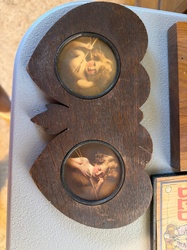
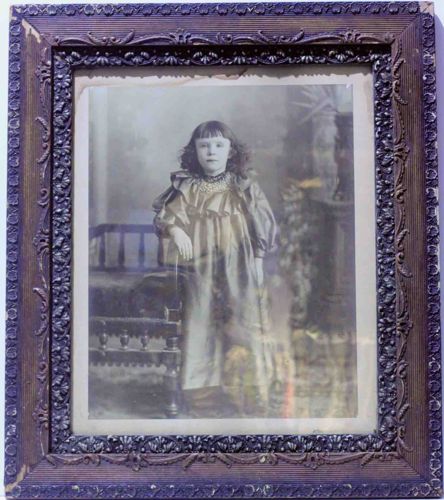
Framed Victorian Era Child Portrait Photograph

Vintage Photography and Antique Frames

AI Estimated Value

·Not an official valuation·Verify before acting

$125.00 - $225.00

As of June 8, 2026

AI Item Analysis

·AI can make mistakes·Verify before acting
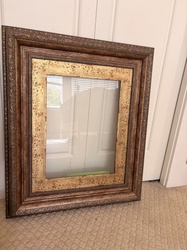
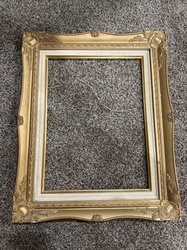
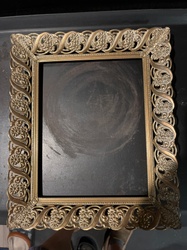
This is a late Victorian or Edwardian era portrait photograph of a young child, likely a girl, housed in an ornate period wood and gesso frame. The photograph appears to be a hand-colored or tinted silver gelatin print or charcoal enlargement, common between 1890 and 1910. The child is dressed in formal period attire, specifically a full-length, wide-sleeved dress with dark ruffles around the collar. The child is posed next to a wooden settee or bench. The frame is a standout feature, exhibiting a complex Victorian design with a reeded outer border, a wide scrolling acanthus leaf and floral fillet, and a dark, possibly ebonized or dark walnut finish. The construction of the frame indicates late 19th-century mass production where molded gesso (plaster) was applied to a wood base to simulate expensive carvings. Regarding condition, the item shows significant signs of age. The frame has visible losses to the gesso ornamentation, particularly at the corners and along the edges, revealing the light-colored plaster underneath the dark finish. The photograph itself shows 'silvering' or mirror-like oxidation common in old silver-based prints, along with some fading and yellowing of the paper base. There is also evidence of moisture staining or foxing along the upper edge of the image where it meets the frame. Despite these condition issues, the piece retains its historical integrity and captures the somber, formal aesthetic of turn-of-the-century studio photography.
AI Appraisal Report

·AI can make mistakes·Verify before acting
I have conducted a visual examination of this framed Victorian-era portrait. The piece is characteristic of the late 19th-century 'charcoal enlargement' or tinted silver gelatin process. The ornate frame (wood with molded gesso) is consistent with mass-produced Victorian styles from 1890–1910. The child’s formal attire and somber studio setting are typical of this period. My assessment confirms the item's age, though condition issues significantly impact its secondary market value. I observed visible gesso losses on the frame and silvering/foxing on the photograph, which indicate environmental exposure and natural oxidation. In the current antique market, such anonymous portraits are highly decorative but lack the premium associated with identified subjects or known photographers. Comparable sales for damaged gesso-framed enlargements typically fall between $100 and $250. The value resides more in the frame's aesthetic than the photograph itself. Limitations of this image-based appraisal include the inability to inspect the back for original labels or verify the exact print medium. A physical inspection would be required to determine if the staining is surface-level or has compromised the paper fibers. Full authentication would necessitate removing the backing to check for studio stamps or dates, and provenance documentation (family records) would be required to identify the subject, which could marginally increase the value to collectors of regional history.

Get your items appraised

Instant estimates of your treasures with AI-powered appraisals

Browse More Appraisals