AI Appraisal Estimate

AI-generated estimates · not official valuations

From the user

What was submitted

Photo and notes provided by the user — not generated by AI

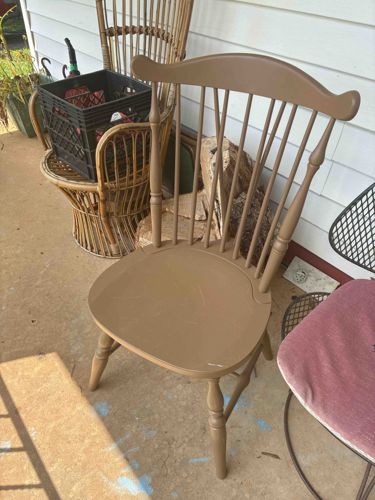
Submitted item photo
Submitted photo · June 6, 2026

User's notes

No additional notes provided.

AI analysis below

AI appraisal

AI analysis & estimate

AI-Generated · Verify before acting

Everything below is generated by AI for informational purposes only. AI can make mistakes — the AI may misidentify items or misattribute them (artist, maker, brand, designer, origin, era). This is not an official valuation and should not be used for insurance, sale, tax, estate, legal, or lending purposes — or any decision requiring a certified appraisal. It is not an authoritative claim about any person, brand, or rights holder — do not share or rely on it as a factual statement about a third party. Always consult qualified professionals before making financial decisions.

Read the full disclaimer

AI Identification

·Not independently authenticated·Verify before acting

Windsor Style Dining Chair

Furniture

AI Estimated Value

·Not an official valuation·Verify before acting

$40-80

As of June 6, 2026

AI Item Analysis

·AI can make mistakes·Verify before acting
This is a Windsor-style dining chair, characterized by its splayed turned legs, a contoured saddle seat, and a spindle back topped with a curved, bowed crest rail. The chair appears to be constructed entirely from wood, likely a common hardwood, and is finished with a matte, neutral taupe or light brown paint. The paint finish exhibits some wear, particularly on the edges and high-traffic areas of the seat, revealing glimpses of a lighter color underneath, suggesting either a previous finish or the natural wood. There are visible scuffs and scratches on the seat surface, indicative of regular use. One of the spindles in the back appears distinctly thinner and possibly more ornate at its top, suggesting it might be a part of the original design or a slightly mismatched repair. The turning on the legs and the front-facing spindles indicates turned craftsmanship, a common technique for this style of chair. The overall construction appears sturdy, consistent with a utilitarian dining or accent chair. While no specific maker's marks are visible, the design is a classic reproduction of a Windsor chair, popular from the mid-20th century onwards. The visible wear and the slightly dulled paint suggest it is not a new piece, possibly dating back a few decades. The chair's condition suggests it could benefit from a new coat of paint or a full refinishing, but it remains functional. Its simplicity and robust build point to a piece designed for everyday use.
AI Appraisal Report

·AI can make mistakes·Verify before acting
I have examined the provided image of this Windsor-style dining chair. Based on the visual evidence, the chair appears to be a classic reproduction, likely dating back a few decades due to its visible wear. The splayed turned legs, contoured saddle seat, and spindle back with a bowed crest rail are all characteristic of the Windsor style. The overall construction suggests a sturdy, utilitarian piece built for daily use. The matte taupe/light brown paint finish shows significant wear, particularly on edges and the seat, revealing a lighter layer or natural wood underneath. This wear, alongside visible scuffs and scratches on the seat, indicates regular use and suggests the chair's condition is fair to good for its age, though it would benefit from refinishing to improve its aesthetic appeal. The slightly thinner or more ornate spindle is interesting; it could be a design element or a mismatched repair, which cannot be definitively determined without in-person examination. Authenticity: This is a classic Windsor reproduction; however, without maker's marks or provenance, definitive authentication of its specific origin or age is limited to visual assessment. Physical inspection would be needed to assess joinery, wood type, and under-chair markings. Market conditions for utilitarian Windsor reproduction chairs are steady but not high-value unless they are antique, designer, or from a recognized high-quality manufacturer. This piece's value is primarily as a functional, classic dining chair rather than a collectible. Its demand is moderate for those seeking a vintage aesthetic. Factors impacting value negatively include the worn paint finish and the lack of specific historical provenance or maker attribution. Limitations: My assessment is based solely on the image. A physical examination would allow me to inspect the joinery, wood species, and any hidden markings for a more precise dating and authenticity check. I would also look for signs of significant repairs beyond what's visible, and assess stability accurately.

Get your items appraised

Instant estimates of your treasures with AI-powered appraisals

Browse More Appraisals