Paleolithic Multifunctional Chert Point Scraper
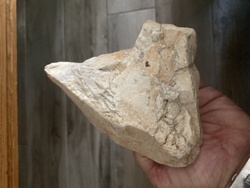
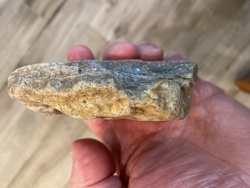
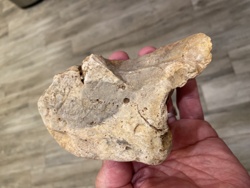
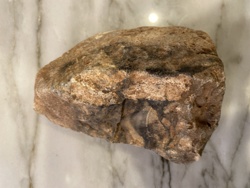
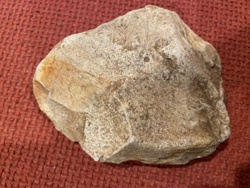
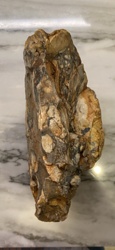
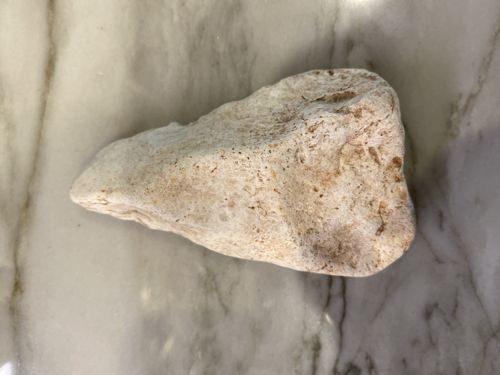
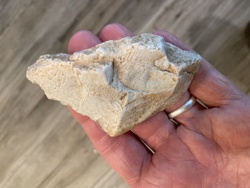
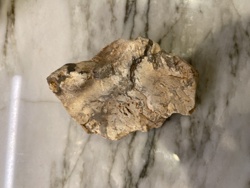
This is a Lithic tool crafted from chert, a sedimentary cryptocrystalline rock. The object measures approximately 4 inches in length by 2.75 inches at its widest point. It exhibits a triangular, almond-like shape tapering to a dull point. The color profile consists of off-white and cream tones with reddish-brown earth staining or patina embedded in the surface texture. Physical characteristics include a bulbous proximal end suited for a hand-grip, and a more refined distal end used for scraping or piercing. The surface shows evidence of percussion flaking, though the edges appear significantly weathered and smoothed by environmental exposure and geological processes. No distinct modern maker's marks are present, which is consistent with prehistoric stone tools. The overall condition reflects substantial antiquity, with heavy calcification and a dull luster indicating it has been subjected to significant soil chemistry or water action over millennia. The lack of sharp, crisp edges suggests it may have functioned as a heavy-duty scraper rather than a fine cutting blade. From an appraisal perspective, its value is tied to its provenance in Guthrie, Oklahoma, and its status as a representative example of early human stone technology, demonstrating basic ergonomic considerations and material selection skills from the Paleolithic period.
AI-Generated Appraisal Disclaimer
Estimated Value
$40–$80
Basic Information
Category
Archaeological Artifacts / Prehistoric Stone Tools
Appraised On
February 25, 2026
Estimated Value
$40–$80
Additional Details Provided By Owner
User Provided Information
Paleolithic chert point scraper multi tool found in Guthrie OK measuring 4" x 2.75"
Item Description
This is a Lithic tool crafted from chert, a sedimentary cryptocrystalline rock. The object measures approximately 4 inches in length by 2.75 inches at its widest point. It exhibits a triangular, almond-like shape tapering to a dull point. The color profile consists of off-white and cream tones with reddish-brown earth staining or patina embedded in the surface texture. Physical characteristics include a bulbous proximal end suited for a hand-grip, and a more refined distal end used for scraping or piercing. The surface shows evidence of percussion flaking, though the edges appear significantly weathered and smoothed by environmental exposure and geological processes. No distinct modern maker's marks are present, which is consistent with prehistoric stone tools. The overall condition reflects substantial antiquity, with heavy calcification and a dull luster indicating it has been subjected to significant soil chemistry or water action over millennia. The lack of sharp, crisp edges suggests it may have functioned as a heavy-duty scraper rather than a fine cutting blade. From an appraisal perspective, its value is tied to its provenance in Guthrie, Oklahoma, and its status as a representative example of early human stone technology, demonstrating basic ergonomic considerations and material selection skills from the Paleolithic period.
Get Your Items Appraised
Instant estimates of your treasures with AI-powered instant appraisals