These notes were written by the person who submitted this item. Appraiser.AI has not verified them, and the AI's identification and estimate may rely on them.
AI Estimated Value
Not an official valuation
$75 - $125
AI estimate as of September 25, 2025 · verify with a professional before acting
AI-Generated · Verify before acting
Everything on this page is generated by AI for informational purposes only. AI can make mistakes — the AI may misidentify items or misattribute them (artist, maker, brand, designer, origin, era). This is not an official valuation and should not be used for insurance, sale, tax, estate, legal, or lending purposes — or any decision requiring a certified appraisal. It is not an authoritative claim about any person, brand, or rights holder — do not share or rely on it as a factual statement about a third party. Always consult qualified professionals before making financial decisions.
This analysis also relies on unverified notes provided by the user, which may be incomplete or inaccurate and could affect the result.
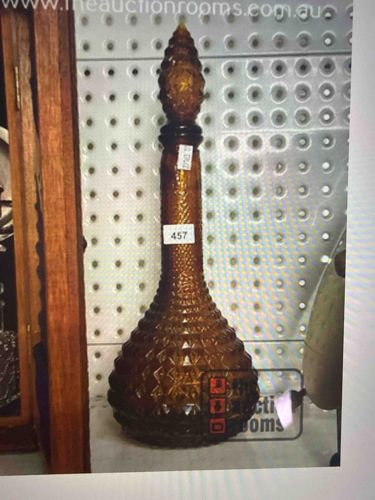
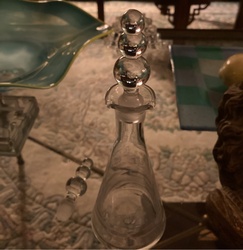
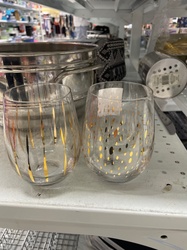
This item is an amber-colored glass genie bottle, likely functioning as a decanter, complete with its original stopper. The bottle features a distinctive onion or gourd-like shape for its body, tapering gracefully into a long, slender neck. The entire surface of both the bottle's body and its ornate stopper is adorned with a highly textured, diamond-faceted or hobnail pattern, which refracts light and adds visual depth. The glass exhibits a rich, translucent amber hue, which suggests it is depression-era glass or from a similar manufacturing period. The stopper is elaborate, mimicking the same textured pattern as the bottle and culminating in a point or finial at its apex. A dark ring, possibly made of cork, plastic, or a different glass, is visible at the base of the stopper where it meets the bottle's neck, intended to create a seal. The overall construction suggests it was molded glass, with the intricate pattern achieved during the manufacturing process. There are no obvious chips, cracks, or repairs visible from the provided image, though detailed inspection would be required to confirm overall condition. The bottle appears to be in good vintage condition, with some light surface dust or reflections potentially visible. The presence of an auction tag (labeled '457') indicates it is or was part of an auction lot. The style suggests an estimated age from the mid-20th century, possibly 1960s to 1970s, a period when such distinctive decanters were popular decorative items.
AI Appraisal Report
Upon examining the image of this amber glass genie bottle decanter, I observe a charming piece of decorative glassware. The onion-shaped body tapering to a slender neck, coupled with the elaborate stopper and textured diamond-faceted pattern, is characteristic of popular designs from the mid-20th century, likely the 1960s or 1970s. The rich, translucent amber hue is attractive and sought after by collectors of vintage glassware.
Visually, the bottle appears to be in good vintage condition. I don't see any obvious chips, cracks, or repairs, which is a positive factor. The presence of the original stopper, complete with what appears to be an intact seal (the dark ring), adds to its completeness and value. The '457' auction tag indicates it has been through a marketplace, suggesting it's been handled and assessed previously. This type of molded glass decanter often shows slight variations or mold lines, which are considered part of its manufacturing process rather than flaws.
In terms of market conditions, genie bottles of this style, particularly in good condition and sought-after colors like amber, maintain a steady demand among collectors of MCM (Mid-Century Modern) decor and vintage glassware enthusiasts. They are not exceedingly rare, and many variations exist. Comparable sales for similar amber, textured genie bottles with stoppers in good condition typically fall within the $75 to $125 range. Factors impacting value include the absence of damage, the complete original stopper, and the desirable amber color.
Limitations in authenticity verification exist solely from an image. While the style and condition appear consistent with genuine vintage glassware, a physical inspection would be crucial to definitively confirm the absence of any subtle repairs, interior hazing, or significant scratches not visible in the photo. Furthermore, handling the piece would allow for an assessment of its weight, the quality of the glass, and whether the stopper creates a proper seal. Provenance documentation, though not typically extensive for these decorative items, could provide additional historical context, but is not essential for this appraisal. Without direct physical examination, I cannot 100% guarantee the item's condition or material composition, but based on the visual evidence, it presents as a good vintage piece.