Japanese Imari Porcelain Scalloped Plate
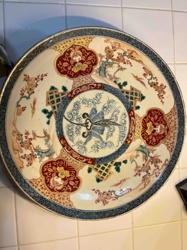
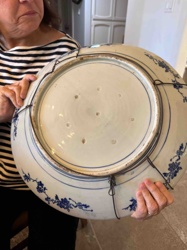
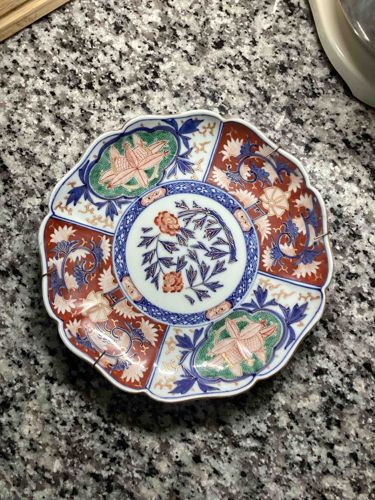
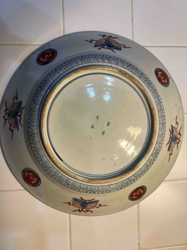
This is a Japanese Imari porcelain plate, likely dating from the Meiji period (late 19th to early 20th century). The piece features the classic Imari palette of underglaze cobalt blue combined with overglaze iron red, green, and gold gilding. The plate is designed with a scalloped, foliate rim and is divided into several decorative radiating panels containing floral motifs, scrolls, and stylized landscapes. The central medallion (roundel) depicts a floral spray with peony blossoms in red and blue. A significant and historically interesting condition issue is present: the plate has several 'staple repairs.' These are small metal cleats drilled into the ceramic to hold major cracks together, a traditional repair method used before modern adhesives. This indicates the piece was highly valued by a previous owner. Despite these repairs and some visible surface wear to the gold gilding and overglaze enamels, the colors remains vibrant. The underside likely contains an unglazed foot ring and potentially a mark, though not visible here. The craftsmanship is typical of Arita-ware production intended for both domestic use and export.
AI-Generated Appraisal Disclaimer
Estimated Value
$150 - $250
Basic Information
Category
Antique Asian Ceramics
Appraised On
February 27, 2026
Estimated Value
$150 - $250
Item Description
This is a Japanese Imari porcelain plate, likely dating from the Meiji period (late 19th to early 20th century). The piece features the classic Imari palette of underglaze cobalt blue combined with overglaze iron red, green, and gold gilding. The plate is designed with a scalloped, foliate rim and is divided into several decorative radiating panels containing floral motifs, scrolls, and stylized landscapes. The central medallion (roundel) depicts a floral spray with peony blossoms in red and blue. A significant and historically interesting condition issue is present: the plate has several 'staple repairs.' These are small metal cleats drilled into the ceramic to hold major cracks together, a traditional repair method used before modern adhesives. This indicates the piece was highly valued by a previous owner. Despite these repairs and some visible surface wear to the gold gilding and overglaze enamels, the colors remains vibrant. The underside likely contains an unglazed foot ring and potentially a mark, though not visible here. The craftsmanship is typical of Arita-ware production intended for both domestic use and export.
Related Tags
Explore similar items and categories:
Get Your Items Appraised
Instant estimates of your treasures with AI-powered instant appraisals