AI estimate as of October 10, 2025 · verify with a professional before acting
AI-Generated · Verify before acting
Everything on this page is generated by AI for informational purposes only. AI can make mistakes — the AI may misidentify items or misattribute them (artist, maker, brand, designer, origin, era). This is not an official valuation and should not be used for insurance, sale, tax, estate, legal, or lending purposes — or any decision requiring a certified appraisal. It is not an authoritative claim about any person, brand, or rights holder — do not share or rely on it as a factual statement about a third party. Always consult qualified professionals before making financial decisions.
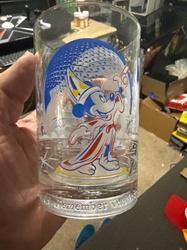
This item is a squat, cylindrical drinking glass, likely intended as a rocks glass or an old-fashioned glass due to its broad, low profile. It is constructed from a clear glass material that exhibits a subtle aqua or light blue tint, particularly noticeable in the thicker sections at the base and rim. The upper body of the glass is relatively thin and features a smooth, unadorned surface. The defining characteristic is its heavily textured and layered base. This base appears to be molded with several horizontal ridges or rings, creating a tactile and visually interesting effect. The very bottom of the glass also shows irregular, organic textures, suggesting it might be made from recycled glass or designed to mimic a rustic, hand-blown aesthetic. There are no visible maker's marks, signatures, or stamps evident in the provided images. The overall visible condition appears good, with no obvious chips, cracks, or significant scuffs, although typical minor wear consistent with use (e.g., faint surface scratches or watermarks) cannot be entirely ruled out without closer inspection. The slight blue hue and textured base suggest a contemporary or possibly mid-20th century 'recycled glass' aesthetic, aiming for a casual yet stylish look. The craftsmanship appears to be commercial grade, possibly mass-produced, indicated by the uniformity of the ridges and general form, though the 'organic' texture at the very base adds a touch of individuality.
AI Appraisal Report
I have examined the provided image of this Aqua-Tinted Glass Tumbler. Based on this visual inspection, the item appears to be in good overall condition, showing no obvious chips, cracks, or significant scuffs. The subtle aqua tint and the heavily textured, layered base are its most distinctive features, suggesting a design aesthetic that mimics recycled or hand-blown glass, aiming for a casual yet stylish appeal. The visible craftsmanship, particularly the uniform ridges and general form, indicates commercial-grade production, likely mass-produced, despite the 'organic' texture at the very bottom. There are no visible maker's marks or signatures, which is common for contemporary mass-produced glassware.
Authenticity, in this context, refers to whether it is a genuine example of its apparent design. Without manufacturer's marks or provenance, it's difficult to attribute to a specific designer or brand. The design elements suggest a modern piece, likely manufactured in the last 20-30 years.
Market conditions for this type of casual drinking glass are generally stable but with low values. Comparables would include similar styled glassware from home goods stores, online retailers, or even discount stores. Demand for such items is consistent but not high-end; they are functional household items. Rarity is not a factor here, as the piece appears to be mass-produced.
Factors significantly impacting value are primarily its functionality and aesthetic appeal within its market segment. Its current value is largely driven by its utility as a rocks or old-fashioned glass with a pleasant, contemporary design. As such, I would place the appraisal value for a single tumbler in this condition at approximately $5-15.
It is crucial to note the limitations of this appraisal: full authentication and a more precise condition assessment cannot be definitively determined from images alone. A physical in-person examination would be required to verify tactile textures, assess subtle surface wear (like faint scratches or watermarks), and check for any internal flaws or imperfections not visible in the provided image. Provenance documentation (e.g., original purchase receipts, manufacturer information) would also be helpful, though unlikely for an item of this type and value, to confirm its exact origin and manufacturing details.