AI estimate as of August 27, 2025 · verify with a professional before acting
AI-Generated · Verify before acting
Everything on this page is generated by AI for informational purposes only. AI can make mistakes — the AI may misidentify items or misattribute them (artist, maker, brand, designer, origin, era). This is not an official valuation and should not be used for insurance, sale, tax, estate, legal, or lending purposes — or any decision requiring a certified appraisal. It is not an authoritative claim about any person, brand, or rights holder — do not share or rely on it as a factual statement about a third party. Always consult qualified professionals before making financial decisions.
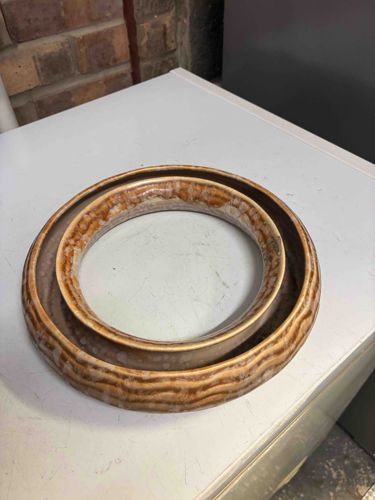
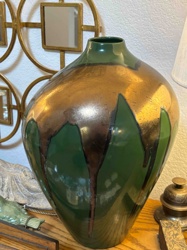
This item is a circular ceramic planter or flower ring, designed to hold a plant pot in its center well, or potentially to be used as a centerpiece itself. It measures approximately 10-12 inches in outer diameter, composed of a heavier ceramic material, possibly stoneware or earthenware, given its slightly coarse appearance. The color palette is earthy, featuring a base of light brown or beige, overlaid with striking, undulating bands of darker brown, resembling wood grain or natural strata. This striation effect is consistent across the visible surfaces, including the inner and outer rims and the central well. The glaze appears semi-glossy, showing some variations in sheen that may indicate areas of wear or intentional artistry. There are no obvious chips, cracks, or repairs, though some lighter, possibly calcified or discolored spots are visible on the inner ring, suggesting prior use with water or plants. The overall craftsmanship appears robust, with no visible maker's marks or signatures in the provided image. The design suggests a mid-20th century to contemporary aesthetic, often associated with naturalistic or rustic decor styles. Its function as a planter ring or decorative serving piece would depend on the depth of the central well, which appears shallow. The quality is good, indicative of a mass-produced but durable pottery item.
AI Appraisal Report
Upon examining the provided image of this ceramic double-ring planter, I assess its condition as good. There are no apparent chips, cracks, or repairs, which is positive. The semi-glossy glaze appears largely intact, though some variations in sheen are present, possibly from use or the glazing process itself. The lighter spots on the inner ring suggest prior use with water or plants, which is common for such an item and not significantly detrimental to value.
From a market perspective, this type of mass-produced, decorative ceramic planter with a faux wood grain glaze aligns with naturalistic and rustic decor trends. Similar items, often dating from the mid to late 20th century, are readily available on secondary markets. While its robust craftsmanship and good condition are favorable, the absence of any visible maker's marks or signatures limits its value as a collectible piece. Without a known potter or manufacturer, it falls into a broader category of utilitarian decorative pottery.
Demand for such items is generally steady for home decor but not high, as there's ample supply. Rarity is low; this is not a unique or particularly unusual piece. Factors significantly impacting its value include its good condition and pleasing aesthetic, making it highly functional and display-ready. However, its mass-produced nature and lack of provenance or artistic signature cap its potential.
It is crucial to note the limitations of image-based appraisal. A physical examination would allow for tactile inspection of the ceramic body to confirm material (e.g., stoneware vs. earthenware), exact dimensions, and detailed scrutiny of the glaze for crazing or subtle repairs. In-person inspection would also permit a thorough search for any faint maker's marks that might be obscured in the image. Provenance documentation, if available, could establish a specific manufacturing period or origin, potentially increasing its appeal, but this is unlikely for a general decorative item of this type. Scientific testing would not typically be warranted for an item of this presumed value.