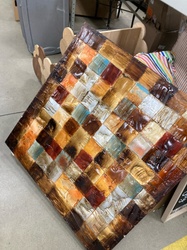
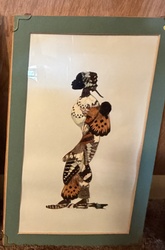
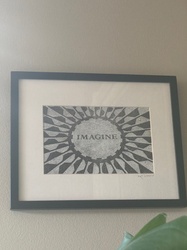
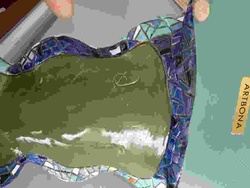
No brand or famous painter, around 30 years old, the gold mosaic is actual gold, though probably not too thick.
These notes were written by the person who submitted this item. Appraiser.AI has not verified them, and the AI's identification and estimate may rely on them.
AI Estimated Value
Not an official valuation
$600-900
AI estimate as of November 15, 2025 · verify with a professional before acting
AI-Generated · Verify before acting
Everything on this page is generated by AI for informational purposes only. AI can make mistakes — the AI may misidentify items or misattribute them (artist, maker, brand, designer, origin, era). This is not an official valuation and should not be used for insurance, sale, tax, estate, legal, or lending purposes — or any decision requiring a certified appraisal. It is not an authoritative claim about any person, brand, or rights holder — do not share or rely on it as a factual statement about a third party. Always consult qualified professionals before making financial decisions.
This analysis also relies on unverified notes provided by the user, which may be incomplete or inaccurate and could affect the result.
This item is a framed mosaic artwork depicting the Virgin Mary. The mosaic art is created from numerous small, irregularly shaped tesserae, predominantly in shades of brown, beige, and gold for the figure, with accents of red for drapery and green in the background. The gold tesserae, especially noticeable in the halo and parts of the drapery, are actual gold, though likely not thick, contributing a shimmering quality and depth to the piece. The overall construction appears to be careful, with tesserae laid to form the contours of the figure and her robes, suggesting a moderate level of craftsmanship. The figure of the Virgin Mary is rendered with a gentle, serene expression, her eyes dark and downcast, and her head slightly tilted. Her hands are joined in a gesture of prayer or reverence. The mosaic is housed within a substantial, ornate gilded wooden frame with a Baroque or Rococo revival style. The frame features intricate floral and scrollwork motifs carved or molded into its surface, with a primary outer border and a thinner, plainer inner border that directly abuts the mosaic. The gold finish of the frame complements the gold tesserae within the artwork itself, creating a cohesive and visually rich presentation. There are no obvious signs of significant damage to the mosaic, such as missing tesserae or cracks. The frame shows some minor wear consistent with its estimated age of approximately 30 years, likely in the form of slight rubbing or minor tarnishing to the gilding, but overall appears to be in good condition. No specific artist's signature or brand marks are visible on the front of the piece. The piece reflects a devotional or decorative art style often found in religious contexts or homes.
AI Appraisal Report
Having visually examined the provided description of this Framed Virgin Mary Mosaic Art, I've assessed its condition and potential market value. The good condition of the mosaic, with no apparent missing tesserae or cracks, is a strong positive. The ornate gilded wooden frame, though showing minor wear consistent with its 30-year age, complements the artwork effectively. The use of actual gold tesserae, even if not thick, adds a luxurious touch and enhances the piece's appeal, contributing to its shimmering quality and overall depth. This elevates it beyond common decorative mosaic art that might use gold-colored glass.
authenticity, based solely on the description, appears consistent with a devotional art piece from the late 20th century. The careful tesserae arrangement and serene depiction suggest moderate craftsmanship. The absence of a famous artist or brand, combined with its 30-year estimated age, places this piece within the decorative art market, rather than the fine art investment category. Market comparables for similar-sized, unsigned religious mosaic art, especially those incorporating genuine gold, typically range in the mid to high hundreds. Demand for such pieces is generally steady among collectors of religious art or those seeking decorative items with a spiritual theme. The primary factors impacting value are its good condition, the use of genuine gold, and the attractive framing.
Limitations in authenticity verification from the description alone are significant. While the description states 'actual gold,' I cannot definitively confirm this without in-person examination, which would include testing the metallic composition of the tesserae. Magnified inspection would also verify the quality of the tesserae cuts and placement more precisely. Furthermore, examining the reverse of the mosaic and frame might reveal hidden signatures, labels, or construction details that could impact value or provide clearer provenance. Without physical inspection, the value range provided is based on the assumption that the gold is indeed genuine as described and that the overall construction quality is consistent with the visual cues of careful craftsmanship.