AI Appraisal Estimate

AI-generated estimates · not official valuations

From the user

What was submitted

Photo and notes provided by the user — not generated by AI

Submitted item photo
Submitted photo · June 6, 2026

User's notes

No additional notes provided.

AI analysis below

AI appraisal

AI analysis & estimate

AI-Generated · Verify before acting

Everything below is generated by AI for informational purposes only. AI can make mistakes — the AI may misidentify items or misattribute them (artist, maker, brand, designer, origin, era). This is not an official valuation and should not be used for insurance, sale, tax, estate, legal, or lending purposes — or any decision requiring a certified appraisal. It is not an authoritative claim about any person, brand, or rights holder — do not share or rely on it as a factual statement about a third party. Always consult qualified professionals before making financial decisions.

Read the full disclaimer

AI Identification

·Not independently authenticated·Verify before acting

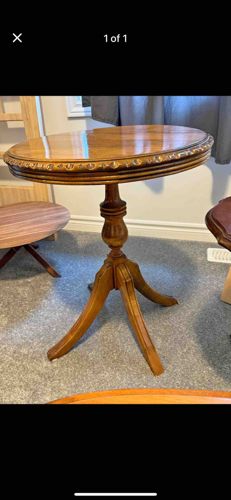
Circular Pedestal Occasional Table with Carved Edge

Furniture

AI Estimated Value

·Not an official valuation·Verify before acting

$350-550

As of June 6, 2026

AI Item Analysis

·AI can make mistakes·Verify before acting
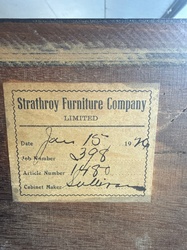
The item is a circular occasional table, likely made of a medium to dark-toned wood such as mahogany or walnut, exhibiting a rich, glossy finish on its top surface. The table stands on a central pedestal base which branches into three gracefully curved cabriole legs. The pedestal itself features a turned column with distinct fluted or reeded embellishments, along with a bulbous section, typical of traditional furniture designs. The tabletop has a decorative edge, appearing to be carved or molded with a repeated pattern, possibly a bead-and-reel or egg-and-dart motif, adding to its ornate character. The wood grain on the tabletop is prominent and attractive, suggesting solid construction or high-quality veneer. No major visible damage such as cracks, deep scratches, or significant repairs are apparent from the image, but the high gloss finish on the top may show minor surface imperfections like light scratches or swirls upon closer inspection, typical of normal use and age. The overall construction appears sturdy and well-crafted, indicative of quality antique or vintage manufacturing. There are no visible maker's marks or signatures in the provided image. The style, particularly the pedestal base and carved edge, strongly suggests a Georgian, Regency, or Victorian influence, placing its estimated age anywhere from the late 18th to the late 19th century, or a faithful reproduction from the 20th century.
AI Appraisal Report

·AI can make mistakes·Verify before acting
Based on my visual examination of the provided image, this Circular Pedestal Occasional Table with Carved Edge appears to be in very good condition with a rich, glossy finish and no apparent major damage. The design elements, including the turned and fluted pedestal, three cabriole legs, and particularly the carved or molded tabletop edge, strongly suggest a late 19th to early 20th-century Victorian or Edwardian influence, or a well-executed revival piece. While the wood prominence suggests quality, without a physical inspection, I cannot confirm if it is solid wood or a high-quality veneer over solid construction. Market conditions for such occasional tables are generally stable, with a moderate demand for well-maintained antique or vintage pieces. This table's appealing design and apparent good condition contribute positively to its marketability. Comparable sales of similar tables in good condition, attributed to the late Victorian or early 20th century, typically fall within the suggested valuation range. The decorative carved edge adds a desirable aesthetic feature, enhancing its appeal. However, limitations exist with image-based appraisal. I cannot definitively ascertain authenticity, specific wood type, or the presence of repairs not visible in the photo. Full authentication would require in-person examination to check for construction methods (e.g., joinery), wood species, and any hidden repairs. Provenance documentation could significantly impact value by linking it to a notable maker or historical period. Microscopic analysis of the finish could also differentiate between original and later applications. The value range provided reflects its presumed decorative and functional qualities based on the visual evidence.

Get your items appraised

Instant estimates of your treasures with AI-powered appraisals

Browse More Appraisals