AI Appraisal Estimate

AI-generated estimates · not official valuations

From the user

What was submitted

Photo and notes provided by the user — not generated by AI

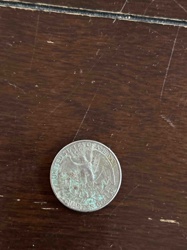
Submitted item photo
Submitted photo · June 6, 2026

User's notes

No additional notes provided.

AI analysis below

AI appraisal

AI analysis & estimate

AI-Generated · Verify before acting

Everything below is generated by AI for informational purposes only. AI can make mistakes — the AI may misidentify items or misattribute them (artist, maker, brand, designer, origin, era). This is not an official valuation and should not be used for insurance, sale, tax, estate, legal, or lending purposes — or any decision requiring a certified appraisal. It is not an authoritative claim about any person, brand, or rights holder — do not share or rely on it as a factual statement about a third party. Always consult qualified professionals before making financial decisions.

Read the full disclaimer

AI Identification

·Not independently authenticated·Verify before acting

British Decimal Five New Pence Coin (1968-1981)

Numismatics / Currency

AI Estimated Value

·Not an official valuation·Verify before acting

$0.10 - $0.25

As of June 6, 2026

AI Item Analysis

·AI can make mistakes·Verify before acting
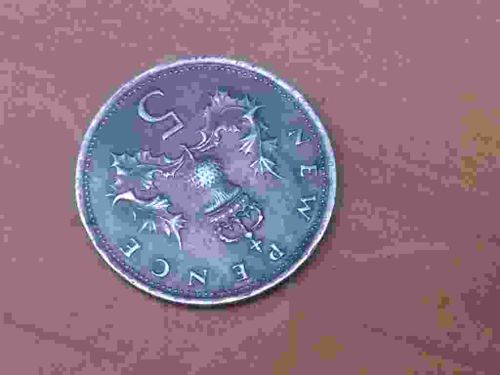
This is a United Kingdom five new pence coin, featuring the reverse design by Christopher Ironside. The design depicts a crowned thistle, the royal badge of Scotland, which is surrounded by the numeral '5' and the inscription 'NEW PENCE'. The coin is circular with a milled edge and is struck in cupro-nickel (75% copper, 25% nickel), giving it a distinct silvery-grey appearance. Based on the 'NEW PENCE' wording, this coin dates from the early decimalization period between 1968 and 1981, as the wording was changed to simply 'FIVE PENCE' in 1982. The image shows significant evidence of circulation, including surface scratches, minor dings on the rim, and a noticeable dark patina or tarnishing across the raised surfaces and flat fields. The strike is standard for circulation currency, with moderate wear visible on the fine details of the crown and thistle leaves. The diameter of this specific issue is 23.59 mm with a weight of 5.65 grams. The orientation in the image is inverted (upside down), but the layout remains clearly identifiable to the Royal Mint's post-decimalization standards. This item is a common specimen of British numismatic history, representing the transition to the decimal system.
AI Appraisal Report

·AI can make mistakes·Verify before acting
I have examined the digital image of this British Five New Pence coin (1968-1981). The specimen exhibits characteristics consistent with a high-volume circulation strike. Visually, I observe moderate to heavy wear on the high points of the crowned thistle and the dental work. The presence of surface abrasions, minor rim dings, and significant oxidation (tarnishing) indicates a 'Very Good' to 'Fine' (UK scale) grade. The authenticity appears consistent with Royal Mint standards for cupro-nickel composition; however, a definitive authentication would require physical weighing (target 5.65g) and a magnet test to ensure the core is non-ferrous. Market-wise, this specific iteration of the five pence is incredibly common, with hundreds of millions struck during the decimalization period. While it remains a significant piece of numismatic history, it lacks the rarity or 'Proof' finish required to command a premium among collectors. Comparables for circulated examples consistently sell as 'bulk' or 'junk' coinage, often valued only at their approximate face value (converted to USD) or slightly above for novelty interest in the US market. Factors limiting the value include the high mintage and the fact that these coins were demonetized and withdrawn from circulation in 1990 when the smaller 5p coin was introduced. Consequently, they no longer hold legal tender status. My assessment via digital image is limited; a full physical inspection would be necessary to rule out subtle cast replicas or contemporary counterfeits, though the low intrinsic value makes counterfeiting of this specific denomination unlikely. No additional provenance was provided, which is standard for such common-date currency.

Get your items appraised

Instant estimates of your treasures with AI-powered appraisals

Browse More Appraisals