AI identification & appraisal estimate

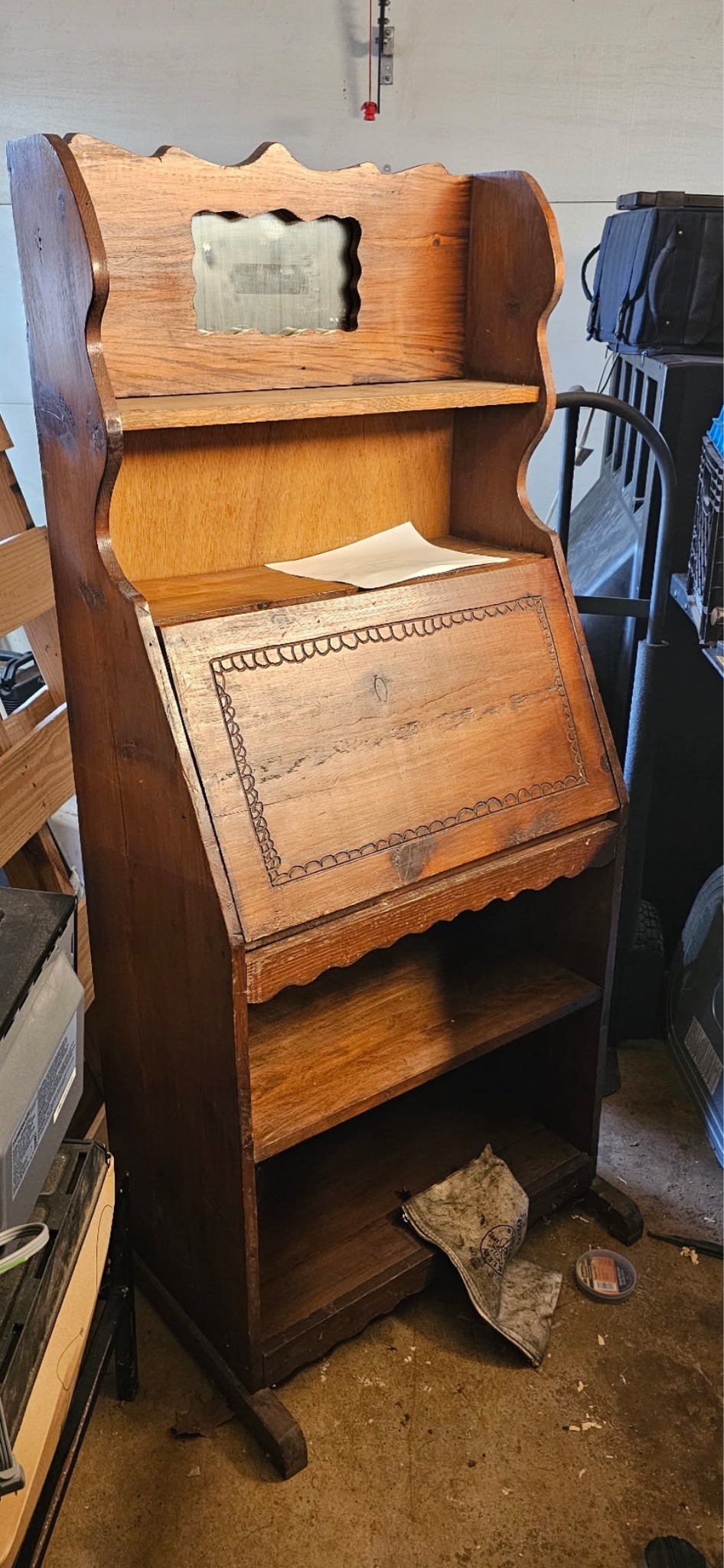
Early-American-style pine drop-front desk with hutch

Submitted photo of Early-American-style pine drop-front desk with hutch
Photo submitted by the user — not generated by AI

AI Estimated Value

Not an official valuation

$150 - $350

AI estimate as of June 6, 2026 · verify with a professional before acting

AI-Generated · Verify before acting

Everything on this page is generated by AI for informational purposes only. AI can make mistakes — the AI may misidentify items or misattribute them (artist, maker, brand, designer, origin, era). This is not an official valuation and should not be used for insurance, sale, tax, estate, legal, or lending purposes — or any decision requiring a certified appraisal. It is not an authoritative claim about any person, brand, or rights holder — do not share or rely on it as a factual statement about a third party. Always consult qualified professionals before making financial decisions.

Read the full disclaimer

AI Item Analysis

This furniture piece is a wooden secretary-style desk consisting of a hutch upper section, a slanted drop-front writing surface, and lower open shelving. It appears to be constructed from pine or a similar softwood with a medium-to-dark stained finish. The top hutch features decorative scalloped edges and a small, centrally located inset mirror with a wavy, irregular wooden frame. Below the desk surface, there is a lower shelf section also adorned with a scalloped apron. The slanted drop-front panel is decorated with a hand-carved or stamped scalloped border pattern. Stylistically, the piece is consistent with 20th-century Early American or rustic colonial revival styles. No maker's marks, signatures, or branding are visible in the photograph, making it impossible to attribute the piece to a specific manufacturer or craftsman without physical inspection. The item shows signs of age and wear consistent with use in a workshop or storage environment, including some surface scuffing, dust accumulation, and minor wood grain separation. The construction appears utilitarian, utilizing simple joinery and decorative elements common in mid-to-late 20th-century reproduction furniture.
AI Appraisal Report

I have examined the image provided of the Early-American-style pine drop-front desk. Based on what I can see, this piece reflects a 20th-century Colonial Revival or rustic aesthetic, likely manufactured as utilitarian furniture rather than high-end cabinetry. The construction appears to utilize softwoods, such as pine, with a finish and wear pattern consistent with mid-to-late 20th-century production. Without visible maker's marks or signatures, I must treat any attribution to a specific workshop as a hypothesis only. Physical inspection would be required to evaluate the joinery—such as checking for machine versus hand-cut dovetails—and to determine if the mirror glass is period-correct or a modern replacement. The value estimate is based on the assumption that this is a mass-produced reproduction piece in fair condition. In current secondary markets, there is steady but modest demand for pine 'country style' furniture. Factors such as surface scuffing and dust accumulation suggest a need for restoration, which limits the top-end value. Should this piece be associated with a known mid-century designer or if documentation emerged proving earlier 19th-century origins, the value could increase significantly. Conversely, if fundamental structural issues or modern synthetic materials are found during an in-person examination, the value would likely fall to the lower end of the range. To confirm authenticity or a more specific provenance, I would recommend a physical inspection by a furniture specialist and a search for archival sales records or manufacturer catalogs.

Keep exploring

More antique furniture appraisals

Get your items appraised

Instant AI-powered appraisal estimates from a photo

Browse More Appraisals