AI identification & appraisal estimate

Mid-Century Coastal Seascape Oil Painting with Lighthouse

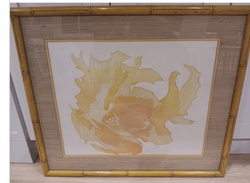
Submitted photo of Mid-Century Coastal Seascape Oil Painting with Lighthouse
Photo submitted by the user — not generated by AI

AI Estimated Value

Not an official valuation

$150-$250

AI estimate as of March 21, 2026 · verify with a professional before acting

AI-Generated · Verify before acting

Everything on this page is generated by AI for informational purposes only. AI can make mistakes — the AI may misidentify items or misattribute them (artist, maker, brand, designer, origin, era). This is not an official valuation and should not be used for insurance, sale, tax, estate, legal, or lending purposes — or any decision requiring a certified appraisal. It is not an authoritative claim about any person, brand, or rights holder — do not share or rely on it as a factual statement about a third party. Always consult qualified professionals before making financial decisions.

Read the full disclaimer

AI Item Analysis

This is an original oil painting on canvas, likely dating from the mid-to-late 20th century (circa 1960s-1970s). The scene depicts a dramatic coastal landscape featuring a lighthouse on a rocky outcrop, seagulls in flight, and a weathered fence in the foreground. The color palette is dominated by muted, earthy tones including ochre, sienna, gray-blue, and cream, suggesting a hazy or overcast atmospheric condition. The paint is applied with visible texture, particularly in the white 'peaks' of the crashing waves and the clouds, characteristic of impasto techniques. The work is housed in a substantial vintage wooden frame with a dark, possibly walnut or faux-grained finish, featuring a high-profile cove molding. A linen-covered inner liner (white/off-white) with a thin gold-toned bead provides a transition between the art and the outer frame. Regarding condition, the frame shows some minor surface wear and dust accumulation consistent with age. There are slight speckles on the linen liner, possibly foxing or minor staining. The canvas appears taut, though a closer inspection for craquelure or paint lifting would be recommended. There is no visible signature in the lower-left corner; any existing artist signature or gallery labels may be present on the reverse or obscured by the frame's edge. The overall style is reminiscent of commercial fine art popular in the mid-century, often sold in furniture stores or galleries catering to home decor.


AI Appraisal Report

I have examined the digital representation of this mid-century coastal seascape. The work demonstrates characteristic aesthetic markers of mass-market decor art from the 1960s and 1970s. The impasto application in the surf and the muted color palette are typical of commercial gallery pieces from this era, intended for residential interior design. From a condition perspective, the canvas appears stable within its original frame, though the linen liner shows visible signs of foxing and environmental spotting, which is common for materials of this age but necessitates professional cleaning or replacement to restore full aesthetic value. The current market for unsigned, mid-century 'sofa art' is saturated. While there is a nostalgic demand for vintage coastal motifs, the lack of a visible signature significantly limits the investment potential. Comparable sales of similar anonymous lighthouses in period-correct 'cove' frames typically realize between $100 and $300 at general antique auctions or via online vintage marketplaces. The value here is primarily decorative rather than fine art investment grade. Limitations: My assessment is based solely on digital images. Without a physical inspection, I cannot confirm the presence of a signature obscured by the frame or hidden on the verso. A physical examination is required to check for canvas brittleness, hidden repairs, or 'black light' UV anomalies. To fully authenticate this as a specific artist's work (should a signature be found), a search for a matching monogram, gallery labels, or provenance records from the original point of sale would be necessary. Scientific testing of pigment binder would only be warranted if a high-value attribution was suspected, which is not indicated here.

Keep exploring

More fine art - paintings appraisals

Get your items appraised

Instant AI-powered appraisal estimates from a photo

Browse More Appraisals