These notes were written by the person who submitted this item. Appraiser.AI has not verified them, and the AI's identification and estimate may rely on them.
AI Estimated Value
Not an official valuation
$25-$45
AI estimate as of September 3, 2025 · verify with a professional before acting
AI-Generated · Verify before acting
Everything on this page is generated by AI for informational purposes only. AI can make mistakes — the AI may misidentify items or misattribute them (artist, maker, brand, designer, origin, era). This is not an official valuation and should not be used for insurance, sale, tax, estate, legal, or lending purposes — or any decision requiring a certified appraisal. It is not an authoritative claim about any person, brand, or rights holder — do not share or rely on it as a factual statement about a third party. Always consult qualified professionals before making financial decisions.
This analysis also relies on unverified notes provided by the user, which may be incomplete or inaccurate and could affect the result.
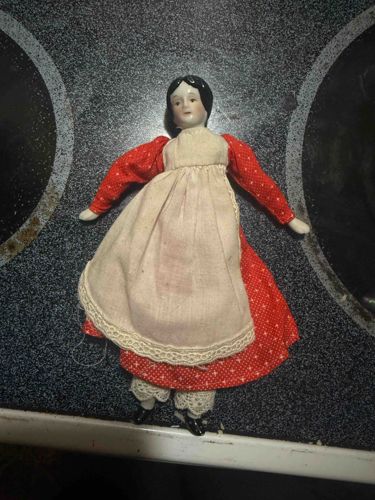
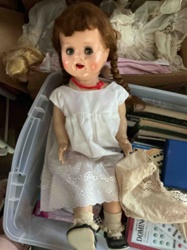
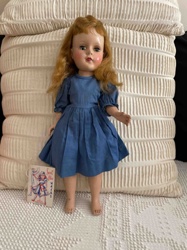
This item is a small porcelain and cloth doll, likely a 'Bisc doll' or a type of half-doll, though it appears to be a full doll with soft body appendages. The head, forearms, and lower legs/feet are crafted from porcelain, indicating a delicate construction. The head features molded black hair with a center part and visible brushstrokes, suggesting a painted finish rather than applied strands. The facial features are hand-painted with dark eyes, defined eyebrows, and rosied cheeks, giving it a sweet, classic doll appearance. The porcelain exhibits a smooth, possibly glazed finish, and appears to be in relatively good condition with no immediate visible cracks or significant chips on the head or limbs, though closer inspection would be required to confirm. The body and upper limbs seem to be made from cloth, possibly stuffed, providing a softer, more pliable form for the doll's torso and upper arms. The doll is dressed in a red fabric with white polka dots, fashioned into a dress with puffed sleeves. Over this, a light-colored, possibly cream or off-white, apron is worn, secured around the waist. Both the dress and the apron show signs of age and possible minor staining or discoloration, consistent with frequent handling or display. The hem of the apron is trimmed with a delicate off-white lace, adding a touch of period appropriate detail. Below the dress, white lace-trimmed pantaloons or undergarments are visible, suggesting attention to traditional doll attire. The doll's feet are painted black, resembling shoes, a common characteristic for early to mid-20th-century porcelain dolls. Given its construction and attire, this doll likely dates from the early to mid-20th century, possibly c. 1920s-1950s, embodying a simple, folk-art or toy aesthetic rather than high-end collector's item, though specific maker's marks, if any, are not visible in the provided image.
AI Appraisal Report
Upon examining the images of this porcelain and cloth character doll, I can provide a preliminary appraisal. The doll features a porcelain head, lower arms, and lower legs, with a stuffed cloth body. The hand-painted facial features, molded black hair, and period-style clothing—a red polka-dot dress with an apron and lace-trimmed pantaloons—are characteristic of dolls produced between the 1920s and 1950s. The overall condition appears to be fair to good for its age, showing some minor signs of wear, such as potential discoloration on the fabric, but no immediately visible cracks or chips on the porcelain components.
This style of doll was widely produced and is relatively common in the collectibles market today. Similar unmarked porcelain and cloth dolls from this era typically sell in the $25 to $45 range. The value is primarily driven by nostalgia and decorative appeal rather than rarity or a specific manufacturer. Factors limiting its value are the lack of a known maker's mark and its common design. The market for such dolls is stable but not particularly high in demand, with many comparable examples available online and at antique marts.
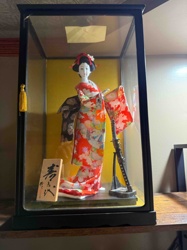
It is crucial to note that this appraisal is based solely on images. A physical, in-person examination is necessary to definitively assess the condition of the porcelain for hairline cracks, check for any manufacturer's marks on the back of the neck or body, and evaluate the integrity of the cloth and clothing. Full authentication and a more precise valuation would require this hands-on inspection to rule out reproductions and confirm the material and construction quality.