AI Appraisal Estimate

AI-generated estimates · not official valuations

From the user

What was submitted

Photo and notes provided by the user — not generated by AI

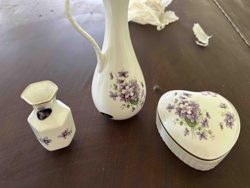
Submitted item photo
Submitted photo · June 1, 2026

User's notes

Marked Royal Satsum

AI analysis below

AI appraisal

AI analysis & estimate

AI-Generated · Verify before acting

Everything below is generated by AI for informational purposes only. AI can make mistakes — the AI may misidentify items or misattribute them (artist, maker, brand, designer, origin, era). This is not an official valuation and should not be used for insurance, sale, tax, estate, legal, or lending purposes — or any decision requiring a certified appraisal. It is not an authoritative claim about any person, brand, or rights holder — do not share or rely on it as a factual statement about a third party. Always consult qualified professionals before making financial decisions.

Note

This analysis also relies on unverified notes provided by the user, which may be incomplete or inaccurate and could affect the result.

Read the full disclaimer

AI Identification

·Not independently authenticated·Verify before acting

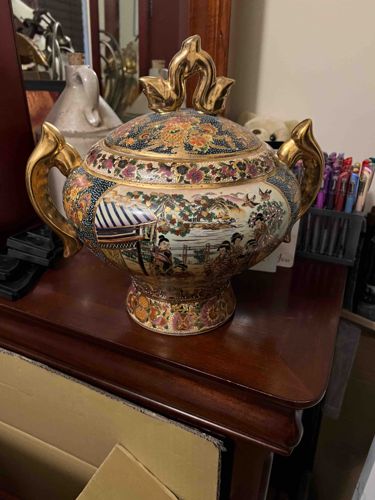
Royal Satsuma Double-Handled Lidded Tureen or Censer

Decorative Ceramics & Porcelain

AI Estimated Value

·Not an official valuation·Verify before acting

$150 - $250

As of June 1, 2026

AI Item Analysis

·AI can make mistakes·Verify before acting
This is a decorative ceramic lidded vessel in the Royal Satsuma style, likely originating from mid-to-late 20th-century mass production for the export market. The item features a squat, bulbous body supported by a flared pedestal base, flanked by two ornate, gilded C-scroll handles. The domed lid is crowned with a distinctive gilded finial shaped like two stylized swans or phoenixes joined back-to-back. The surface is heavily decorated using the moriage technique, characterized by raised, textured enamel work and extensive gilding. The central cartouches depict traditional Japanese genre scenes, including figures in kimonos (bijin) within a landscape featuring a pagoda and water. The surrounding areas are densely packed with floral motifs (millefleurs), geometric patterns, and diaper borders in a palette of gold, cobalt blue, rose, and earthy tones. While marked 'Royal Satsuma', this indicates a decorative style rather than an antique piece from the Satsuma kilns of the Meiji period. The glaze displays the characteristic fine crackle texture associated with this ware. The overall condition appears excellent with vibrant colors and intact gilding, showing no visible chips or significant wear, though it lacks the hand-painted refinement of 19th-century originals.
AI Appraisal Report

·AI can make mistakes·Verify before acting
Upon my visual examination of this lidded censer, I have determined it to be a representative example of mid-to-late 20th-century Japanese export ware. While the piece is marked 'Royal Satsuma' and utilizes traditional moriage techniques—characterized by the raised, beaded enamel work—it is important to distinguish this from antique Satsuma produced during the Meiji period (1868–1912). The density of the millefleurs pattern and the specific application of the gilding on the swan-style finial are indicative of mass-produced decorative items intended for the Western market rather than' studio-pottery' pieces. The condition appears excellent, with the characteristic crazing of the cream-toned glaze being stable and the polychrome enamels remaining vibrant. The market for mid-century 'Royal Satsuma' is currently saturated, as these items were produced in high volumes. Consequently, they are valued primarily for their decorative appeal rather than rarity or historical significance. Similar examples frequently appear in estate auctions and secondary markets within this price bracket. Please note that this appraisal is based on photographic evidence. A physical inspection would be required to rule out professional restorations to the handles and finial, which are common points of failure. Furthermore, verifying the specific backstamp and weight would provide more certainty regarding the exact manufacturing decade. For definitive authentication of the clay body and mineral composition of the pigments, scientific testing such as thermoluminescence would be necessary, though the cost of such testing would likely exceed the fair market value of the item itself.

Get your items appraised

Instant estimates of your treasures with AI-powered appraisals

Browse More Appraisals