AI estimate as of August 14, 2025 · verify with a professional before acting
AI-Generated · Verify before acting
Everything on this page is generated by AI for informational purposes only. AI can make mistakes — the AI may misidentify items or misattribute them (artist, maker, brand, designer, origin, era). This is not an official valuation and should not be used for insurance, sale, tax, estate, legal, or lending purposes — or any decision requiring a certified appraisal. It is not an authoritative claim about any person, brand, or rights holder — do not share or rely on it as a factual statement about a third party. Always consult qualified professionals before making financial decisions.
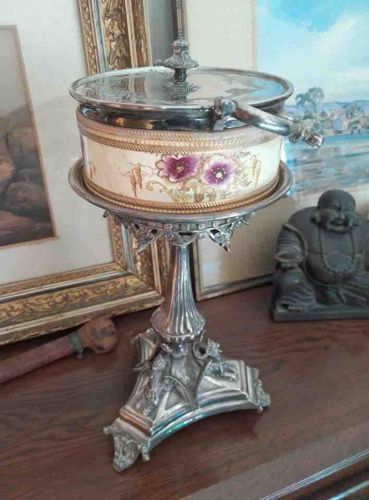
This is an antique or vintage ceramic and silver-plated butter dish with a bell-shaped stand, likely designed to keep butter cool. The main butter container is a cylindrical ceramic crock, adorned with hand-painted floral motifs featuring prominent purple and pink blooms, possibly mallows or hollyhocks, against a creamy background. Around the top and bottom edges of the ceramic section, there's a decorative band resembling a braided or textured trim, highlighted with gilded accents. The silver-plated components include a fitted lid with an ornate finial, a curved swing-handle attached to the lid, and an intricate stand. The stand features a fluted, tapering central column supported by a highly decorative, ornate base with four scrolled feet and classical acanthus leaf or similar botanical ornamentation. The silver plating shows signs of age, including some tarnishing and possible plate loss in areas, particularly visible on the flat surfaces of the lid and the raised decorative elements of the stand. The ceramic appears to be in good condition, with vibrant colors and no apparent chips or cracks. The overall design suggests a late 19th to early 20th-century aesthetic, indicative of the Art Nouveau or Victorian periods, characterized by their love for elaborate details and functional elegance.
AI Appraisal Report
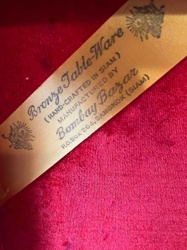
Based on my visual examination of the provided image, this silver-plated and ceramic butter dish with stand appears to be an authentic antique piece, likely from the late 19th to early 20th century, aligning with Victorian or Art Nouveau aesthetics. The hand-painted floral motifs on the ceramic, coupled with the elaborate silver-plated components, are characteristic of the period's love for intricate decorative arts and functional elegance. The ceramic bowl itself seems to be in very good condition, with no visible chips or cracks and vibrant colors, which is a significant positive factor. However, the silver plating shows clear signs of age, including significant tarnishing and probable plate loss, particularly on the flat surfaces of the lid and the raised decorative elements of the stand. While expected for an item of this age, extensive plate loss can detract from overall appeal and value. This piece's design, intended to keep butter cool, suggests a degree of specialty. In terms of market conditions, similar intricate butter dishes or tableware from this era generally see moderate demand among collectors of antique decorative arts. Rarity is difficult to assess definitively without broader market comparison, but the specific combination of ceramic decoration and silver-plated stand might make it relatively unique. Factors significantly impacting value include the excellent condition of the ceramic and the intricate design of the stand. Conversely, the condition of the silver plating is the primary detractor. Limitations in authenticity verification from images alone are significant; I cannot assess the quality of the silver plating beyond surface appearance, nor can I identify any maker's marks, hallmarks, or patent numbers which are crucial for definitive attribution and authentication. An in-person examination would allow for tactile inspection of the materials, identification of any marks, assessment of the true extent of plate loss, and verification of original components. Provenance documentation, such as original sales receipts or family histories, would also greatly enhance authentication and value.