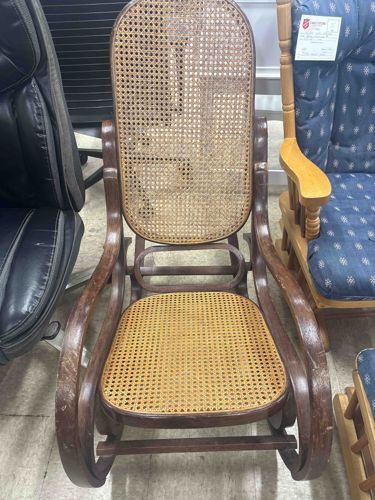
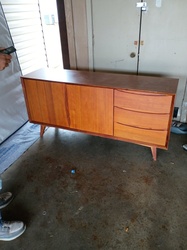
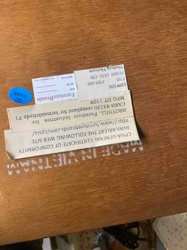
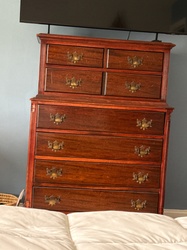
unmarked some wear on arms and legs no damage to rattan
These notes were written by the person who submitted this item. Appraiser.AI has not verified them, and the AI's identification and estimate may rely on them.
AI Estimated Value
Not an official valuation
$600-900
AI estimate as of September 10, 2025 · verify with a professional before acting
AI-Generated · Verify before acting
Everything on this page is generated by AI for informational purposes only. AI can make mistakes — the AI may misidentify items or misattribute them (artist, maker, brand, designer, origin, era). This is not an official valuation and should not be used for insurance, sale, tax, estate, legal, or lending purposes — or any decision requiring a certified appraisal. It is not an authoritative claim about any person, brand, or rights holder — do not share or rely on it as a factual statement about a third party. Always consult qualified professionals before making financial decisions.
This analysis also relies on unverified notes provided by the user, which may be incomplete or inaccurate and could affect the result.
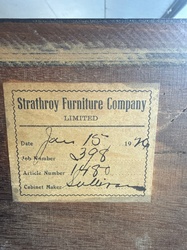
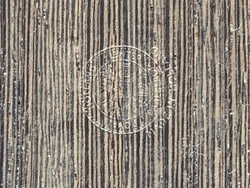
This appears to be a vintage bentwood rocking chair featuring woven cane inserts for both the seat and the backrest. The chair is constructed from dark-stained wood, likely birch or beech, characteristic of Thonet or similar manufacturers known for their bentwood furniture. The wood exhibits a rich, reddish-brown hue. The design of the chair features curved rails forming the rocking base, along with elegantly curved armrests that flow into the chair's structure. The backrest is tall and oval-shaped, while the seat is rectangular with rounded front corners, both meticulously inlaid with natural-colored cane in a classic open-weave pattern, presenting a uniform grid of small square openings. The weaving appears to be in good condition, showing no discernible damage or tears, maintaining its original integrity. The wooden frame, however, shows signs of wear, particularly on the armrests and legs, indicated by visible scuffs, scratches, and some loss of finish, revealing lighter wood beneath the stain. Despite the wear, there are no apparent structural damages such as cracks or breaks in the wood frame. The craftsmanship suggests a manufacturing process involving steam-bending of wood, indicative of late 19th to early 20th-century design periods, often associated with the Art Nouveau or Classical Revival styles. The chair's overall form is lightweight yet sturdy, highlighting the strength and flexibility of bentwood techniques. The natural cane provides breathability and a degree of comfort without the need for upholstery. There are no visible manufacturer's marks or signatures in the provided images.
AI Appraisal Report
Upon examining the provided image and information, I assess this Bentwood and Cane Rocking Chair. It exhibits the classic characteristics of a late 19th to early 20th-century bentwood piece, likely from a reputable European manufacturer such as Thonet, though without marks, attribution remains speculative. The dark-stained wood, possibly birch or beech, shows the expected steam-bending craftsmanship. The cane seat and backrest appear to be in excellent condition, which is a significant plus, as cane replacement is costly. However, the wooden frame displays clear signs of wear, including scuffs, scratches, and finish loss on the armrests and legs. While this indicates age and use, critically, there are no visible structural damages like cracks or breaks, suggesting underlying integrity.
In terms of market conditions, vintage bentwood rocking chairs, especially those with original cane in good condition, maintain consistent demand among collectors and interior decorators seeking classic, timeless pieces. Comparables on the secondary market, considering similar condition and potential age, typically range. The unmarked nature is a limiting factor for definitive authentication and higher valuing; a marked piece by Thonet or Kohn, for instance, would command a premium. The rarity is moderate; while many bentwood pieces exist, rocking chairs with undamaged cane are less common than other forms.
The factors impacting value are primarily the excellent cane condition counterbalanced by the frame's superficial wear and the lack of maker's marks. For a full authentication and to ascertain the exact manufacturer, an in-person examination would be crucial to look for hidden marks, assess wood aging characteristics, and examine joinery methods more closely. Provenance documentation, if available, would also be invaluable. Without these, my appraisal is based on visual cues and established market trends for unmarked, period-appropriate Bentwood furniture.