AI Appraisal Estimate

AI-generated estimates · not official valuations

From the user

What was submitted

Photo and notes provided by the user — not generated by AI

Submitted item photo
Submitted photo · May 16, 2026

User's notes

No additional notes provided.

AI analysis below

AI appraisal

AI analysis & estimate

AI-Generated · Verify before acting

Everything below is generated by AI for informational purposes only. AI can make mistakes — the AI may misidentify items or misattribute them (artist, maker, brand, designer, origin, era). This is not an official valuation and should not be used for insurance, sale, tax, estate, legal, or lending purposes — or any decision requiring a certified appraisal. It is not an authoritative claim about any person, brand, or rights holder — do not share or rely on it as a factual statement about a third party. Always consult qualified professionals before making financial decisions.

Read the full disclaimer

AI Identification

·Not independently authenticated·Verify before acting

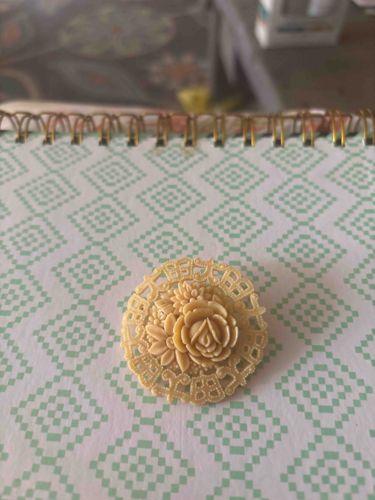
Vintage Celluloid or Early Thermoplastic Floral Brooch

Vintage Costume Jewelry

AI Estimated Value

·Not an official valuation·Verify before acting

$45 - $65

As of May 16, 2026

AI Item Analysis

·AI can make mistakes·Verify before acting
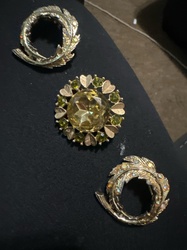
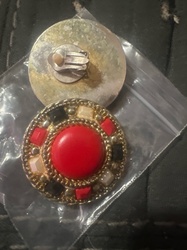
This is a vintage circular brooch featuring a high-relief, molded floral design, commonly associated with costume jewelry from the 1930s to the 1950s. The piece is crafted from a cream or light beige synthetic material, likely celluloid or an early thermoplastic like Casein or Galalith. The central motif consists of a large, multi-petaled rose surrounded by smaller blossoms and foliage, showcasing a three-dimensional 'molded' aesthetic. The outer border is designed with an intricate geometric fretwork or lattice pattern that simulates lace or fine metalwork. This delicate openwork is characteristic of early plastic jewelry, which sought to mimic more expensive materials like carved ivory. The color is a uniform antique ivory tone with a matte finish. There is no visible maker's mark or signature on the front; such pieces often had simple pin-back mechanisms glued or heat-set into the reverse. The condition appears fair to good, with some visible accumulation of dust and fine debris within the deep crevices of the floral moldings, which is common for such textured pieces. No immediate structural cracks or missing petals are evident, though some slight discoloration due to aging (patina) is present. The craftsmanship displays the early industrial capability to mass-produce decorative floral elements with significant depth.
AI Appraisal Report

·AI can make mistakes·Verify before acting
Based on my visual examination of this vintage floral brooch, I have identified it as a significant example of mid-20th-century molded costume jewelry. The piece demonstrates the high-relief 'molded' aesthetic characteristic of either celluloid or a casein-based thermoplastic. The craftsmanship of the fretwork border mimics the 'Ivory Pyralin' styles popular between 1930 and 1950. The piece appears to be in good vintage condition; while there is evidence of organic debris in the crevices, the absence of 'celluloid rot' (crystallization or weeping) and the integrity of the delicate lattice border are positive indicators of stability. The market for unsigned early plastic jewelry is currently stable but niche. Comparables for floral molded celluloid brooches of this size and complexity typically realize between $40 and $75 at specialty vintage boutiques or online marketplaces. The antique ivory color remains desirable for collectors of 'shabby chic' or mid-century accessories. However, the lack of a designer's mark (such as those from Trifari or Elzac) prevents it from reaching the higher premium tiers of the costume jewelry market. Note that this appraisal is based on image analysis alone. A definitive identification of the material (distinguishing between Celluloid, Galalith, or later polymers) would require an in-person 'hot needle' test or a chemical scent test (camphor vs. milk/formaldehyde). I would also need to inspect the reverse to verify if the pin mechanism is original or a later repair, as a replaced 'glue-on' finding would decrease the value by 30%. Full authentication would require physical inspection for stress fractures not visible under current lighting.

Get your items appraised

Instant estimates of your treasures with AI-powered appraisals

Browse More Appraisals