AI Appraisal Estimate

AI-generated estimates · not official valuations

From the user

What was submitted

Photo and notes provided by the user — not generated by AI

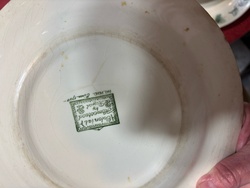
Submitted item photo
Submitted photo · May 28, 2026

User's notes

No additional notes provided.

AI analysis below

AI appraisal

AI analysis & estimate

AI-Generated · Verify before acting

Everything below is generated by AI for informational purposes only. AI can make mistakes — the AI may misidentify items or misattribute them (artist, maker, brand, designer, origin, era). This is not an official valuation and should not be used for insurance, sale, tax, estate, legal, or lending purposes — or any decision requiring a certified appraisal. It is not an authoritative claim about any person, brand, or rights holder — do not share or rely on it as a factual statement about a third party. Always consult qualified professionals before making financial decisions.

Read the full disclaimer

AI Identification

·Not independently authenticated·Verify before acting

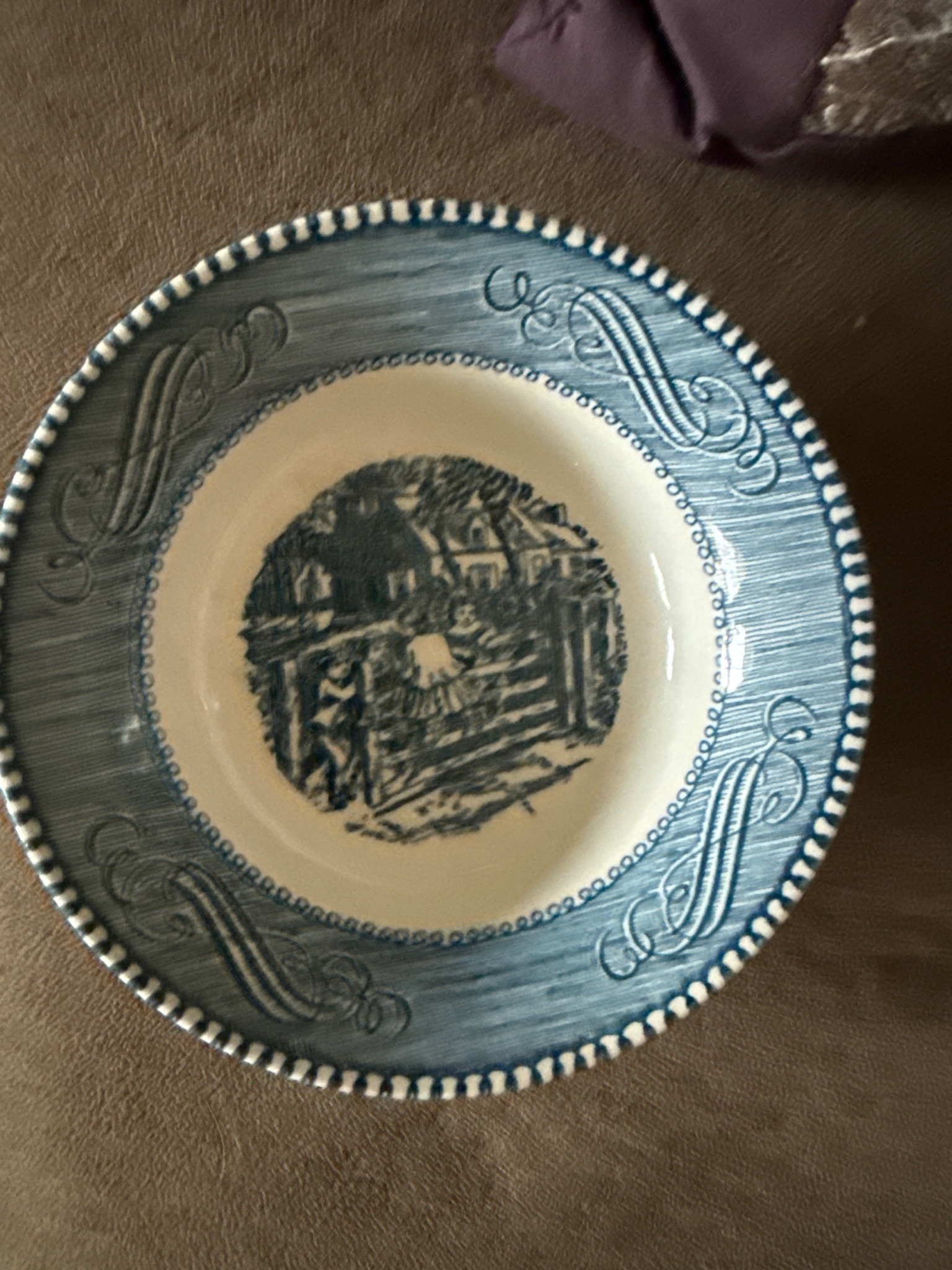
Blue Transferware Cream Soup Bowl or Shallow Rimmed Plate

Ceramics & Porcelain / Antique Dinnerware

AI Estimated Value

·Not an official valuation·Verify before acting

$25.00-$45.00

As of May 28, 2026

AI Item Analysis

·AI can make mistakes·Verify before acting
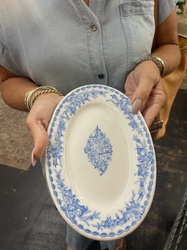
This item is a decorative ceramic shallow bowl or rimmed plate, featuring a classic blue and white transferware design. The central well displays a pastoral or rural farm scene in a dark navy blue, depicting figures near a wooden fence with cottages and trees in the background, characteristic of Victorian or early 20th-century Staffordshire styles. The wide rim is decorated with a distinct blue-on-blue hatched/textural background, embellished with four symmetrical embossed or printed ribbon-like scrolls. A repeating bead or chain border encircles the inner edge of the rim, while the outer edge features a scalloped, dashed blue border. The base material appears to be a cream-colored earthenware or ironstone. The glazed finish is glossy, showing some minor surface scuffs consistent with light domestic use. There are no immediate signs of large chips or cracks visible on the front surface, though the craftsmanship indicates a mass-market production style rather than fine porcelain. This piece likely dates from the late 19th century to the mid-20th century, drawing on traditional English transferware aesthetic styles. The high contrast between the cream body and the saturated blue ink is a hallmark of this type of collectible utility-ware.
AI Appraisal Report

·AI can make mistakes·Verify before acting
I have carefully examined the provided images of this blue and white transferware shallow rimmed bowl. The item features a central pastoral vignette typical of Staffordshire production from the late 19th to early 20th centuries. The high-contrast navy ink against the cream earthenware body, along with the scalloped edge and embossed scrollwork on the rim, suggests a mass-produced utility ware intended for the middle-market domestic consumer. Upon visual inspection, the glaze maintains a healthy gloss, though minor surface abrasions and typical shelf wear on the footring are present. No major structural failures, such as hairlines or 'spidering,' are visible from the primary angles. The market for English transferware remains saturated with similar pastoral and 'Romantic' patterns. Because this piece lacks a specific documented maker's mark or pattern name (such as those by Spode, Johnson Brothers, or Royal Doulton), it is classified as 'unattributed Staffordshire.' Comparables for single, non-pedigreed soup bowls of this period consistently sell in the $20 to $50 range at auction and secondary retail markets. Rarity is low, as these were produced in vast quantities. Limitations: This appraisal is based solely on digital images. Without a physical inspection, I cannot verify the presence of 'sick' glass/glaze, professional restorations, or the resonance of the ceramic (the 'ring test' for internal cracks). To fully authenticate and date this piece, I would require a clear photograph of the base marks, a tactile assessment of the weight/density to distinguish between earthenware and ironstone, and provenance documentation to confirm its historical lineage. Scientific testing such as UV light inspection would be necessary to rule out modern repairs.

Get your items appraised

Instant estimates of your treasures with AI-powered appraisals

Browse More Appraisals