AI estimate as of September 6, 2025 · verify with a professional before acting
AI-Generated · Verify before acting
Everything on this page is generated by AI for informational purposes only. AI can make mistakes — the AI may misidentify items or misattribute them (artist, maker, brand, designer, origin, era). This is not an official valuation and should not be used for insurance, sale, tax, estate, legal, or lending purposes — or any decision requiring a certified appraisal. It is not an authoritative claim about any person, brand, or rights holder — do not share or rely on it as a factual statement about a third party. Always consult qualified professionals before making financial decisions.
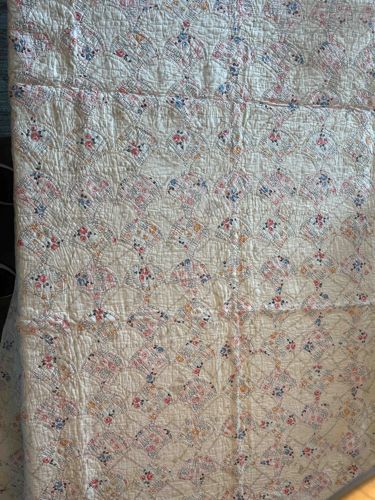
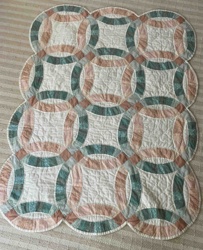
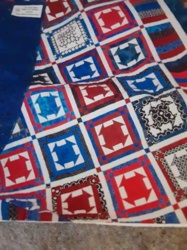
This is a vintage 'Grandmother's Flower Garden' style quilt, characterized by its intricate hexagonal piecing that forms a repeating floral motif. The quilt features a cream or off-white background fabric, providing a soft contrast to the colorful hexagones. The 'flower' centers and 'petals' are composed of small hexagonal fabric pieces in various muted shades of pink, rose, blue, and possibly yellow or orange, suggesting a 'scrappy' construction from various calico or print fabrics typical of the era. The quilting stitches appear to follow the outlines of the pieced shapes and possibly echo the 'flower garden' pattern, indicating hand-quilting, a hallmark of traditional craftsmanship. The overall texture is soft and pliable, consistent with cotton materials. There are visible wrinkles and folds across the surface, suggesting it has been stored or used, but no obvious tears or significant damage are discernible from the image. The colors, while muted, retain their vibrancy, hinting at good preservation for its age. The style and construction point to an estimated age from the mid-20th century, likely between the 1930s and 1960s, a period when this quilt pattern was highly popular. The density and evenness of the quilting would be a key indicator of its quality and craftsmanship. The overall condition appears to be good with a gentle patina from age and use.
AI Appraisal Report
Based on my visual examination of the provided image, I assess this vintage 'Grandmother's Flower Garden' quilt to be in good, unrestored condition. The intricate hexagonal piecing and 'scrappy' fabric selection, featuring muted pinks, blues, and possibly yellows against an off-white background, are consistent with the popular aesthetic of the mid-20th century, likely 1930s-1960s. The visible wrinkles and soft texture suggest cotton materials and a history of use or storage, but there are no obvious tears or significant damage, which is a positive indicator for its age. The colors, while muted, appear well-preserved. Hand-quilting is evident, tracing the outlines of the pieced shapes, which is a hallmark of traditional craftsmanship and adds to its appeal.
Market conditions for vintage quilts like this are generally stable, with a steady demand from collectors and interior decorators seeking authentic textile art. Comparables include other well-preserved, hand-quilted 'Grandmother's Flower Garden' patterns from the specified era. While this pattern is not exceptionally rare, a well-executed and preserved example like this holds value. The factors significantly impacting this value are its good condition, evident hand-quilting, and iconic pattern.
It is important to note the limitations of authenticity verification from images alone. Without physical inspection, I cannot definitively confirm fabric composition, the precise density and evenness of quilting stitches, the presence of any minor repairs, hidden damage, or odors, all of which would influence the final valuation. An in-person examination would allow for a thorough assessment of stitch count, fabric integrity, and overall structural soundness. Provenance documentation, such as family history or purchase records, would further enhance authentication and value. Scientific testing could verify fabric age and composition if needed, though typically not for this common quilt type unless specific questions arose.