AI estimate as of August 31, 2025 · verify with a professional before acting
AI-Generated · Verify before acting
Everything on this page is generated by AI for informational purposes only. AI can make mistakes — the AI may misidentify items or misattribute them (artist, maker, brand, designer, origin, era). This is not an official valuation and should not be used for insurance, sale, tax, estate, legal, or lending purposes — or any decision requiring a certified appraisal. It is not an authoritative claim about any person, brand, or rights holder — do not share or rely on it as a factual statement about a third party. Always consult qualified professionals before making financial decisions.
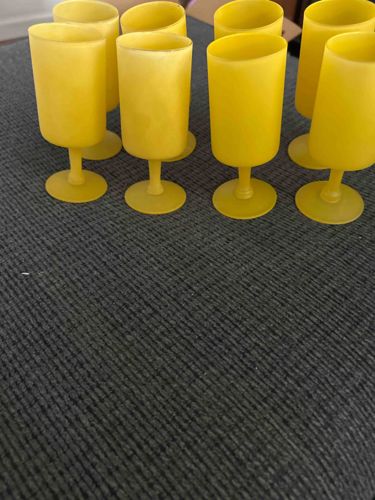
This set consists of what appears to be eight (8) vintage plastic goblets or stemmed cups, all uniform in a vibrant, opaque yellow color. Each goblet features a cylindrical bowl with straight sides, transitioning smoothly to a relatively slim stem that widens into a circular foot. The material appears to be a type of molded plastic, likely polypropylene or melamine, given the opaque finish and the apparent durability. The surfaces show a matte or satin finish, rather than a glossy one, which suggests a deliberate design choice or a characteristic of the plastic used. The size of the cups seems to be suitable for water, juice, or casual beverages, possibly for outdoor use, picnics, or children's parties, considering the material's unbreakability compared to glass. There are no visible chips, cracks, or significant scuffs on the surfaces that can be discerned from the image, suggesting they are in good to very good used condition. Some subtle discoloration or fading might be present, as well as minor surface scratches consistent with age and use, but these are not overtly obvious. No specific maker's marks, brand names, or manufacturing details are discernible from the provided image. The design aesthetic, particularly the solid, opaque color and simple form, hints at a mid-20th century, possibly 1960s to 1980s, style period, common for everyday plasticware. The uniformity in shape and color indicates they are part of a coordinated set. The craftsmanship appears to be typical for mass-produced plastic items of that era, focusing on functionality and durability rather than intricate details or high-end finishes.
AI Appraisal Report
Based on my visual examination of the provided image, this set of eight vintage yellow plastic goblets appears to be in good to very good used condition. I observe no significant chips, cracks, or deep gouges, although minor surface scratches consistent with use and age are likely present but not clearly discernible. The uniform opaque yellow color and simple design align well with mass-produced plasticware from the mid to late 20th century, likely 1960s-1980s. The design and material suggest authenticity as typical vintage plastic household items.
In terms of market conditions, vintage plasticware, especially everyday items like these, typically commands modest prices. Comparables on online marketplaces (e.g., Etsy, eBay) for similar sets of eight vintage plastic goblets or tumblers of this era range from $15 to $50, depending on condition, specific design, and color. Yellow is a popular vintage color, which slightly enhances appeal.
Demand for such items is generally low to moderate, driven primarily by collectors of vintage plasticware, those seeking nostalgic decor, or individuals looking for durable, reusable entertaining pieces. These goblets are neither particularly rare nor from a highly sought-after designer or manufacturer, which limits their top-end value. Their value lies more in their functional and aesthetic vintage appeal rather than collectible rarity or artistic merit.
A significant factor impacting value is the lack of any discernible maker's marks, which prevents attribution to a specific brand that might command higher prices. Without a physical inspection, I cannot confirm the exact type of plastic (e.g., melamine, polypropylene) or assess tactile quality. To fully authenticate and assess precise condition, an in-person examination would be necessary to check for subtle discoloration, odors, UV damage, or minor surface imperfections not visible in the image. Provenance documentation, if available, could also enhance value by confirming origin or specific historical use.