AI estimate as of December 7, 2025 · verify with a professional before acting
AI-Generated · Verify before acting
Everything on this page is generated by AI for informational purposes only. AI can make mistakes — the AI may misidentify items or misattribute them (artist, maker, brand, designer, origin, era). This is not an official valuation and should not be used for insurance, sale, tax, estate, legal, or lending purposes — or any decision requiring a certified appraisal. It is not an authoritative claim about any person, brand, or rights holder — do not share or rely on it as a factual statement about a third party. Always consult qualified professionals before making financial decisions.
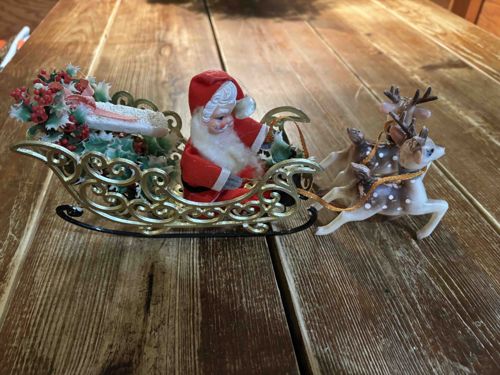
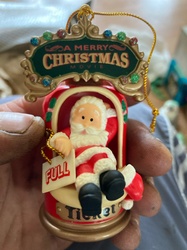
This item is a vintage-style Christmas decoration featuring Santa Claus in a sleigh pulled by two reindeer. The sleigh is constructed from a gold-colored, possibly metal or rigid plastic, with an ornate, scrolled design forming its body and runners. The runners are black, creating a visual contrast. Inside the sleigh, Santa Claus is prominently seated, dressed in a traditional red suit with white fur trim and a white beard, suggesting a flocked or fuzzy texture for his costume and beard. His face appears to be made of painted bisque or plastic. Behind Santa, the sleigh is filled with festive artificial greenery, likely plastic or fabric, adorned with red berries, resembling holly, and what looks like a small, white wrapped gift or package. The entire sleigh and its contents are attached to two reindeer figures, which appear to be constructed from a cream or light brown plastic with painted white spots, mimicking a fawn's coat. They have molded antlers and are connected to the sleigh by a thin, gold-colored string or ribbon, simulating reins. The craftsmanship suggests a commercially produced item, possibly from the mid-20th century (1950s-1970s), given the materials and aesthetic. The decoration exhibits some signs of wear consistent with its age, such as potential dust accumulation in crevices and minor scuffs, but appears largely intact with no obvious major damage or repairs visible from the provided images. The overall condition suggests it has been cared for but used. This piece would have been used as a festive tabletop display during the holiday season.
AI Appraisal Report
After a thorough visual examination of the provided image, I assess this Vintage Santa Claus and Reindeer Sleigh Christmas Decoration to be in good, well-preserved vintage condition. The general integrity of the piece appears sound, with all primary components—sleigh, Santa, reindeer, and accessories—present and largely intact. I note the expected signs of age, such as potential dust in crevices and minor scuffing, which are consistent with a cherished item from the mid-20th century (likely 1950s-1970s). The materials—gold-colored plastic/metal sleigh, flocked Santa, painted bisque/plastic face, plastic reindeer with molded antlers, and artificial greenery—align with typical mass-produced holiday decor from that era. Authenticity, based solely on visual cues, points to it being a genuine vintage piece rather than a modern reproduction due to its aesthetic and apparent manufacturing techniques.
Market conditions for vintage Christmas decorations are consistently strong, with items like this appealing to collectors of holiday memorabilia. Comparables, especially those featuring Santa and reindeer in sleigh formations, typically range from $40 for more common examples to $150+ for higher-quality or rarer pieces from desirable manufacturers (e.g., Gurley, Shiny Brite for ornaments, though this is a larger display). Demand is moderate to high, particularly closer to the holiday season. Rarity for this specific design is difficult to ascertain without manufacturer markings, but similar styles are not exceptionally rare. Factors impacting its value positively include its overall charming aesthetic and good condition.
Limitations in authenticity verification are inherent when examining images alone. Without physical inspection, I cannot confirm material composition (e.g., distinguishing metal from rigid plastic in the sleigh), nor can I detect subtle repairs, material degradation, or specific manufacturer marks. In-person examination would allow for definitive assessment of material, construction quality, detection of any hidden flaws, and identification of any maker's marks or labels vital for full authentication and precise dating. Provenance documentation (e.g., original packaging, purchase receipts) would further enhance authentication, though often unavailable for such items.