AI identification & appraisal estimate

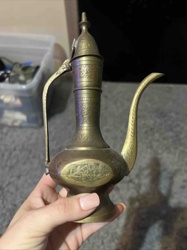
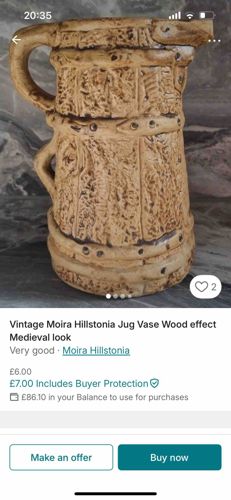
Vintage Moira Hillstonia Wood Effect Medieval Style Jug/Vase

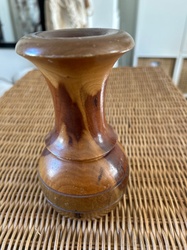
Submitted photo of Vintage Moira Hillstonia Wood Effect Medieval Style Jug/Vase
Photo submitted by the user — not generated by AI

AI Estimated Value

Not an official valuation

$25-50

AI estimate as of July 12, 2025 · verify with a professional before acting

AI-Generated · Verify before acting

Everything on this page is generated by AI for informational purposes only. AI can make mistakes — the AI may misidentify items or misattribute them (artist, maker, brand, designer, origin, era). This is not an official valuation and should not be used for insurance, sale, tax, estate, legal, or lending purposes — or any decision requiring a certified appraisal. It is not an authoritative claim about any person, brand, or rights holder — do not share or rely on it as a factual statement about a third party. Always consult qualified professionals before making financial decisions.

Read the full disclaimer

AI Item Analysis

This item is a vintage Moira Hillstonia jug or vase, designed with a distinct wood-effect finish to emulate a medieval aesthetic. It appears to be constructed from ceramic or earthenware, given the texture and common material for such decorative pieces. The color is a light, naturalistic brown or beige, mimicking aged wood, with darker brown accents emphasizing carved or molded details. The body of the jug is cylindrical, tapering slightly towards the top, and features vertical panels or 'staves' that are heavily textured to resemble rough, split wood. These panels are punctuated by two horizontal decorative bands, one just below the rim and another around the middle of the body, which are designed to look like metal straps holding the 'wood' staves together. Each 'strap' features molded 'rivets' or 'nails,' further enhancing the rustic, constructed appearance. The handle is sturdy and integrated into the design, maintaining the same wood-effect texture. The craftsmanship indicates a deliberate effort to create an antique or historical impression, likely a mass-produced item aiming for a handcrafted feel. Overall condition is described as 'Very good,' suggesting minimal wear, chips, or cracks, though the image does not provide enough resolution to confirm fine details of wear or any maker's marks, which would typically be on the base. The style strongly points to a mid-20th century production, adopting a historical revival aesthetic popular in that era for domestic decor.
AI Appraisal Report

Upon examining the image of the Moira Hillstonia Wood Effect Medieval Style Jug/Vase, I assess its condition to be very good, consistent with the description provided. The wood-effect texture, replicating vertical staves and 'metal' bands with 'rivets,' appears intact with no visible chips, cracks, or significant surface abrasions. The color consistency also suggests good preservation. This piece is characteristic of decorative earthenware from the mid-20th century, a period that saw a strong revival of historical and rustic aesthetics in home decor. Moira Hillstonia was a known manufacturer of such ceramic wares, often mass-produced to achieve a handcrafted appearance. Given its likely mass-production, rarity is not a significant factor here; these items appear sporadically on secondary markets. The market for decorative ceramics of this type is generally stable but not highly speculative. Value is primarily driven by condition, aesthetic appeal, and maker recognition (though Moira Hillstonia pieces typically fall into a modest price bracket). Comparable sales data for similar Moira Hillstonia wood-effect vases and jugs on online auction platforms and antique dealer sites suggest a consistent demand, albeit at relatively accessible price points. Factors impacting value positively include its 'very good' condition and the charming, distinctive design. Negative factors include its mass-produced nature and lack of historical significance beyond its decorative function. The primary limitation of this appraisal, based solely on imagery, is the inability to verify authenticity markings, such as a backstamp or impressed marks, which are typically found on the base. A physical examination would allow me to thoroughly inspect for any hidden damage, assess the true texture and weight, and verify specific maker's marks for full authentication. Without physical inspection, precise verification of the 'Moira Hillstonia' attribution can only be assumed from the description.

Keep exploring

More decorative arts appraisals

Get your items appraised

Instant AI-powered appraisal estimates from a photo

Browse More Appraisals