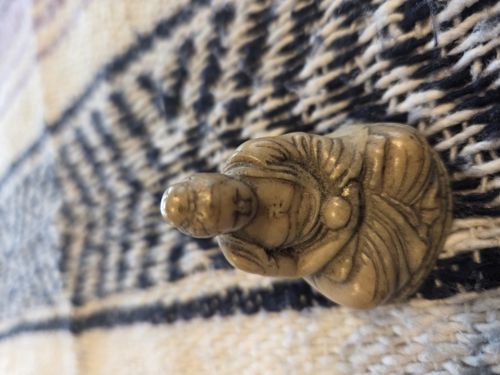
Carved Bone or Resin Seated Buddha Netsuke
Asian Art & Collectibles

Carved Bone or Resin Seated Buddha Netsuke

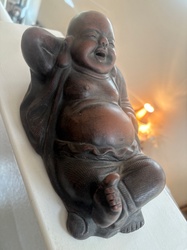
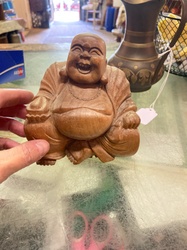
This is a small, ornate figurine depicting a seated Buddha figure, commonly referred to in Asian art as a Netsuke. The piece is crafted from a cream-colored or beige material, possibly carved bone, tagua nut, or a high-quality molded resin designed to simulate antique ivory. The figure is shown in a cross-legged meditative pose with detailed flowing robes that feature deep incised lines to create texture and depth. A notable feature is the small sauvastika symbol (a sacred symbol in Buddhism) visible on the chest. The facial features are delicately rendered with a serene expression. The surface shows a dark patina or 'staining' within the recessed carvings, which is a common decorative technique used to highlight the intricate details of the carving. In terms of condition, the item appears to have some surface wear consistent with age, particularly where the dark pigment has rubbed off on raised surfaces. There are no immediately visible cracks or chips from this angle, though the underside (the himotoshi) is not visible to confirm its functional status as a toggle. Based on style, this piece appears to be a 20th-century decorative object made in the tradition of Japanese Edo-period toggles.
Estimated Value

$40-60

Basic Information

Category

Asian Art & Collectibles

Appraised On

March 3, 2026

Estimated Value

$40-60

Item Description

This is a small, ornate figurine depicting a seated Buddha figure, commonly referred to in Asian art as a Netsuke. The piece is crafted from a cream-colored or beige material, possibly carved bone, tagua nut, or a high-quality molded resin designed to simulate antique ivory. The figure is shown in a cross-legged meditative pose with detailed flowing robes that feature deep incised lines to create texture and depth. A notable feature is the small sauvastika symbol (a sacred symbol in Buddhism) visible on the chest. The facial features are delicately rendered with a serene expression. The surface shows a dark patina or 'staining' within the recessed carvings, which is a common decorative technique used to highlight the intricate details of the carving. In terms of condition, the item appears to have some surface wear consistent with age, particularly where the dark pigment has rubbed off on raised surfaces. There are no immediately visible cracks or chips from this angle, though the underside (the himotoshi) is not visible to confirm its functional status as a toggle. Based on style, this piece appears to be a 20th-century decorative object made in the tradition of Japanese Edo-period toggles.
Get Your Items Appraised

Instant estimates of your treasures with AI-powered instant appraisals

Browse More Appraisals