AI estimate as of October 10, 2025 · verify with a professional before acting
AI-Generated · Verify before acting
Everything on this page is generated by AI for informational purposes only. AI can make mistakes — the AI may misidentify items or misattribute them (artist, maker, brand, designer, origin, era). This is not an official valuation and should not be used for insurance, sale, tax, estate, legal, or lending purposes — or any decision requiring a certified appraisal. It is not an authoritative claim about any person, brand, or rights holder — do not share or rely on it as a factual statement about a third party. Always consult qualified professionals before making financial decisions.
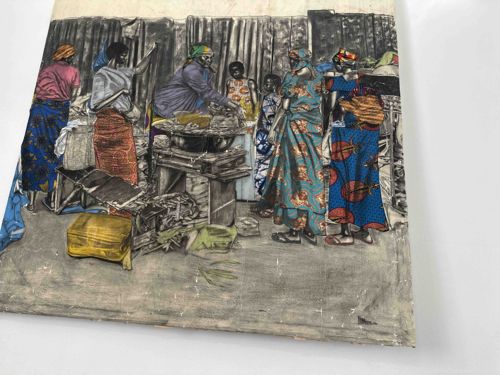
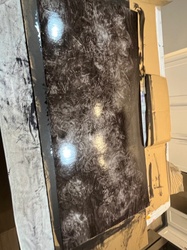
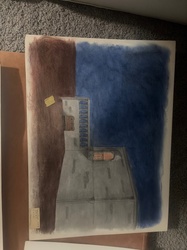
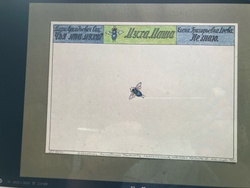
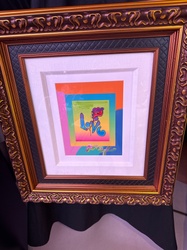
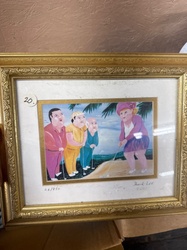
This appears to be a unique mixed media artwork depicting a vibrant African market scene, combining drawing or printmaking with textile collage elements. The overall composition shows several figures, predominantly women, engaged in various activities within a busy market setting. The background and ground are rendered in grayscale, likely charcoal, graphite, or a monochrome print, providing a muted backdrop to the colorful human figures. The figures' clothing is a striking feature, constructed from actual fabric swatches with distinct patterns, meticulously cut and adhered to the artwork, creating a three-dimensional and textural effect. Colors observed in the fabrics include teal with orange/brown motifs, royal blue with red circular patterns, burnt orange, a light gray, and a bright pink. One fabric piece is a rich yellow, possibly representing a package or bale. The grayscale areas show fine lines and shading, suggesting a detailed underlying drawing, capturing stalls, various goods, and the general clutter of a market. The visible condition suggests some surface wear, particularly in the grayscale areas, with minor scuffs and marks, consistent with handling or age. The edges of the fabric pieces appear well-adhered, indicating careful craftsmanship. The integration of textiles adds a tactile quality and depth not typically found in conventional two-dimensional art. This artwork likely dates from the late 20th or early 21st century, given its contemporary mixed-media approach. The use of vibrant patterns and the subject matter clearly point to an African cultural context.
AI Appraisal Report
Based on my visual examination of the provided image, this mixed media artwork, 'African Market Scene,' presents a compelling blend of drawing/printmaking and textile collage. The condition appears good overall, with the fabric elements well-adhered and vibrant. I note some surface wear, scuffs, and marks in the grayscale areas, which is consistent with age and handling but does not significantly detract from the artwork's visual impact. This wear suggests authenticity rather than a pristine, mass-produced item. The integration of actual fabric swatches for clothing creates a unique tactile and visual depth, making this piece stand out from purely two-dimensional works.
From a market perspective, mixed media works, especially those incorporating textiles and cultural themes, have a steady demand among collectors interested in contemporary African art or folk art. Comparables would include unique, unsigned mixed media pieces with similar thematic content and craftsmanship, often found in smaller galleries, art fairs, or online platforms specializing in emerging artists. The piece's uniqueness and clear African cultural context enhance its appeal. Factors impacting value include the lack of a visible signature or artist's documentation, which limits its potential for higher valuation as a recognized artist's work. The age, estimated to be late 20th or early 21st century, places it within a contemporary art market context.
Limitations in authenticity verification are significant without a physical examination. I cannot definitively confirm the age of the piece, the exact materials used (e.g., specific paper or fabric types), or the precise printmaking/drawing technique from images alone. An in-person examination would allow for closer inspection of the paper's aging, the fabric's composition, and the method of adhesion. Provenance documentation, such as purchase receipts or exhibition history, would be crucial for attributing the work to a specific artist or confirming its origin. Without such information, the value is primarily based on its aesthetic appeal, craftsmanship, and decorative qualities as an unsigned art piece.