Chert Lithic Tool (Scraper or Projectile Point)
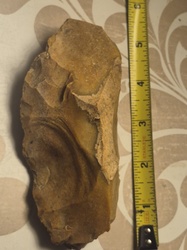
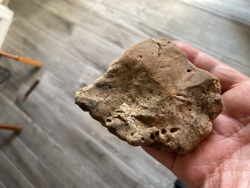
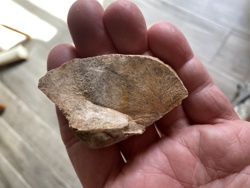
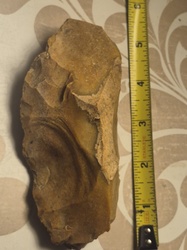
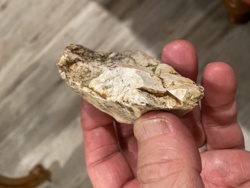
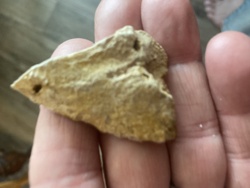
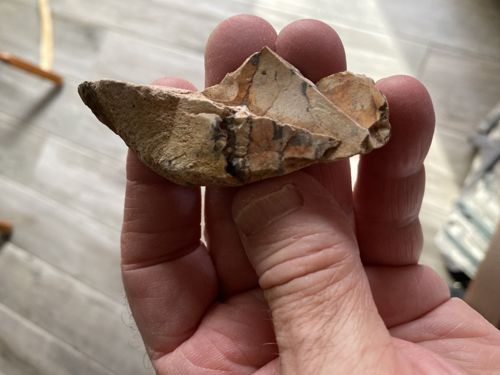
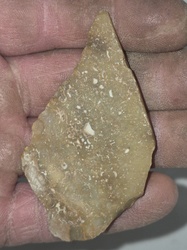
This artifact is a lithic specimen measuring approximately 2.5 inches by 1 inch, identified as being sourced from Guthrie, Oklahoma. The item is crafted from chert, a cryptocrystalline sedimentary rock, displaying a mottled palette of earthy tans, creams, and dark brown to black dendritic inclusions or veining. Its physical form is asymmetrical with significant bifacial or unifacial flaking along its margins, characteristic of percussion or pressure flaking techniques used in stone tool manufacturing. The architecture of the piece shows a distinct ridge and several flake scars that create a sharp, functional edge, suggesting its use as a handheld scraper or a primitive projectile point. The surface texture exhibits a matte finish with visible concoidal fracture patterns. While the user identifies this as 'Lower Acheulean,' it is important to note that Acheulean technology is traditionally associated with the Lower Paleolithic of Africa, Europe, and Western Asia, whereas artifacts found in Oklahoma are typically associated with much later North American cultural periods such as the Paleo-Indian or Archaic periods. The condition appears stable with naturally weathered edges and no modern breakage visible. The craftsmanship reflects a utilitarian standard, with deliberate shaping to create a ergonomic grip and a durable working edge.
AI-Generated Appraisal Disclaimer
Estimated Value
$45-75
Basic Information
Category
Archeological Artifact / Lithic Tool
Appraised On
February 25, 2026
Estimated Value
$45-75
Additional Details Provided By Owner
User Provided Information
Lower Acheulean chert projectile point or scraper tool found in Guthrie OK measuring 2.5" x 1"
Item Description
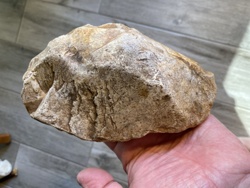
This artifact is a lithic specimen measuring approximately 2.5 inches by 1 inch, identified as being sourced from Guthrie, Oklahoma. The item is crafted from chert, a cryptocrystalline sedimentary rock, displaying a mottled palette of earthy tans, creams, and dark brown to black dendritic inclusions or veining. Its physical form is asymmetrical with significant bifacial or unifacial flaking along its margins, characteristic of percussion or pressure flaking techniques used in stone tool manufacturing. The architecture of the piece shows a distinct ridge and several flake scars that create a sharp, functional edge, suggesting its use as a handheld scraper or a primitive projectile point. The surface texture exhibits a matte finish with visible concoidal fracture patterns. While the user identifies this as 'Lower Acheulean,' it is important to note that Acheulean technology is traditionally associated with the Lower Paleolithic of Africa, Europe, and Western Asia, whereas artifacts found in Oklahoma are typically associated with much later North American cultural periods such as the Paleo-Indian or Archaic periods. The condition appears stable with naturally weathered edges and no modern breakage visible. The craftsmanship reflects a utilitarian standard, with deliberate shaping to create a ergonomic grip and a durable working edge.
Related Tags
Get Your Items Appraised
Instant estimates of your treasures with AI-powered instant appraisals