AI estimate as of December 3, 2025 · verify with a professional before acting
AI-Generated · Verify before acting
Everything on this page is generated by AI for informational purposes only. AI can make mistakes — the AI may misidentify items or misattribute them (artist, maker, brand, designer, origin, era). This is not an official valuation and should not be used for insurance, sale, tax, estate, legal, or lending purposes — or any decision requiring a certified appraisal. It is not an authoritative claim about any person, brand, or rights holder — do not share or rely on it as a factual statement about a third party. Always consult qualified professionals before making financial decisions.
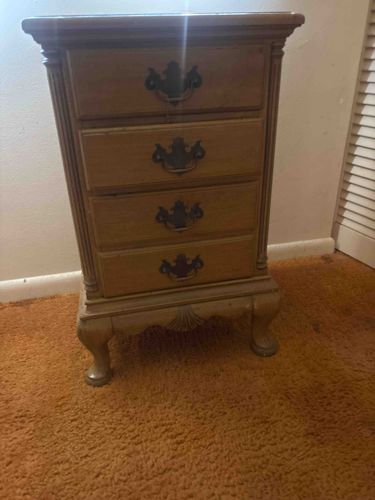
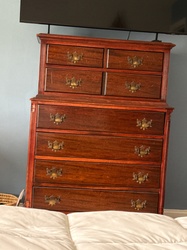
This is a wooden four-drawer nightstand or small chest, appearing to be constructed from a light-colored wood, possibly oak or a similar hardwood, finished with a warm, medium-tone stain. The piece features a traditional or possibly Queen Anne style, indicated by the cabriole legs and shell carving details on the apron below the bottom drawer. The top surface has a slight overhang with a simple, decorative edge molding. The sides of the chest are fluted, adding a classical architectural element to its design. Each of the four drawers is equipped with a matching pair of ornate, dark-toned metal bail pull handles, possibly brass or iron with an aged patina, featuring a decorative escutcheon plate with a floral or scroll motif. The drawers appear to be of similar size, stacked vertically. The overall visible condition seems fair, with some light reflections obscuring exact details of the finish on the drawer fronts, but no obvious significant damage like large gouges or missing pieces are immediately discernible. The finish appears consistent across the visible surfaces. The item's design suggests an age from the mid-20th century, likely 1950s-1970s, based on the style of handles and the overall construction aesthetic common during that period for bedroom furniture. The craftsmanship appears to be factory-made, striving for a classic appearance with decorative accents.
AI Appraisal Report
I have visually examined this Four-Drawer Wood Nightstand/Chest. Based on the provided image, the condition appears fair to good, exhibiting characteristics typical of a well-used but cared-for piece of furniture. I can discern no significant structural damage, large gouges, or missing components. The consistency of the finish, despite some light reflection, suggests it is original or a well-executed refinish. Authenticity, based solely on visual cues, points to a factory-made piece from the mid-20th century, likely 1950s-1970s, given the traditional styling, Queen Anne inspired cabriole legs, shell carving, fluted sides, and ornate bail pull handles which were common during that era.
Market conditions for such mass-produced traditional-style bedroom furniture are moderate. While solid wood construction is desirable, the design aesthetic is no longer at the peak of popularity, limiting demand to those furnishing period homes or seeking durable, affordable pieces. Comparables in the secondary market typically range from $100 to $400 for similar four-drawer chests or nightstands of this age and style. Factors impacting value include the solid wood construction, the decorative details, and the overall good condition. However, the lack of a prominent maker's mark, association with a high-end designer, or particularly rare design elements prevents it from commanding a premium.
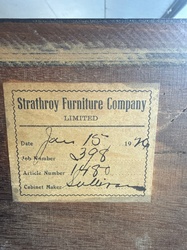
Limitations in authenticity verification are significant based on images alone. A full authentication would require in-person examination to assess the wood type definitively, inspect drawer construction (e.g., dovetails, dadoes), check for manufacturer labels or stamps, and scrutinize the condition of the finish and hardware for originality and wear. Provenance documentation could also shed light on its history and origin. Without these steps, the estimated age and origin remain based on aesthetic commonalities.