Acheulean Style Chert Bifacial Tool
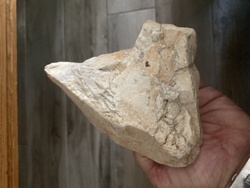
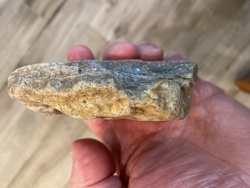
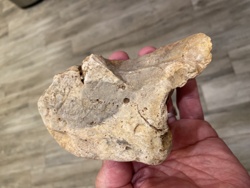
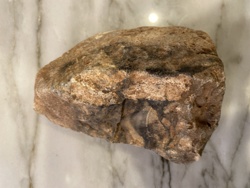
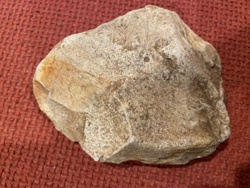
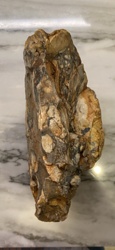
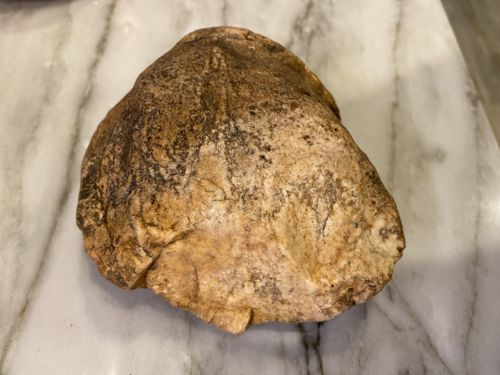
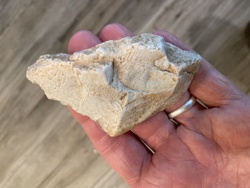
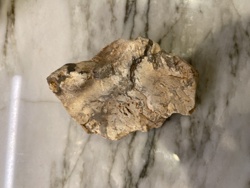
This artifact is a cordiform-style lithic biface, measuring approximately 5 inches by 5 inches, crafted from a tan-to-ochre colored chert. The item demonstrates significant surface patination with dark mineral deposits and manganese spotting across the dorsal face, consistent with long-term environmental exposure. Physically, it features a rounded, bulbous base known as a ‘butt,’ intended to fit the palm, tapering toward a more defined working edge. The construction shows evidence of hard-hammer percussion flaking, resulting in large, deep flake scars. This specific tool type, characterized as an Acheulean-style hand axe or scraper, is typified by its bilateral symmetry and dual-purpose utility for butchering or scraping. While similar in morphology to Lower Paleolithic tools found in the Old World, its provenance in Guthrie, Oklahoma, classifies it within a North American context where such robust bifacial forms are often associated with Paleo-Indian preforms or early archaic quarrying tools. The condition is stable, showing smoothed edges from natural rolling or water wear, with no modern fracture lines, suggesting significant antiquity. The heft and craftsmanship indicate a functional prehistoric tool designed for durability during heavy-duty tasks.
AI-Generated Appraisal Disclaimer
Estimated Value
$150 - $300
Basic Information
Category
Archaeological Artifacts / Prehistoric Stone Tools
Appraised On
March 2, 2026
Estimated Value
$150 - $300
Additional Details Provided By Owner
User Provided Information
Lower Paleolithic Acheulean chert bi face hand axe scraper found in Guthrie OK measuring 5" x 5"
Item Description
This artifact is a cordiform-style lithic biface, measuring approximately 5 inches by 5 inches, crafted from a tan-to-ochre colored chert. The item demonstrates significant surface patination with dark mineral deposits and manganese spotting across the dorsal face, consistent with long-term environmental exposure. Physically, it features a rounded, bulbous base known as a ‘butt,’ intended to fit the palm, tapering toward a more defined working edge. The construction shows evidence of hard-hammer percussion flaking, resulting in large, deep flake scars. This specific tool type, characterized as an Acheulean-style hand axe or scraper, is typified by its bilateral symmetry and dual-purpose utility for butchering or scraping. While similar in morphology to Lower Paleolithic tools found in the Old World, its provenance in Guthrie, Oklahoma, classifies it within a North American context where such robust bifacial forms are often associated with Paleo-Indian preforms or early archaic quarrying tools. The condition is stable, showing smoothed edges from natural rolling or water wear, with no modern fracture lines, suggesting significant antiquity. The heft and craftsmanship indicate a functional prehistoric tool designed for durability during heavy-duty tasks.
Get Your Items Appraised
Instant estimates of your treasures with AI-powered instant appraisals