Framed Chinese Ink and Wash Painting of Red-Crowned Cranes and Pine
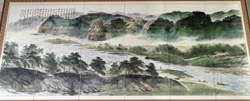
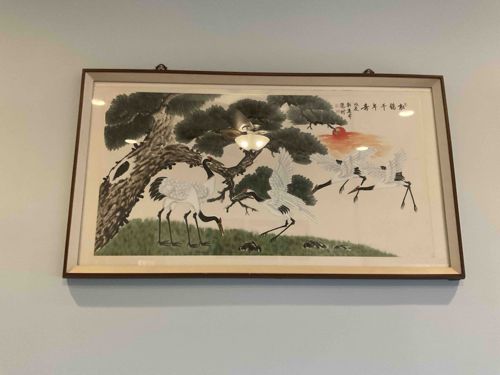
This is a horizontal Chinese ink and color painting on paper, professionally housed in a dark wood frame with two decorative metal hangers and protected by glass. The composition features a traditional motif of red-crowned cranes (Tancho) congregating beneath a gnarled, ancient pine tree, a set of symbols representing longevity and peace. The artwork utilizes fine brushwork for the crane plumage and expressive, textured strokes for the pine bark and needles. A vibrant red setting sun is visible in the background, contrasting with the muted greens and browns. To the upper right, there is a clear calligraphic inscription in black ink accompanied by two red seal stamps, which likely indicate the artist's signature and the date or location of creation. The horizontal format suggests it may have been adapted from a handscroll or commissioned as a wall piece. The colors appear well-preserved, though some glare from interior lighting obscures central details. The framing style and the precision of the crane rendering suggest a mid-to-late 20th-century origin, adhering to classical stylistic standards.
AI-Generated Appraisal Disclaimer
Estimated Value
$450.00 - $700.00
Basic Information
Category
Asian Fine Art and Paintings
Appraised On
December 28, 2025
Estimated Value
$450.00 - $700.00
Item Description
This is a horizontal Chinese ink and color painting on paper, professionally housed in a dark wood frame with two decorative metal hangers and protected by glass. The composition features a traditional motif of red-crowned cranes (Tancho) congregating beneath a gnarled, ancient pine tree, a set of symbols representing longevity and peace. The artwork utilizes fine brushwork for the crane plumage and expressive, textured strokes for the pine bark and needles. A vibrant red setting sun is visible in the background, contrasting with the muted greens and browns. To the upper right, there is a clear calligraphic inscription in black ink accompanied by two red seal stamps, which likely indicate the artist's signature and the date or location of creation. The horizontal format suggests it may have been adapted from a handscroll or commissioned as a wall piece. The colors appear well-preserved, though some glare from interior lighting obscures central details. The framing style and the precision of the crane rendering suggest a mid-to-late 20th-century origin, adhering to classical stylistic standards.
Related Tags
Explore similar items and categories:
Get Your Items Appraised
Instant estimates of your treasures with AI-powered instant appraisals