AI estimate as of July 19, 2025 · verify with a professional before acting
AI-Generated · Verify before acting
Everything on this page is generated by AI for informational purposes only. AI can make mistakes — the AI may misidentify items or misattribute them (artist, maker, brand, designer, origin, era). This is not an official valuation and should not be used for insurance, sale, tax, estate, legal, or lending purposes — or any decision requiring a certified appraisal. It is not an authoritative claim about any person, brand, or rights holder — do not share or rely on it as a factual statement about a third party. Always consult qualified professionals before making financial decisions.
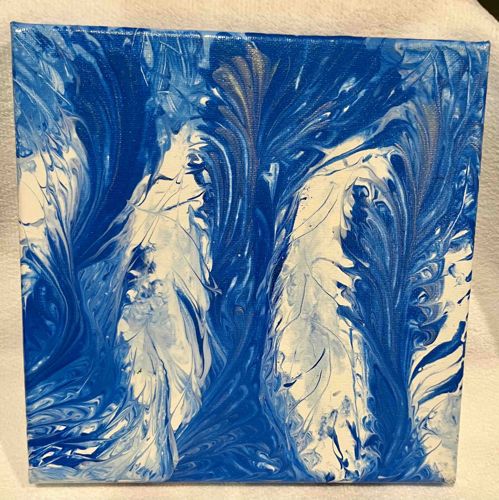
This item is an acrylic pour painting on what appears to be a stretched canvas, likely a small, square format. The dominant colors are a vibrant cobalt blue and white, with subtle hints of a light grey or very pale silver blended into some of the blue areas, particularly towards the top. The painting technique used, fluid art or acrylic pouring, creates organic, swirling patterns where the colors flow and intermix. The process involves pouring liquid acrylic paints onto a surface, allowing them to spread and combine, often creating 'cells' or lace-like effects. Here, the patterns are characterized by prominent vertical elements of swirling blue that seem to frame and intertwine with areas of white, creating an abstract, dynamic composition that evokes natural forms such as water, flames, or foliage. The paint is applied thickly in some areas, contributing to a sense of texture and depth. The edges of the canvas appear to be painted, indicating a 'gallery wrap' style, intended to be displayed without a frame. There are no visible condition issues such as cracks, chips, or significant dirt. The surface appears even and well-cured. No discernible artist's signature, date, or other manufacturing marks are visible in the provided image. Given the contemporary nature of acrylic pour techniques, the estimated age of this piece would likely be modern, possibly late 20th century or 21st century. The craftsmanship is typical of the genre, with the success of the pour depending on the artist's control over the paint's fluidity and composition. The vibrant colors and abstract forms make it a piece with strong visual impact.
AI Appraisal Report
Upon visual examination of this Abstract Blue and White Acrylic Pour Painting, I assess its condition as excellent. The colors are vibrant, and there are no visible signs of cracking, chipping, or significant surface imperfections. The paint appears well-cured, and the canvas edges are painted, suggesting a gallery wrap presentation.
Authenticity, based solely on the image, points to a contemporary piece utilizing fluid art techniques, likely from the late 20th or 21st century. The absence of a visible signature or any identifying marks, while common for some contemporary abstract works, limits definitive authentication of an artist.
The market for abstract acrylic pour paintings is robust, driven by a growing appreciation for contemporary art and accessible price points. Demand for these pieces is moderate; while they are visually striking, they are not rare given the widespread practice of this technique. Comparable works by emerging or unknown artists of similar scale typically range from $100 to $300 online and in smaller galleries. Factors impacting value include the lack of an identifiable artist, which limits the potential for higher market prices associated with established names, and the inherent variability of pour painting outcomes. The aesthetic appeal and strong visual impact are positive contributors.
Limitations in authenticity verification from an image alone are significant. A full in-person examination would allow for tactile inspection of the canvas, paint thickness, and detection of any subtle surface anomalies. Provenance documentation, such as purchase receipts or exhibition history, is crucial for establishing origin and artist attribution. Scientific testing, like pigment analysis, could confirm paint composition and age but is generally not economically warranted for works of this type unless a specific artist attribution is being challenged.