AI Appraisal Estimate

AI-generated estimates · not official valuations

From the user

What was submitted

Photo and notes provided by the user — not generated by AI

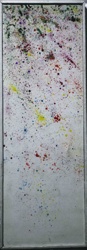
Submitted item photo
Submitted photo · June 6, 2026

User's notes

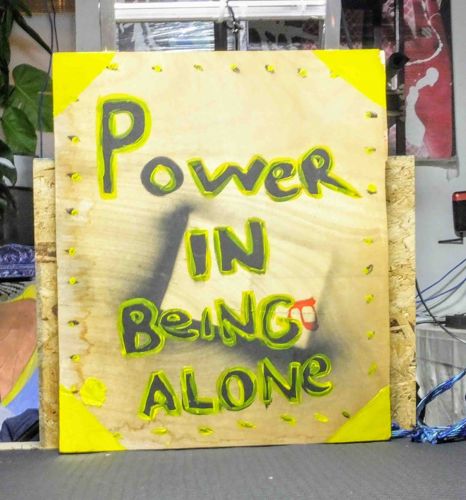
Unknown artist. Power in being alone artwork paint on canvas, size 2165 x 2324

AI analysis below

AI appraisal

AI analysis & estimate

AI-Generated · Verify before acting

Everything below is generated by AI for informational purposes only. AI can make mistakes — the AI may misidentify items or misattribute them (artist, maker, brand, designer, origin, era). This is not an official valuation and should not be used for insurance, sale, tax, estate, legal, or lending purposes — or any decision requiring a certified appraisal. It is not an authoritative claim about any person, brand, or rights holder — do not share or rely on it as a factual statement about a third party. Always consult qualified professionals before making financial decisions.

Note

This analysis also relies on unverified notes provided by the user, which may be incomplete or inaccurate and could affect the result.

Read the full disclaimer

AI Identification

·Not independently authenticated·Verify before acting

Power in Being Alone Mixed Media Artwork

Fine Art - Modern & Contemporary Paintings

AI Estimated Value

·Not an official valuation·Verify before acting

$450 - $700

As of June 6, 2026

AI Item Analysis

·AI can make mistakes·Verify before acting
This contemporary mixed media artwork features the text 'POWER IN BEING ALONE' rendered in a bold, street-art inspired style. The piece appears to be executed on a light-colored wooden plywood substrate rather than a traditional canvas, measuring approximately 2165 x 2324 units. The typography consists of charcoal or dark grey block letters outlined with an irregular, vibrant neon yellow or chartreuse hand-painted border, creating a visually high-contrast effect. Construction details include visible metal fasteners or rivets along the vertical sides and bottom edge, accented with spots of neon yellow paint. The corners are also painted with bright yellow triangles, giving the piece a framed or reinforced aesthetic. A faint, dark spray-painted shadow or silhouette is visible behind the central text, adding a sense of depth and layered urban grit. The condition shows intentional raw edges and a slightly weathered surface typical of contemporary industrial-style art. There are small red accents or marks near the letter 'G' and 'N', possibly representing a signature or a deliberate graphic element. The overall craftsmanship reflects a raw, DIY instructional or protest-sign aesthetic, likely produced in the late 20th or early 21st century by an unknown artist focusing on empowerment and solitude motifs.
AI Appraisal Report

·AI can make mistakes·Verify before acting
I have conducted a thorough visual examination of the mixed media work titled 'POWER IN BEING ALONE.' The piece exhibits a raw, industrial aesthetic, utilizing plywood rather than traditional canvas, which aligns with modern 'street-art' and 'protest-art' movements. The use of neon chartreuse accents against charcoal block lettering creates a high-contrast visual that is currently popular in boutique interior design markets. The structural rivets and painted corners suggest an intentional 'DIY' construction that enhances its urban character. The condition appears consistent with contemporary works of this style—the 'weathered' surface and raw edges are likely stylistic choices rather than environmental degradation. Market demand for large-scale, text-based contemporary art remains steady, particularly for residential and commercial loft spaces. Comparables for unsigned, large-scale mixed media works on wood typically fall within this range, as the value is driven primarily by decorative appeal and scale rather than investment-grade pedigree. However, there are significant limitations to this appraisal. Without an artist's signature or verifiable provenance, the work is currently valued as an 'anonymous decorative piece.' Authenticity cannot be fully established through digital imagery alone. A physical inspection is required to determine the specific pigments used (identifying aerosol vs. acrylic), the age of the wood substrate, and to search for obscured signatures or gallery stamps on the reverse. Provenance documentation, such as a bill of sale from a specific gallery or street collective, would be necessary to elevate this value into the fine art category. Scientific testing of the binders could further narrow the date of creation.

Get your items appraised

Instant estimates of your treasures with AI-powered appraisals

Browse More Appraisals