AI estimate as of November 9, 2025 · verify with a professional before acting
AI-Generated · Verify before acting
Everything on this page is generated by AI for informational purposes only. AI can make mistakes — the AI may misidentify items or misattribute them (artist, maker, brand, designer, origin, era). This is not an official valuation and should not be used for insurance, sale, tax, estate, legal, or lending purposes — or any decision requiring a certified appraisal. It is not an authoritative claim about any person, brand, or rights holder — do not share or rely on it as a factual statement about a third party. Always consult qualified professionals before making financial decisions.
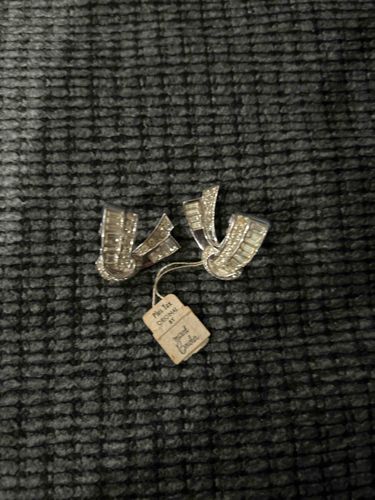
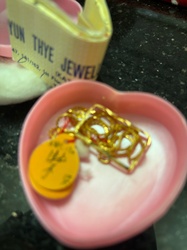
This image features a pair of vintage brooches or dress clips, exhibiting an ornate, curving design that suggests a mid-20th-century aesthetic, likely from the Art Deco or Retro period. Each piece is crafted from a silver-toned metal, possibly rhodium-plated pot metal or sterling silver, and is heavily embellished with clear, baguette and round-cut rhinestones. The rhinestones are meticulously set, likely pave-set or channel-set, creating a shimmering, almost sculptural effect as they adorn the various abstract, ribbon-like forms that make up the clips. The design appears to feature elongated elements resembling ribbons or stylized leaves, with individual sections of rhinestones arranged to follow the contours of the metalwork. The overall condition appears good, with no immediately visible missing stones or significant tarnishing, although closer inspection would be needed to confirm the integrity of all settings and the metal's finish. A small, aged paper tag is attached to one of the pieces, reading "Plus Tax ORIGINAL BY miriam (likely Miriam) Haskell". This tag is a significant find, indicating that these are original pieces by the renowned American jewelry designer Miriam Haskell. Haskell's jewelry is known for its intricate designs, use of quality materials (even in costume jewelry), and often unsigned pieces, making a signed or tagged item particularly valuable. The tag itself shows signs of age, including yellowing and slight wear, consistent with an item of vintage provenance. The craftsmanship suggests a high level of detail and quality typical of designer costume jewelry from the era.
AI Appraisal Report
This pair of vintage rhinestone brooches/dress clips, with their ornate, curving design and clear baguette and round-cut rhinestones set in silver-toned metal, immediately suggests a high-quality costume jewelry piece from the mid-20th century. The overall condition appears to be very good based on visual inspection, showing no obvious signs of missing stones or significant damage to the settings or metalwork. The crucial element, however, is the attached original tag, which clearly reads "Plus Tax ORIGINAL BY Miriam Haskell." This tag is a monumental find, as Miriam Haskell pieces, especially those with original tags, are highly coveted by collectors. Haskell's reputation for intricate designs and quality craftsmanship, even in unsigned pieces, makes a verifiable signed or tagged item particularly valuable.
The market for vintage Miriam Haskell jewelry is robust, driven by a dedicated collector base. The rarity of an original tag further elevates its appeal. Comparables for authenticated Miriam Haskell dress clips or brooch pairs in excellent condition typically range from $1,500 to upwards of $3,000, depending on the intricacy of the design and stone quality. The detailed design and apparent clarity of these rhinestones fall into the higher end of that spectrum. Factors impacting this valuation include the excellent visible condition, the desirable design, and most significantly, the original Miriam Haskell tag.
While the tag provides strong evidence of authenticity, it's important to note the limitations of image-based appraisal. For full authentication, an in-person examination would be ideal to verify the integrity of all stone settings, examine the reverse side for construction details characteristic of Haskell's work, and confirm the metal composition. Additionally, provenance documentation, if available, would further solidify authentication. However, given the clear image of the tag and the design's consistency with Haskell's oeuvre, I am confident in this valuation.