AI Appraisal Estimate

AI-generated estimates · not official valuations

From the user

What was submitted

Photo and notes provided by the user — not generated by AI

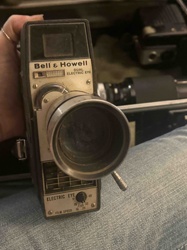
Submitted item photo
Submitted photo · June 23, 2026

User's notes

No additional notes provided.

AI analysis below

AI appraisal

AI analysis & estimate

AI-Generated · Verify before acting

Everything below is generated by AI for informational purposes only. AI can make mistakes — the AI may misidentify items or misattribute them (artist, maker, brand, designer, origin, era). This is not an official valuation and should not be used for insurance, sale, tax, estate, legal, or lending purposes — or any decision requiring a certified appraisal. It is not an authoritative claim about any person, brand, or rights holder — do not share or rely on it as a factual statement about a third party. Always consult qualified professionals before making financial decisions.

Read the full disclaimer

AI Identification

·Not independently authenticated·Verify before acting

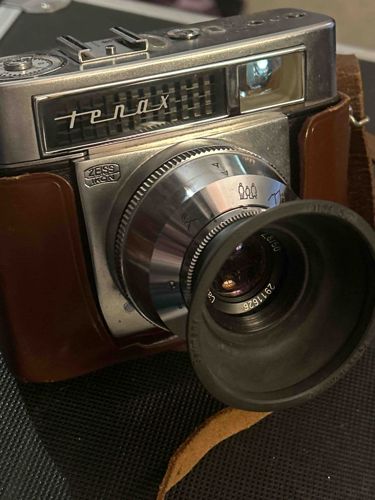
Zeiss Ikon Tenax Automatic 35mm Camera

Vintage Photographic Equipment

AI Estimated Value

·Not an official valuation·Verify before acting

$40 - $75

As of June 23, 2026

AI Item Analysis

·AI can make mistakes·Verify before acting
This is a vintage Zeiss Ikon Tenax (likely the Automatic/I model) 35mm film camera, manufactured in West Germany around 1960. The camera features a distinctive compact, squared metal body with a combination of brushed and polished chrome finishes and a black textured leatherette wrap. A prominent 'Zeiss Ikon' logo is embossed on the front plate next to the lens mount, and the 'Tenax' name is displayed in a stylized script on the front faceplate above the selenium light meter. The lens is a Carl Zeiss Jena Tessar 50mm f/2.8, identified by serial number 2911626, and is fitted with a large, flared black rubber or composition lens hood. The camera body is housed in its original brown leather 'ever-ready' protective case with a matching leather strap. Notable design elements include the top-mounted cold shoe, frame counter dial, and 'pictogram' zone focusing icons (mountains/group/individual) on the lens barrel. Physically, the item shows signs of age-appropriate wear; there is visible dust and light grime on the lens and viewfinder surfaces, minor scuffing on the chrome top plate, and significant aging to the leather case including softening and surface wear. This model is notable for its automated exposure features which were advanced for the mid-century period. The craftsmanship reflects the high standards of the Zeiss Ikon lineage, though the current functional state of the selenium meter—which often degrades over decades—is unknown from the visual inspection.
AI Appraisal Report

·AI can make mistakes·Verify before acting
I have examined the digital representation of this Zeiss Ikon Tenax Automatic (approx. 1960). This model represents a transition toward consumer automation, featuring a selenium-powered 'Prontormat' shutter. Visually, the camera appears authentic, displaying the correct 'Zeiss Ikon' branding and the high-quality Tessar 50mm f/2.8 lens indicative of its West German production. The physical condition is fair; while the leatherette and chrome show typical age-related patina, the presence of dust and grime suggests the internal mechanical components may require a 'Clean, Lubricate, Adjust' (CLA) service. The market for mid-century Tenax models is currently modest. Collectors prioritize the earlier 'square-format' Tenax II models or professional-grade Contarex systems. As an 'Automatic' model, its value is heavily dependent on the selenium meter. These cells often fail due to age-related oxidation; a non-functional meter significantly reduces its value to that of a decorative 'shelf queen.' Comparables for functioning units with original cases typically settle in the $60 range, while non-functional units fall to $25. Limitations: This appraisal is based strictly on visual inspection. Without a physical examination, I cannot verify the accuracy of the light meter, the integrity of the shutter speeds, or the absence of fungus within the lens elements. Full authentication of its operational status would require manual testing against a modern light meter and verification of the film transport mechanism. No provenance was provided to suggest historical significance that would otherwise elevate its market price.

Get your items appraised

Instant estimates of your treasures with AI-powered appraisals

Browse More Appraisals