AI estimate as of December 5, 2025 · verify with a professional before acting
AI-Generated · Verify before acting
Everything on this page is generated by AI for informational purposes only. AI can make mistakes — the AI may misidentify items or misattribute them (artist, maker, brand, designer, origin, era). This is not an official valuation and should not be used for insurance, sale, tax, estate, legal, or lending purposes — or any decision requiring a certified appraisal. It is not an authoritative claim about any person, brand, or rights holder — do not share or rely on it as a factual statement about a third party. Always consult qualified professionals before making financial decisions.
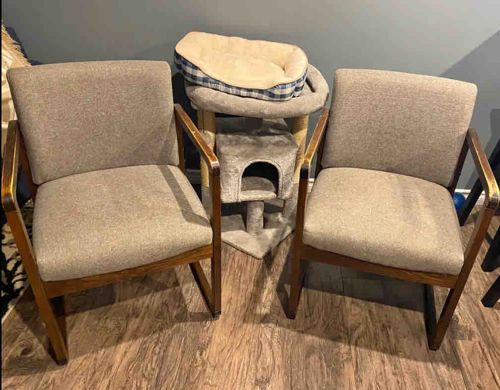
This is a pair of armchairs, likely dating from the mid-20th century or a modern recreation in that style. Each chair features a minimalist design with a wooden frame and upholstered seat and back. The wood appears to be a medium to dark-toned hardwood, possibly teak or walnut, with a visible grain, suggesting a natural finish that has likely been stained or lacquered. The armrests are smoothly curved at the front, leading down to straight, angled legs. The upholstery is a light, neutral-toned fabric, appearing to be a textured weave such as a tweed or boucle in a warm beige or light grey color. The cushions for both the seat and back are relatively thin, maintaining the sleek profile of the chair. There are no visible buttons or tufting, emphasizing the clean lines. The construction appears to be a mortise and tenon or similar joinery for the frame, indicating potentially good quality craftsmanship. Visible condition issues include minor wear on the wooden frames, particularly on the edges and armrests, consistent with age and use. There are no obvious tears or significant stains on the upholstery from the provided image, though detailed inspection would be needed. The overall aesthetic is characteristic of Danish modern or Scandinavian design, prioritizing functionality, simplicity, and natural materials. The chairs appear to be in good, usable condition, reflecting a classic design that remains popular.
AI Appraisal Report
I have examined the provided image of this pair of Mid-Century Modern style armchairs. Visually, the chairs exhibit the hallmarks of Danish Modern or Scandinavian design, characterized by their minimalist aesthetic, clean lines, and apparent use of natural materials. The wooden frames, appearing to be teak or walnut, show a visible grain with a natural finish. Minor wear on the frames, consistent with their age and use, is visible, particularly on edges and armrests. The light, neutral-toned fabric upholstery, possibly tweed or boucle, appears to be in good condition without obvious tears or significant stains from the image provided.
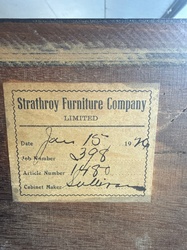
Authenticity of mid-century pieces from images alone is challenging. While the design is characteristic of the era, without manufacturer's marks, labels, or provenance, I cannot definitively attribute these to a specific renowned designer or maker. The construction, with what appears to be quality joinery, suggests good craftsmanship, often found in authentic period pieces. The current market for well-preserved Mid-Century Modern furniture remains strong, particularly for authentic designs or high-quality reproductions that capture the aesthetic. Comparables for similar pairs of unsigned, good-condition Danish modern armchairs typically range from $1,500 to $3,000, influenced by wood type, specific design nuances, and overall condition.
Demand for this style is consistently high, driven by its timeless appeal and integration into various interior design schemes. While not explicitly rare due to the popularity of the style, a well-preserved pair maintains good value. Factors significantly impacting value include the condition of the wood and upholstery, and crucially, any verifiable designer attribution. To fully authenticate and confirm the maker, an in-person examination would be required to search for manufacturer's marks or tags, assess wood species definitively, and conduct detailed inspection of the joinery and original upholstery for specific construction identifiers. Provenance documentation, if available, would also be invaluable for full authentication.