AI Appraisal Estimate

AI-generated estimates · not official valuations

From the user

What was submitted

Photo and notes provided by the user — not generated by AI

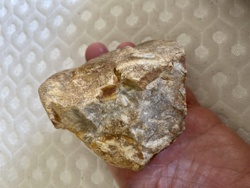
Submitted item photo
Submitted photo · June 6, 2026

User's notes

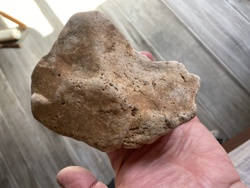
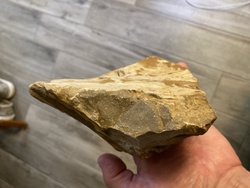
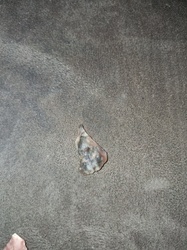
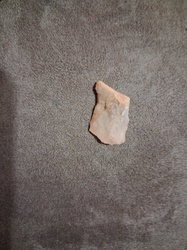
Lower Paleolithic Acheulean chert bi face hand axe scraper portable rock art bird effigy tool found in Guthrie OK measuring 9.5" x 5.5"

AI analysis below

AI appraisal

AI analysis & estimate

AI-Generated · Verify before acting

Everything below is generated by AI for informational purposes only. AI can make mistakes — the AI may misidentify items or misattribute them (artist, maker, brand, designer, origin, era). This is not an official valuation and should not be used for insurance, sale, tax, estate, legal, or lending purposes — or any decision requiring a certified appraisal. It is not an authoritative claim about any person, brand, or rights holder — do not share or rely on it as a factual statement about a third party. Always consult qualified professionals before making financial decisions.

Note

This analysis also relies on unverified notes provided by the user, which may be incomplete or inaccurate and could affect the result.

Read the full disclaimer

AI Identification

·Not independently authenticated·Verify before acting

Large Paleolithic-Style Chert Biface Stone Tool / Portable Rock Art

Archaeological Artifacts / Prehistoric Lithic Tools

AI Estimated Value

·Not an official valuation·Verify before acting

$40.00 - $85.00

As of June 6, 2026

AI Item Analysis

·AI can make mistakes·Verify before acting
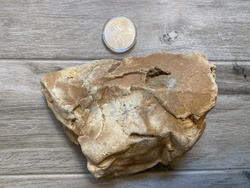
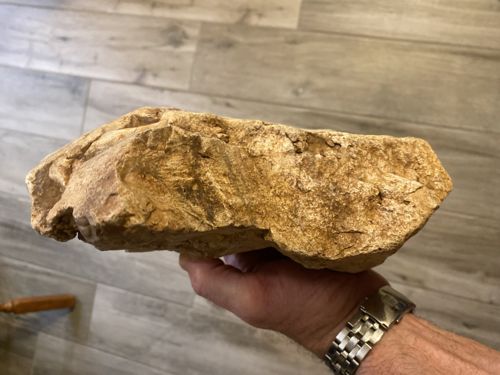
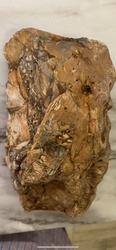
This specimen is a large, hand-sized stone object measuring approximately 9.5 inches by 5.5 inches. It is composed of chert, a sedimentary cryptocrystalline quartz, displaying a predominantly tan and earthy brown color palette with some darker manganese-like staining across the surface. The piece exhibits characteristics of bifacial reduction, featuring broad flake scars and a tapered edge that suggests utility as a heavy-duty hand axe or scraper. The construction is robust, showing evidence of percussion flaking consistent with Lower Paleolithic Acheulean-style lithic technology, though its find location in Oklahoma would conventionally associate such forms with much later indigenous North American lithic industries or natural occurrences unless verified by archaeological context. Notable for its zoomorphic profile, the user identifies this as 'portable rock art' representing a bird effigy, with the pointed end serving as a beak-like feature and the broader body suggesting a feathered form. The condition is heavily weathered with a thick patina, rounded edges from age or environmental exposure, and no recent fractures or signs of modern alteration. The surface shows some micro-flaking along the presumed working edge, indicative of prehistoric use-wear. There are no visible maker's marks or stamps, which is typical for artifacts of this era.
AI Appraisal Report

·AI can make mistakes·Verify before acting
I have carefully examined the provided images and descriptions of this large chert specimen. My assessment as an appraiser reveals a dual-nature object: a lithic tool of indeterminate age and a subjective effigy piece. The object displays clear evidence of bifacial reduction and marginal retouch, which are consistent with prehistoric stone-working techniques. The heavy patina and manganese staining suggest significant age and prolonged environmental exposure, which are positive indicators of antiquity. However, the valuation is conservative due to the 'Portable Rock Art' classification. In the current archaeological market, there is a fundamental divide between scientific lithic analysis and subjective zoomorphic interpretation. While the owner identifies a bird effigy, such features are often the byproduct of functional knapping or natural geofacts (pareidolia) rather than intentional artistic shaping. Professional collectors and museums typically prioritize documented provenance and specific typology (such as a Clovis or Folsom point) over effigy interpretation. Without a stratigraphic context or a peer-reviewed excavation report, this piece is appraised primarily as an 'anomalous large biface.' Market demand for unprovenanced lithic tools from Oklahoma is stable but modest. Comparables for unauthenticated large bifaces of this size generally range under $100. Authenticity cannot be definitively confirmed via images alone; a physical examination by a lithic specialist using high-power microscopy is required to differentiate between prehistoric use-wear and natural 'tumble' wear. To increase value, the owner would need to provide a professional chain of custody or thermoluminescence testing results. Consequently, the value reflects its status as an interesting study piece rather than a verified museum-grade effigy.

Get your items appraised

Instant estimates of your treasures with AI-powered appraisals

Browse More Appraisals