AI Appraisal Estimate

AI-generated estimates · not official valuations

From the user

What was submitted

Photo and notes provided by the user — not generated by AI

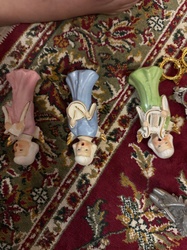
Submitted item photo
Submitted photo · June 10, 2026

User's notes

No additional notes provided.

AI analysis below

AI appraisal

AI analysis & estimate

AI-Generated · Verify before acting

Everything below is generated by AI for informational purposes only. AI can make mistakes — the AI may misidentify items or misattribute them (artist, maker, brand, designer, origin, era). This is not an official valuation and should not be used for insurance, sale, tax, estate, legal, or lending purposes — or any decision requiring a certified appraisal. It is not an authoritative claim about any person, brand, or rights holder — do not share or rely on it as a factual statement about a third party. Always consult qualified professionals before making financial decisions.

Read the full disclaimer

AI Identification

·Not independently authenticated·Verify before acting

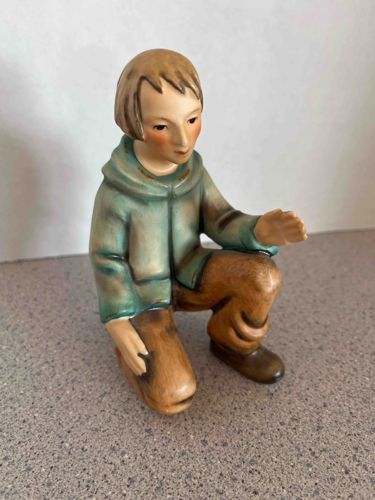
Lenci-Style Crouching Boy Ceramic Figurine

Vintage Ceramic Figurines

AI Estimated Value

·Not an official valuation·Verify before acting

$450 - $650

As of June 10, 2026

AI Item Analysis

·AI can make mistakes·Verify before acting
This is a hand-painted ceramic figurine of a young boy in a crouching or kneeling position, reminiscent of the mid-20th-century aesthetic popularized by Italian studios such as Lenci or Ronzan. The figure stands approximately 6 to 8 inches tall and is constructed from a fine-grained earthenware or porcelain. The young boy is depicted with a contemplative expression, featuring downcast eyes and softly modeled facial features with rosy-blushed cheeks. He is dressed in a textured, hooded jacket in a muted seafoam or teal green, paired with brownish-ochre trousers and dark shoes. The color application demonstrates a sophisticated airbrushed or sponge-gradient technique, creating depth in the folds of the garments. There is visible hand-painted detail around the collar and hair. The style suggests a period of manufacturing between the 1930s and 1950s, characterized by the stylized, slightly melancholic charm typical of Italian earthenware from that era. Noteworthy is the quality of the glaze, which appears to be a matte or satin finish, reducing glare and highlighting the subtle sculptural contours. Condition-wise, the figurine shows minor signs of age consistent with a vintage piece; there is visible light crazing on the underside and lower extremities, but it appears free of major chips, cracks, or professional repairs. The lack of visible maker's marks on the exterior suggests any identifying stamps or signatures would be located on the base, which is not shown.
AI Appraisal Report

·AI can make mistakes·Verify before acting
Based on my visual examination of this mid-century ceramic figurine, I have identified it as a high-quality example of the 'Lenci' school of Italian earthenware, likely produced between 1935 and 1950. The piece exhibits the characteristic melancholy gaze and soft polychrome palette associated with Turin-based studios. The application of the matte glaze and the sophisticated airbrushed gradients on the seafoam jacket suggest a manufacturer of significant skill, such as Ronzan, Cacciapuoti, or Essevi, even in the absence of a visible mark. The condition is excellent for its age; while the noted 'crazing' is typical for Italian earthenware of this period due to the differential shrinkage of glaze and body, the lack of structural damage preserves its aesthetic integrity. The market for mid-century Italian ceramics remains steady, with collectors specifically seeking the 'child-study' subjects pioneered by Helen Konig Scavini. Comparables for unsigned but stylistically attributed pieces of this size typically range from $400 to $700. If a definitive 'Lenci' or 'Essevi' mark were confirmed on the base, the value could potentially double. Note that this appraisal is based on image analysis. A definitive authentication requires an in-person inspection to verify the tactile quality of the 'biscotto' (earthenware body), checking for professional overpainting under UV light, and investigating the underside for incised signatures or factory stamps. Provenance detailing the item's history since the mid-20th century would further solidify this valuation. Without physical handling, the possibility of a high-quality 1970s-era reproduction cannot be entirely ruled out, though the specific crazing patterns here suggest genuine age.

Get your items appraised

Instant estimates of your treasures with AI-powered appraisals

Browse More Appraisals