AI estimate as of July 4, 2025 · verify with a professional before acting
AI-Generated · Verify before acting
Everything on this page is generated by AI for informational purposes only. AI can make mistakes — the AI may misidentify items or misattribute them (artist, maker, brand, designer, origin, era). This is not an official valuation and should not be used for insurance, sale, tax, estate, legal, or lending purposes — or any decision requiring a certified appraisal. It is not an authoritative claim about any person, brand, or rights holder — do not share or rely on it as a factual statement about a third party. Always consult qualified professionals before making financial decisions.
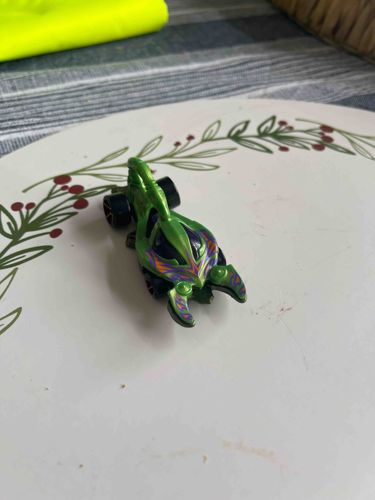
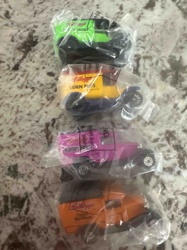
This item is a die-cast toy car, likely a Hot Wheels or similar brand, characterized by its vibrant metallic green finish and an aggressive, futuristic design. Its body shape is highly stylized, resembling a predatory insect or creature with a long, slender rear section and a broader, claw-like front end. The vehicle features four black plastic wheels with visible axels, suggesting it is designed for rolling play. The most distinctive visible feature is the iridescent, multi-colored pattern on its top surface, specifically on the broader front section and along what appear to be 'pincers' or 'mandibles' at the very front. This pattern incorporates shades of purple, orange, and blue, providing a striking contrast to the dominant green. The overall construction appears to be a combination of painted metal for the body and plastic for the wheels and chassis components, typical of Hot Wheels toys. Given its small size, it's consistent with a 1:64 scale model. The visible condition suggests it is likely used, as there might be minor wear consistent with play, though no significant damage or missing parts are immediately apparent from the image. The glossy paint finish indicates a relatively good state of preservation. It does not appear to have any obvious manufacturing marks or dates from this viewing angle. The design aesthetic places it within the realm of fantasy or concept vehicles often found in toy car lines, appealing to collectors or children who enjoy imaginative play.
AI Appraisal Report
Upon examining the provided image of this metallic green die-cast fantasy car, I assess its condition as good, with apparent minor wear consistent with play rather than significant damage. The vibrant metallic green finish and iridescent multi-colored pattern on the 'pincers' are well-preserved, suggesting careful handling or limited use. Its authenticity as a mass-produced toy car, likely a Hot Wheels or similar brand, is highly probable given its characteristic design, scale (estimated 1:64), and construction materials (die-cast metal body, plastic wheels). However, without direct physical examination, I cannot confirm specific manufacturing marks, serial numbers, or material integrity, which are crucial for definitive authentication beyond visual cues.
In terms of market conditions, die-cast fantasy cars, even 'treasure hunt' or limited editions, generally do not fetch high prices unless they are exceedingly rare prototypes, error cars, or highly sought-after vintage models in pristine, never-opened packaging. Comparables in similar condition typically retail for a few dollars. Demand for common used fantasy models is low among serious collectors, though they appeal to enthusiasts of unique designs or casual collectors.
Factors impacting its value negatively are its likely mass-produced nature, apparent used condition, and common availability of similar fantasy models. Positive factors include its distinctive color scheme and potentially unique design within its series, if it is a rarer variant.
To fully authenticate and precisely value, I would require an in-person examination to check for specific series marks, manufacturer stamps, wheel variations, and package information (if applicable). Provenance documentation, though rare for common toys, could also confirm its release context. Without these, any valuation remains an estimate based on visual assessment.