AI estimate as of November 21, 2025 · verify with a professional before acting
AI-Generated · Verify before acting
Everything on this page is generated by AI for informational purposes only. AI can make mistakes — the AI may misidentify items or misattribute them (artist, maker, brand, designer, origin, era). This is not an official valuation and should not be used for insurance, sale, tax, estate, legal, or lending purposes — or any decision requiring a certified appraisal. It is not an authoritative claim about any person, brand, or rights holder — do not share or rely on it as a factual statement about a third party. Always consult qualified professionals before making financial decisions.
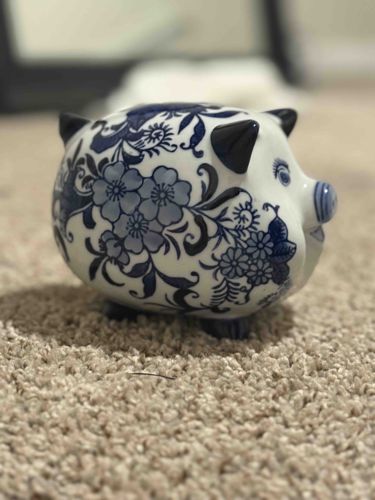
This item is a ceramic piggy bank, fashioned in the traditional shape of a pig. Its primary coloration is white, serving as a clean background for an intricate blue floral design that covers most of its body. The blue used in the pattern appears to be a classic cobalt or indigo, with lighter and darker shades creating depth within the floral motifs. Specifically, there are larger, lighter blue multi-petaled flowers interspersed with smaller, darker blue flowers, leafy scrolls, and perhaps some abstract swirling patterns. The pig's ears, and snout are painted a solid dark blue, contrasting with the detailed body. The eyes are small, dark blue dots. The overall design evokes a Delftware or Chinoiserie aesthetic, suggesting an Asian or European influence, particularly Dutch or Chinese porcelain art. The pig appears to be of a medium size, suitable for holding coins. Its surface has a glossy finish, indicative of a glazed ceramic. There are no immediately visible chips, cracks, or significant wear, suggesting it is in good, possibly excellent, condition. The craftsmanship appears to be of good quality, with clear lines and a well-executed pattern, though it is difficult to determine if it is hand-painted or decal-applied without closer inspection. The presence of four stubby feet, also likely dark blue, ensures stability. There is no visible coin slot or stopper mechanism in this view, but these are typical features of a piggy bank. The estimated age, based on the classic blue and white decorative style, could range from late 20th century to contemporary, as this style remains popular.
AI Appraisal Report
Based on my visual examination of the Blue and White Floral Pattern Ceramic Piggy Bank, I assess its condition as excellent. The glossy glaze appears intact with no visible chips, cracks, or significant wear. The intricate blue floral pattern, reminiscent of Delftware or Chinoiserie, is well-executed, though without closer inspection, I cannot definitively determine if it is hand-painted or decal-applied. This distinction would impact value, with hand-painting generally commanding higher prices. The solid dark blue ears, snout, and feet provide good contrast, and the overall craftsmanship suggests good quality.
In terms of market conditions, blue and white ceramic decorative items are consistently popular, appealing to a broad demographic. Piggy banks, specifically, are common decorative and functional items, often purchased as gifts. Comparables in similar excellent condition, featuring classic blue and white floral designs and likely mass-produced, typically retail in the $20-$50 range. While the aesthetic is appealing, demand for collectible piggy banks generally isn't exceptionally high unless they possess unique historical significance, artistic merit, or provenance. This particular piece does not appear to exhibit significant rarity.
Factors significantly impacting its value include its excellent condition and timeless design. The primary limitation in this assessment, without physical examination, is verifying authenticity of craftsmanship (hand-painted vs. decal) and identifying any maker’s marks. An in-person inspection would allow for tactile assessment of the surface, close scrutiny of the brushstrokes (or lack thereof), and examination of the base for marks. Provenance documentation, such as where and when it was purchased, would also add to its potential value, though for an item of this type, such documentation is rare.