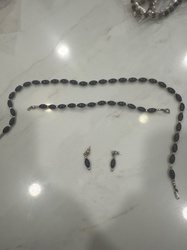
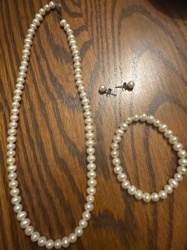
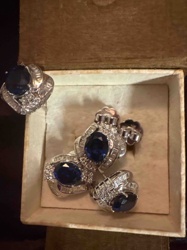
These notes were written by the person who submitted this item. Appraiser.AI has not verified them, and the AI's identification and estimate may rely on them.
AI Estimated Value
Not an official valuation
$1,800 - $2,500
AI estimate as of August 2, 2025 · verify with a professional before acting
AI-Generated · Verify before acting
Everything on this page is generated by AI for informational purposes only. AI can make mistakes — the AI may misidentify items or misattribute them (artist, maker, brand, designer, origin, era). This is not an official valuation and should not be used for insurance, sale, tax, estate, legal, or lending purposes — or any decision requiring a certified appraisal. It is not an authoritative claim about any person, brand, or rights holder — do not share or rely on it as a factual statement about a third party. Always consult qualified professionals before making financial decisions.
This analysis also relies on unverified notes provided by the user, which may be incomplete or inaccurate and could affect the result.
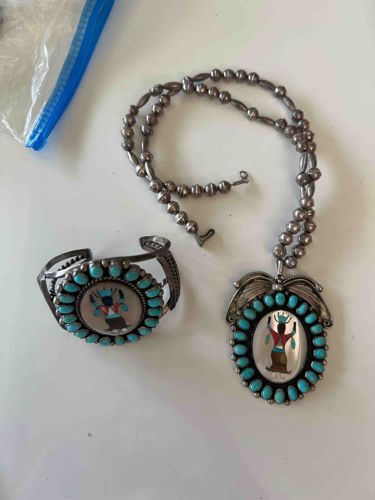
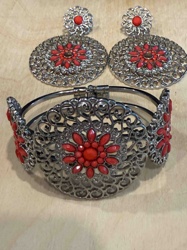
This is a vintage Native American-style jewelry set, likely Zuni or Navajo, consisting of a necklace with a pendant and a matching cuff bracelet, crafted from silver with turquoise and composite stone inlay. The silver components exhibit a dark patina consistent with age, suggesting they are unpolished and have developed a natural oxidation over time. The necklace features a double strand of silver beads, which appear to be bench beads (handmade and individually shaped), leading down to a large, ornate pendant. The pendant showcases an oval-shaped inlay panel at its center depicting a stylized human figure, often referred to as a ‘Mudhead Clown’ or ‘Kachina’ figure, executed in mosaic or stone-on-stone inlay against a light-colored matrix, possibly shell or mother-of-pearl. This central figure displays elements of red, black, and a light blue-green, suggesting various natural stone or shell materials. Surrounding this central panel are numerous small, oval-cut turquoise cabochons, set in individual bezels, creating a halo effect. The pendant is further embellished with what appear to be stylized silver leaves or feathers at its top, adding to its artisanal appeal. The cuff bracelet mirrors the pendant's design with a circular central inlay depicting a similar human figure, surrounded by a ring of small, bezel-set turquoise cabochons. The silver cuff itself is relatively thick and sturdy, unadorned except for its form, and shows signs of wear such as minor surface scratches or slight deformation consistent with use. Both pieces display a high degree of craftsmanship, typical of Southwestern Native American silverwork, with careful stone cutting and silver soldering visible. There are no obvious signs of repair, and the overall condition appears good, with the patina adding to its antique aesthetic. The general style, featuring intricate inlay work and the use of natural turquoise and silver, is characteristic of Native American jewelry from the mid-20th century.
AI Appraisal Report
I have examined the images of this Native American Silver and Turquoise Inlay Necklace and Bracelet Set, along with the provided details. The set presents as a genuine example of mid-20th century Southwestern Native American jewelry, likely Zuni or Navajo, given the intricate mosaic inlay work depicting a 'Mudhead Clown' or 'Kachina' figure. The dark patina on the silver and the use of individually shaped bench beads on the necklace support its claimed age of the 1960s. The overall condition appears good, with wear consistent with age and use, and no obvious signs of repair that would significantly detract from its value.
Market conditions for vintage Native American jewelry, especially pieces with intricate inlay and traditional motifs, remain strong. Collectors value authenticity, craftsmanship, and condition. The 'Mudhead' figure is a desirable motif, adding to its appeal. In terms of demand and rarity, while similar styles exist, a matching necklace and bracelet set of this quality, particularly with the detailed inlay, is less common.
Factors positively impacting value include the matching set, the apparent quality of the silver and stone work, and the desirable 'Mudhead' motif. The unpolished state and natural patina enhance its antique aesthetic.
It is important to note the limitations of appraising solely from images. While the style and craftsmanship strongly suggest authenticity, an in-person examination would be crucial to definitively verify the silver's fineness, confirm the nature of the stones and inlay materials (e.g., natural turquoise vs. stabilized/treated, type of shell), and check for any hidden repairs or damage. Provenance documentation, such as details of its acquisition or maker's marks if any exist (not visible in images), would further solidify its authenticity and potentially its value.