AI estimate as of July 12, 2025 · verify with a professional before acting
AI-Generated · Verify before acting
Everything on this page is generated by AI for informational purposes only. AI can make mistakes — the AI may misidentify items or misattribute them (artist, maker, brand, designer, origin, era). This is not an official valuation and should not be used for insurance, sale, tax, estate, legal, or lending purposes — or any decision requiring a certified appraisal. It is not an authoritative claim about any person, brand, or rights holder — do not share or rely on it as a factual statement about a third party. Always consult qualified professionals before making financial decisions.
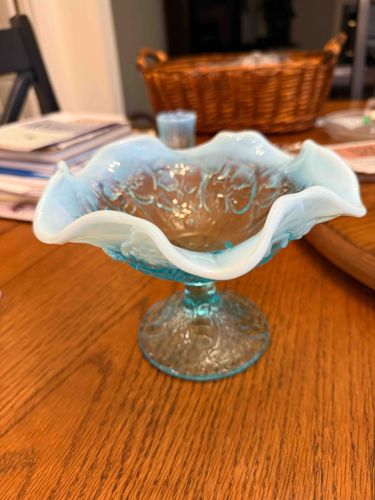
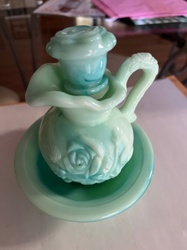
This is a vintage ruffled edge compote dish made of opalescent glass, exhibiting a beautiful light blue hue that transitions to a more milky white or opal color at the ruffled edges. The dish stands on a pedestal base. The body of the bowl and the circular base are adorned with an intricate, raised floral and foliate pattern, suggesting a pressed glass manufacturing technique. The pattern appears to feature blossoms and scrolling vine-like elements. The overall shape is a flared, ruffled bowl atop a cylindrical stem and a round, stable foot. The glass itself shows a lovely iridescent quality, particularly visible on the interior of the bowl, where the light reflects off the embossed patterns. There are no immediately visible chips, cracks, or significant damage, suggesting it is in good condition for its age. The craftsmanship indicates a mass-produced item characteristic of the late 19th or early 20th century, a period known for its production of decorative opalescent glass. The quality appears good, with clear molding of the patterns. While no maker's marks are discernible from the image, the style is reminiscent of pieces produced by various American glass companies during the Victorian or Edwardian eras.
AI Appraisal Report
Upon my virtual examination of this Blue Opalescent Ruffled Edge Pedestal Compote Dish, I find it to be in remarkably good condition for its age. The visual evidence suggests no chips, cracks, or significant damage, which is a key factor in valuing antique glass. The ruffled edges are intact, and the opalescence is well-preserved, exhibiting the characteristic milky white transition. The intricate floral and foliate pattern, indicative of pressed glass manufacturing, is clear and well-defined.
This piece is consistent with decorative opalescent glass produced in the late 19th or early 20th century by American glass companies. While the specific maker cannot be definitively identified without a physical inspection for maker's marks or pontil scars, its style aligns with manufacturers like Fenton, Northwood, or Jefferson Glass Company, which were prolific in this type of production. Market conditions for antique opalescent glass remain steady, with collector demand for well-preserved examples. Pieces in popular colors like blue opalescent, especially those with appealing patterns and good condition, tend to command fair prices. Its rarity is moderate; while not unique, this specific pattern and condition combination is desirable.
Factors significantly impacting its value include its excellent condition, attractive color, and detailed pattern. The primary limitation in authenticity verification from images alone is the inability to physically inspect for true glass composition, manufacturing techniques (e.g., mold lines), and any subtle damages not evident in photographs. A hands-on examination would allow for tactile assessment, blacklight testing for repairs or later additions, and a thorough search for any faint maker's marks or factory imperfections that could pinpoint the manufacturer. Provenance documentation, if available, would further authenticate its history.