AI Appraisal Estimate

AI-generated estimates · not official valuations

From the user

What was submitted

Photo and notes provided by the user — not generated by AI

Submitted item photo
Submitted photo · May 25, 2026

User's notes

No additional notes provided.

AI analysis below

AI appraisal

AI analysis & estimate

AI-Generated · Verify before acting

Everything below is generated by AI for informational purposes only. AI can make mistakes — the AI may misidentify items or misattribute them (artist, maker, brand, designer, origin, era). This is not an official valuation and should not be used for insurance, sale, tax, estate, legal, or lending purposes — or any decision requiring a certified appraisal. It is not an authoritative claim about any person, brand, or rights holder — do not share or rely on it as a factual statement about a third party. Always consult qualified professionals before making financial decisions.

Read the full disclaimer

AI Identification

·Not independently authenticated·Verify before acting

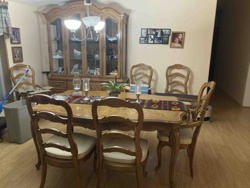
Marble-Top Rectangular Dining Table with Cane Back Chairs

Furniture - Dining Room Sets

AI Estimated Value

·Not an official valuation·Verify before acting

$1,800 - $2,500

As of May 25, 2026

AI Item Analysis

·AI can make mistakes·Verify before acting
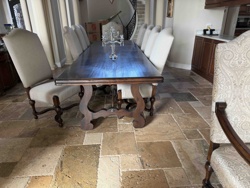
This dining ensemble features a rectangular dining table topped with a thick slab of polished white marble characterized by prominent grey and purplish-grey veining. The marble appears to have a beveled edge, signifying a higher level of finish. Surrounding the table are matching high-back dining chairs constructed from medium-toned finished wood, likely cherry or mahogany. Each chair features a curved crest rail with decorative carvings and an inset woven cane (rattan) back panel, reflecting a French Provincial or Neoclassical Revival style common in the late 20th century. The table's substantial size suggests it is designed to seat six to eight individuals. Notable features include the natural variation in the stone surface and the intricate weaving of the chair backs. Condition-wise, the visible wood surfaces show minor surface wear consistent with age, and the marble top shows some miscellaneous items which may have caused faint surface scratches not immediately visible from a distance. The craftsmanship appears sturdy, with the chairs featuring contoured legs and solid joinery. Given the design, this set likely dates from the 1980s or 1990s, blending classical formal elements with the opulence of natural stone.
AI Appraisal Report

·AI can make mistakes·Verify before acting
I have carefully examined the characteristics of this marble-topped dining ensemble. The set reflects the quality and aesthetic of the New Classical or French Provincial revival period, likely produced in the late 20th century. The centerpiece is a heavy, beveled-edge marble slab with distinct purplish-grey veining, suggesting high-grade quarrying. The chairs demonstrate superior craftsmanship compared to mass-market furniture of the era, featuring intricate cane work and solid wood frames—likely cherry—with carved crest rails. Visually, the set appears in good condition; the minor surface wear on the wood and typical 'flea-bite' scratches on the marble are consistent with residential use and do not significantly detract from its structural integrity. Market demand for large, formal dining sets has stabilized. While modern minimalist trends influenced the market previously, there is a resurgence in 'grandmillennial' and maximalist aesthetics that value natural stone and traditional textures like rattan. Comparable high-end sets from the 1980s/90s generally realize prices in the $1,500 to $3,000 range at regional auction houses or specialty vintage showrooms. Limitations: This appraisal is based on visual patterns alone. An in-person inspection is required to confirm the species of wood, verify the presence of maker's marks or stamps (which would increase value), and check for hidden repairs in the cane or structural stress in the table's support frame. Scientific testing or provenance documentation would be necessary to confirm the specific origin of the marble (e.g., Carrara or Calacatta) and definitively rule out synthetic composites that mimic stone.

Get your items appraised

Instant estimates of your treasures with AI-powered appraisals

Browse More Appraisals